At our university, we believe education is the most powerful path to a future free from poverty. By expanding access, support, and opportunity, we empower every student to build a life of dignity, independence, and success.


You can use this tool to research different jobs and industries, including 5-years trends of how many people are employed and the demand in different regions and LGAs.
Provided by Jobs and Skills Australia, part of the Australian Government.

You can use this tool to research the likely future need for different jobs and skills, as well as filter by your State or Territory.
Provided by Jobs and Skills Australia, part of the Australian Government.
University Social Responsibility Initiative
We actively implements social responsibility initiatives through a variety of programs aimed at promoting equitable access to education and contributing to the United Nations Sustainable Development Goals 2030.
The University’s Donation Program targets students from the bottom 20% of household income groups, providing both partial and full financial assistance. In 2024, 12% of the entire student body benefited from full tuition coverage, with all academic expenses fully funded by the University. This support extends to 45 international students from low-income countries, who also receive full financial sponsorship. In addition, 15 start-up projects, developed collaboratively by our students and local communities, are fully funded by the University.
Beyond tuition support, TSUULL provides comprehensive educational assistance, including scholarships, free language courses , free sign language courses and training and enhanced academic resources. Students also benefit from strong support for housing, nutrition, and transportation, as well as access to psychological services and programs in digital literacy, ensuring holistic development and well-being.
The University is also committed to creating an inclusive and accessible campus environment for individuals with disabilities. This includes barrier-free infrastructure, accessible learning facilities, and support services designed to ensure equal participation in academic and campus life.
The University’s commitment is reflected in tangible outcomes: the completion rate of students from low-income backgrounds reaches 99%, while 73% of graduates from bottom-income households secure employment. Through these initiatives, TSUULL demonstrates its inclusive approach to education, supporting vulnerable students both financially and socially, and creating sustainable pathways for academic success, professional development, and social empowerment.
Institutional Commitment to Expanding Access for Students from the Bottom Financial Quintile
Our university maintains a strong institutional commitment to expanding access to higher education for students who fall within the bottom 20% of the national household income distribution. This group is consistently prioritized in all admission, support, and funding mekhanisms. The university has established clear internal targets to ensure that low-income applicants are not only admitted, but also provided with the financial and academic support necessary to succeed.
Our university maintains a strong and measurable institutional commitment to expanding access to higher education for students from the bottom 20% of the national household income distribution. This commitment is formally embedded in the UNIVERSITY STRATEGIC DEVELOPMENT PLAN 2024-2030, which defines admission targets, financial-support guarantees, and equity-monitoring systems to ensure long-term, evidence-based progress.
TSUULL identifies students belonging to low-income and socially vulnerable groups on the basis of the legitimate framework established by the Resolution of the Cabinet of Ministers of the Republic of Uzbekistan. Depending on their socio-economic status, such students are registered in the national social support databases — Yoshlar Daftari, Ayollar Daftari, and Temir Daftari — with verification conducted through the Unified Portal of Interactive Public Services
Admission Targets and Priority Enrollment
To ensure meaningful access, the university implements the following admission targets:
These principles reinforce the university’s national role in promoting social mobility, equity, and opportunity.
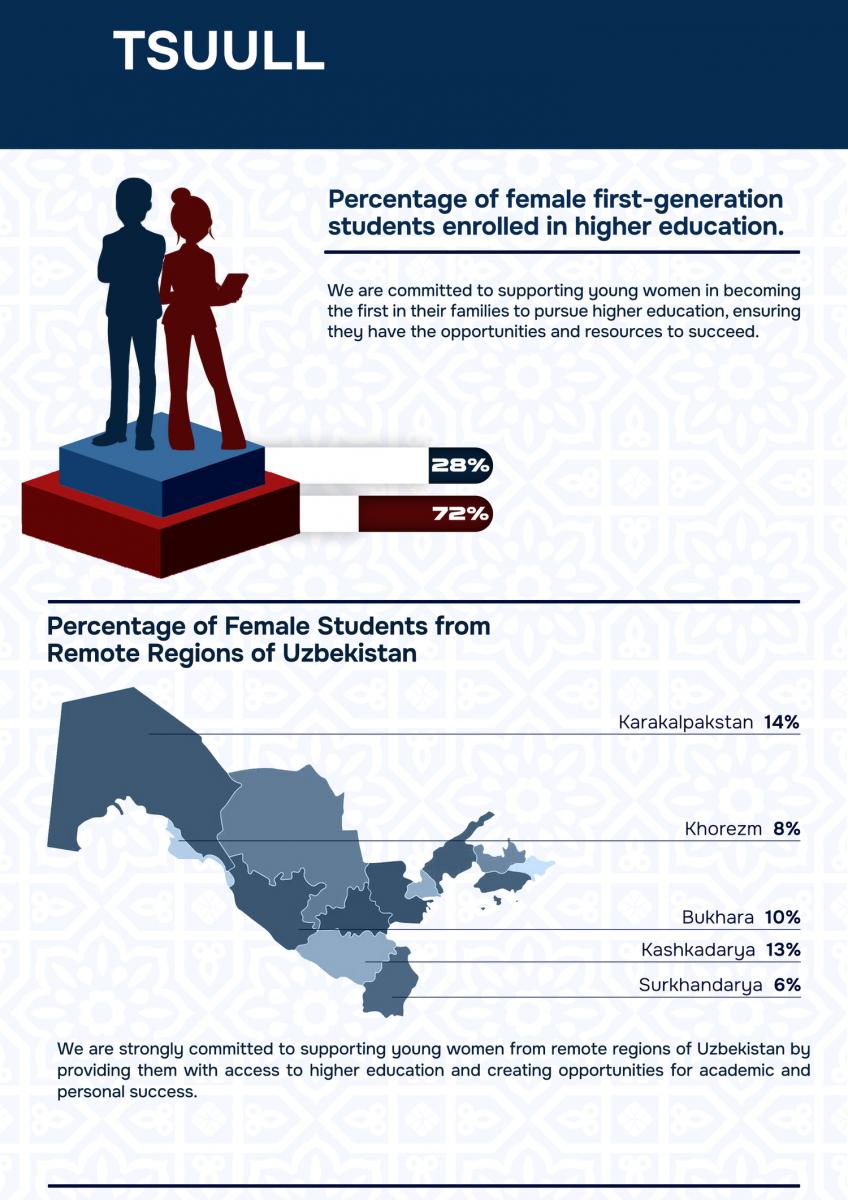
Students from economically disadvantaged backgrounds are given priority consideration for subsidies, tuition reductions, and need-based scholarships, including enhanced support packages for those demonstrating exceptional hardship. In addition, the university actively collaborates with secondary schools—particularly those serving low-income and rural communities—to encourage applications from first-generation university students, with a special focus on empowering girls and young women to pursue higher education.
Current research shows that students from households living below the poverty line are often the first in their families to access higher education. In alignment with this evidence, the university’s outreach initiatives, preparatory programs, and admission targets are specifically designed to ensure that these students are not excluded due to economic barriers. Through these efforts, our university plays a critical role in promoting social mobility and educational equity at the national level.
The University operates permanent, fully free preparatory and support-oriented educational initiatives, including a wide range of language courses, digital literacy training, and a regular series of public talks and outreach events. These activities are strategically designed to expand educational access and enhance academic readiness among applicants from low-income families, thereby reducing structural barriers to university admission and promoting greater equity in higher education.
In parallel, the University has established a structured system of psychological support, providing professional counselling services to applicants from socio-economically disadvantaged backgrounds. These services are aimed at addressing psychological challenges such as fear of university entrance examinations, low self-confidence, and anxiety related to academic competition, thus fostering resilience, motivation, and a stronger sense of preparedness for successful entry into higher education.
Students from economically disadvantaged backgrounds are given priority consideration for subsidies, tuition reductions, and need-based scholarships, including enhanced support packages for those demonstrating exceptional hardship. In addition, the university actively collaborates with secondary schools—particularly those serving low-income and rural communities—to encourage applications from first-generation university students, with a special focus on empowering girls and young women to pursue higher education.
Current research shows that students from households living below the poverty line are often the first in their families to access higher education. In alignment with this evidence, the university’s outreach initiatives, preparatory programs, and admission targets are specifically designed to ensure that these students are not excluded due to economic barriers. Through these efforts, our university plays a critical role in promoting social mobility and educational equity at the national level.
These targets are outlined in the UNIVERSITY STRATEGIC DEVELOPMENT PLAN 2024–2030, approved by the Academic Council in 2023. TSUULL has demonstrated measurable progress in supporting students from the bottom 20% income group. Their representation increased from 14% in 2021 to 20% in 2024, with a strategic target of 30% by 2030, under the oversight of the University Council and Admissions Office.
The annual retention and four-year graduation rates rose from 92% to 99%, with a goal of 100% by 2030, coordinated by the University Youth Parliament and Student Union. The Master’s graduation rate also increased significantly, rising from 91% in 2021 to 98% in 2024, with a strategic target of 100% by 2030, under the supervision of the Board of Trustees.
The completion rate of female students from low-income backgrounds increased from 92% to 99%, monitored by the Gender Equity Committee, reflecting TSUULL’s strong commitment to inclusive education and the eradication of poverty through higher education.
| Institutional Targets | ||||
| Indicator | 2021 (Baseline) | 2024 (Current) | 2030 (Target) | Responsible Unit |
|---|---|---|---|---|
| Enrollment of students from bottom 20% | 14% of total student body | 20% | 30% | University Council & Admission Office |
| Annual retention rate | 92% | 99% | 100% | University Youth Parliament |
| Bachelor’s graduation rate | 92% | 99% | 100% | Student Union |
| Master’s graduation rate | 91% | 98% | 100% | Board of Trustees |
| Female students from bottom 20% completing degree | 92% | 99% | 100% | Gender Equity Committee |
The University Council maintains an integrated database containing socioeconomic profiles, GPA, and completion status for all students in the bottom 20% income group. Annual progress tracking of each student cohort (by income level, gender, and faculty), regular reporting to the Board of Trustees, in compliance with National Unified Register of Social Protection for income verification and continuation of eligibility are conducted.
a. Financial Support
TSUULL ensures full financial accessibility to higher education for students from low-income families, with 12% of the student body receiving full tuition coverage and all related academic costs—amounting to 5,904,000,000 UZS—funded by the university. By eliminating financial barriers, this initiative promotes equitable access to education, strengthens social mobility, and directly supports the achievement of SDG 1: No Poverty.
b. Academic Support
c. Social and Psychological Support
Our university’s commitment to students from low-income families extends far beyond ensuring their successful completion of higher education. In addition to creating inclusive academic conditions and comprehensive support mechanisms that enable these students to graduate, the university also systematically tracks their post-graduation pathways and actively facilitates their transition into the labour market.
Special attention is given to graduates from the bottom financial quintile, whose employment outcomes are carefully monitored through coordinated efforts involving the University Council, Board of Trustees, and Registration Office, including partner organisations, public institutions, and private sector employers. The university provides targeted career guidance, professional skills training, internship placements, and direct referrals to employment opportunities.
By maintaining post-graduation engagement and offering sustained support, the university helps ensure that students from low-income backgrounds not only obtain a university diploma but also secure meaningful, stable and dignified employment, thereby strengthening their socio-economic mobility and long-term resilience.
| Year of graduation from bottom income quintile households | Total number of graduates from bottom income quintile households | Total number of graduates from bottom income quintile households employed | Percentage |
|---|---|---|---|
| 2020/2021 | 118 | 83 | 70% |
| 2021/2022 | 147 | 109 | 74% |
| 2022/2023 | 255 | 192 | 75% |
| 2023/2024 | 199 | 142 | 72% |
| Total | 719 | 526 | 73% |
University implements a comprehensive and systematically structured support framework for students from low-income families, ensuring equitable access to higher education and fostering their successful academic progression. All measures undertaken by the University are fully aligned with SDG 1, addressing key dimensions such as food security, housing, transportation, financial assistance, and access to essential educational resources. TSUULL operates a comprehensive and structured financial aid system that serves as the primary mechanism for supporting students from low-income families and is fully aligned with national anti-poverty strategies.
1. Housing Support: Dormitories and University-Funded Community Accommodation [allocated funds: 1 705 885 000 UZS]
2. Nutritional Support Initiative for Students from Low-Income Families[allocated funds: 6 084 000 000 UZS]
As part of the university’s commitment to ensuring equal access to education and supporting student well-being, TSUULL continued its Permanent Free Lunch Program. This initiative provided free daily meals to approximately 5% of the university’s total student body. By covering this essential need, the university helped reduce the financial burden on low-income students, allowing them to focus fully on their studies and academic success.
3. Transportation Support for Students from Low-Income Families [allocated funds: 2 059 200 000]
To reduce financial barriers and ensure equitable access to education, the University introduced a comprehensive transportation support initiative for students from low-income households. At the start of the academic year, the University provided free annual public transportation passes to eligible students, enabling them to commute across the city without incurring additional costs. This support covered 26.1% of the entire student body, demonstrating the University’s sustained commitment to fostering social inclusion, promoting equal learning opportunities, and aligning institutional practices with the principles of SDG 1.
4. Enhanced Academic Resource Support
TSUULL provides comprehensive support to students experiencing acute socio-economic vulnerability through targeted initiatives that ensure equitable access to essential learning resources. In the reporting period, 5.5% of the student body received all required textbooks and academic materials free of charge. These provisions encompass dictionaries, coursebooks, language-learning tools, and digital access resources, directly mitigating barriers to academic engagement and promoting inclusive, high-quality education in alignment with the university’s commitment to eradicating poverty and advancing equitable learning opportunities. In addition, the University regularly organizes competitions and academic challenges with valuable prizes, encouraging active participation, rewarding achievement, and fostering motivation among students from all socio-economic backgrounds.
5. Comprehensive Social Protection and Legal Empowerment for Vulnerable Students
TSUULL ensures that students from low-income families can fully engage with and complete their higher education by providing multi-faceted support. In 2024, the University expanded its institutional assistance through a combination of university-funded programs, donation-based aid, and coordination with national social protection platforms. Beyond material support, TSUULL organizes training sessions and awareness seminars to enhance legal literacy, particularly for socially and economically vulnerable students. These initiatives equip students with essential knowledge of their legal rights, procedures for accessing state benefits, and mechanisms for addressing common legal challenges, thereby strengthening their social protection and promoting empowerment.
Comprehensive Tuition and Academic Support for Students from Low-Income Families
In 2024, TSUULL reinforced its commitment to equitable higher education by providing full tuition coverage to students from low-income families. As part of its core anti-poverty initiatives, students benefited from university-funded scholarships that cover all academic expenses, including tuition, laboratory fees, study materials, and access to digital learning platforms. By eliminating financial barriers, these grants enable students to concentrate fully on their studies, maximize their academic potential, and pursue successful professional careers.
TSUULL’s structured financial aid system, aligned with national anti-poverty strategies, not only ensures barrier-free access to education but also promotes social and economic mobility for vulnerable populations. These comprehensive academic grants exemplify the university’s dedication to Sustainable Development Goal 1—No Poverty—by directly addressing the financial challenges that can hinder educational attainment and long-term career development.
Comprehensive Tuition Support for Students from Low-Income Families
In TSUULL ensured full financial accessibility to higher education for students from low-income families. As part of the university’s core anti-poverty initiatives, 12% of the entire student body benefited from full tuition coverage, with all academic expenses fully funded by the university [allocated amount of money-5 904 000 000 UZS]. Beyond tuition, this support also encompasses associated costs such as laboratory fees, study materials, and access to digital learning platforms, ensuring a truly barrier-free educational experience. By removing financial obstacles, TSUULL empowers students to focus entirely on their studies, fosters equitable access to higher education, and strengthens the social and economic mobility of vulnerable populations. This program reflects the university’s ongoing commitment to Sustainable Development Goal 1—No Poverty—by directly addressing the economic challenges that can impede academic achievement and long-term professional development.
Integration with National Social-Protection Systems
In the 2023–2024 academic year, nine students (seven of whom were female) were awarded highly competitive state and presidential scholarships, including the Navoiy State Scholarship, the Presidential Scholarship, and the Islam Karimov State Scholarship, in recognition of their outstanding academic achievements.
Moreover, two female students were selected as participants in the University’s Orhun Academic Exchange Programme, which enabled them to pursue tuition-free studies for one academic semester at a partner foreign institution, with complimentary accommodation and meals provided.
In addition, two TSUULL undergraduate graduates, with institutional endorsement and support, successfully obtained the national “El-Yurt Umidi” Scholarship, permitting them to undertake fully funded Master’s degree programmes at the University of Reading (United Kingdom). This prestigious scholarship comprehensively covers tuition fees, accommodation, living expenses, and associated academic costs.
To enhance institutional support and ensure comprehensive coverage for students facing socio-economic vulnerability, TSUULL actively coordinates its financial aid programs with key national social-protection initiatives:
• Yoshlar Daftari
Designed to support young people from low-income households, this program provides tuition assistance, vocational training opportunities, and livelihood support. Students registered under Yoshlar Daftari are given priority access to university-funded tuition waivers and stipends.
• Ayollar Daftari
Focused on women from socially or economically disadvantaged backgrounds, this initiative ensures that female students—particularly those from rural regions—receive tuition support, counselling services, and emergency financial assistance.
• Temir Daftar
Targeting families experiencing severe poverty, Temir Daftari enables students from these households to be prioritized for university hardship funding, tuition subsidies, and immediate emergency assistance, thereby safeguarding their continuity in higher education.
TSUULL integrates its support programs with national social-protection systems to ensure vulnerable students can complete their education. In 2023–2024, nine students received prestigious state and presidential scholarships, seven of them female. These included the Navoiy State Scholarship, Scholarship of the President of the Republic of Uzbekistan and the Islam Karimov State Scholarship. This initiative strengthens both economic support and academic empowerment, promoting inclusive education and equitable opportunities in line with SDG 1.
TSUULL implements targeted schemes to support students from low and lower-middle income countries through a range of financial and social support mechanisms, including tuition fee waivers, scholarships, grants, and subsidised accommodation, meals, and transportation.
Aligned with the United Nations Sustainable Development Goal 1 — No Poverty, these measures are designed to widen access to higher education, eliminate financial barriers, and ensure equal educational opportunities for economically disadvantaged international students. This commitment is embedded in TSUULL’s Strategic Development Plan under the priority direction “Education for All: Reducing Poverty through Access, Opportunity, and Empowerment.” The University Council , Admission Office, University Youth Parliament, Student Union, Board of Trustees and Gender Equity Committee jointly oversee the implementation, monitoring, and continuous improvement of these support schemes for students from low and lower-middle income countries.
Support for International Students from Low-Income Countries
Over the past two years, TSUULL has implemented a targeted support program for students from Afghanistan and Pakistan, a countries facing severe socio-economic challenges. This initiative directly contributes to global poverty reduction through education, capacity-building, and human capital development, aligning strongly with SDG 1 and SDG 4 .
Achievements:
Enrollment of Vulnerable Youth
In 2024, 20 Afghan bachelor-level students ,13 doctoral students (10 male and 23 female) and 12 bachelor-level students from Pakistan (7 male and 5 female) have been enrolled in full-time degree programs at TSUULL. The decisions regarding both admission and the provision of comprehensive financial support were made jointly by the University Council , Admission Office, University Youth Parliament, Student Union, Board of Trustees and Gender Equity Committee. These collective decisions were based on a thorough review of the documents submitted by the students, including official proof of income level, family composition certificates, social vulnerability status documentation (such as orphan or disability certificates), residence verification from rural or conflict-affected areas, and confirmation of refugee or asylum seeker status, where applicable.
Comprehensive Financial Assistance [allocated funds 1 128 000 000UZS]
TSUULL provides complete financial coverage for these students, eliminating all major study-related expenses:
Social and Academic Inclusion
Beyond financial assistance, TSUULL has established a comprehensive support ecosystem for Afghan and Pakistan students, including:
These measures foster not only academic success but also psychological well-being and social integration.
TSUULL’s Afghan and Pakistan Student Support Initiative has had measurable impact in promoting educational equity and poverty reduction:
| Country | Level of study | Total students | Male | Female | % of supported cohort | Primary vulnerability category | Support coverage | Expected duration |
|---|---|---|---|---|---|---|---|---|
| Afghanistan | Bachelor’s | 20 | 12 | 8 | 44.4% | Conflict-affected regions; refugees | 100% (full) | 4 years |
| Afghanistan | Doctoral | 13 | 10 | 3 | 28.9% | Orphans; low-income backgrounds | 100% (full) | 3 years |
| Pakistan | Bachelor’s | 12 | 7 | 5 | 26.7% | Low-income; rural and remote areas | 100% (full) | 4 years |
| TOTAL | — | 45 | — | — | 100% | — | — | — |
In accordance with a Resolution of the Cabinet of Ministers of the Republic of Uzbekistan, an Educational Center for the Training of Afghan Citizens was established under the Ministry of Higher and Secondary Specialized Education of the Republic of Uzbekistan, with its official location in the Termez district of Surkhandarya region
The Center operates as a state educational institution with legal entity status and delivers programs in higher education, secondary specialized and vocational education, as well as professional retraining and advanced training courses.
The Center functions as an official branch of TSUULL. Afghan students enrolled in the Center study on the basis of our university academic standards and curricula. Courses are delivered by TSUULL academic staff, and the Center makes full use of the University’s educational, methodological, digital, library, research, technical and administrative resources.
Upon successful completion of their studies, graduates of the Center are awarded official diplomas of Alisher Navo’i Tashkent State University of Uzbek Language and Literature.
Since 2020 to the present day, the Center has prepared:
All students have been educated entirely free of charge, with full coverage of tuition fees and related academic expenses, reflecting the University’s firm commitment to SDG 1, SDG 4, and SDG 10.
TSUULL actively supports entrepreneurship and innovation among its students, graduates, and the surrounding community. The University’s initiatives focus on creating sustainable income opportunities, encouraging self-employment, and promoting innovation in the language, culture, and education sectors, directly contributing to SDG 1 and SDG 8 .
TSUULL Start-Up Support Hub
In 2022, TSUULL established a Start-Up Support Hub under the Sustainable Practices and Youth Affairs Office to provide structured guidance and resources to student-led and community-based entrepreneurial projects.
The hub offers:
Training and Mentorship: Regular workshops on business planning, financial literacy, digital marketing, and project management, conducted by industry specialists and university faculty.
Business Incubation Services: Step-by-step mentoring for start-up idea validation, prototype design, and registration.
Micro-grant Support: Small seed funding (ranging from 3–10 million UZS) for the best student and community projects in education technology, language services, cultural entrepreneurship, and digital innovation.
Networking Opportunities: Partnerships with the Youth Affairs Agency, Yakkasaroy District Administration, and private business incubators to connect young entrepreneurs with investors and development programs.
To strengthen the real-world relevance of its programs, TSUULL regularly invites successful national entrepreneurs and business leaders to share their expertise during Start-Up Seminars. These events provide hands-on advice on developing, launching, and scaling innovative ventures.
Prominent guest speakers have included:
Khasan Mamasaidov – Founder of M-Factor
Husan Mamasaidov – Co-founder of Deli Company
Akmal Paiziev – Founder of MyTaxi and Express24
Alisher Sa’dullayev – Chairman of the Youth Union of the Republic of Uzbekistan
Aziz Yusupov – Founder of LeBazar
Botir Orifjanov – CEO of Paynet
Firuz Allayev – Founder of Asaxiy.uz
Gavhar Sagdullayeva – Member of the Presidential Social Advertising Team; trainer in professional photography and creative media
Through these collaborations, TSUULL ensures that its students and community participants gain direct exposure to real entrepreneurial practices, understand the national business ecosystem, and develop practical strategies for financial independence and sustainable growth.
Since its establishment, the hub has supported over 32 jointly by students and members of the local community , several of which have grown into self-sustaining small enterprises in translation services, inclusive initiatives, creative media, online education, and mobile applications, digital language corpora and others.
Entrepreneurship Education and Capacity-Building
Entrepreneurial skills are integrated into the academic and extracurricular life of TSUULL through:
Community Inclusion and Poverty Reduction Impact
TSUULL’s start-up initiatives are not limited to enrolled students — they also serve local youth, unemployed women, and graduates from low-income families.
Through joint programs with the “Five Important Initiatives” framework, the university:
These initiatives directly contribute to poverty alleviation by fostering entrepreneurship as a pathway to financial independence and job creation.
Institutional Partnerships and Sustainability
TSUULL collaborates with national and international partners to enhance its start-up ecosystem:
The university plans to expand its Start-Up Hub with a Digital Innovation Lab by 2026, which will provide technical resources for app development, online education tools, and language technologies.
These achievements demonstrate TSUULL’s commitment to using education and entrepreneurship as instruments of poverty reduction and social mobility. By nurturing local innovation, supporting community-driven enterprises, and empowering youth with business competencies, the university creates lasting socio-economic value aligned with SDG 1and SDG 8.
The university provides targeted financial assistance to the local community by allocating dedicated funds to support the start-up of financially and socially sustainable businesses. These initiatives are implemented jointly by TSUULL students and representatives of surrounding mahallas, ensuring strong community involvement and real local impact. By investing in such collaborative start-ups, the university promotes inclusive economic participation, social entrepreneurship, job creation, and long-term sustainable development, particularly in socially vulnerable groups.
Since its inception in 2021, the program has experienced significant growth — both in scale and impact. Annual allocations have progressively increased, reflecting the university’s prioritization of innovation and entrepreneurship.
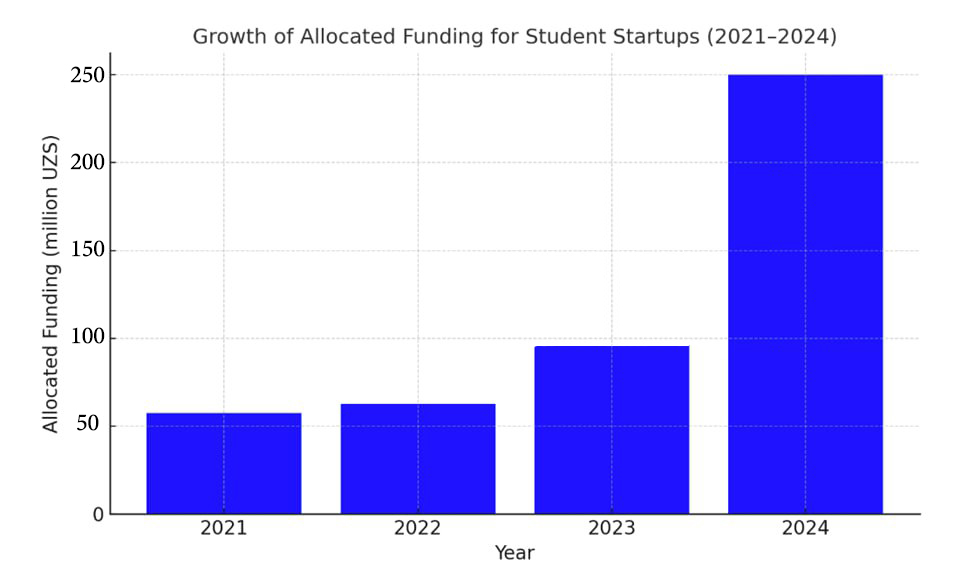
Start-up Project Contest 2024
The following startup projects, implemented in collaboration with local communities, won the startup competition and were awarded financial support. The total amount of funding allocated was 250,000,000 UZS.
1. Project: “Explanatory Dictionary of Loanwords of the Uzbek Language” Mobile Application
University project participant: Azimjonov Husniddin (Faculty of Uzbek language education, Uzbek language education in foreign language groups, 3rd year student of group 304-A)
Local community project participant: Sulaymonov Javohir (Resident of the Constitution mahalla, School No. 91); Karimova Guli (Resident of the Constitution mahalla, School No. 91)
Allocated funds: 25 000 000 UZS
2. Project: TSUULL Young Scientists web platform
University project participant: Karimov Behzod (Faculty of Uzbek language education, Uzbek language education in foreign language groups, 3rd year student of group 304-A)
Local community project participant: Berdiyeva Lola(Resident of the Constitution mahalla, School No. 91); Mirzakarimova Ma’mura(Resident of the Constitution mahalla, School No. 91)
Allocated funds: 15 000 000 UZS
3. Project: The "Uzbek Language for Foreigners" (B1) textbook
University project participant: Ermatova Durdona (PhD student, Comparative Linguistics and Translation Studies)
Local community project participant: Kamolova Marjona (Resident of the Belariq mahalla)
Allocated funds: 13 000 000 UZS
4. Project: Creation of Audiobook version and mobile application of the "Istanbul yabancilar icin turkce ders kitabi" textbook for inclusive turkish language education for visually impaired students
University project participant: Nasriddinova Iroda Faculty of Uzbek Filology, 3rd year student)
Local community project participant: Sharipova Ozoda (Resident of Belariq mahalla)
Allocated funds: 8 000 000 UZS
5. Project: "Creation of a Linguistic Database of Uzbek Slang"
University project participant: Nasriddinova Iroda Faculty of Uzbek Filology, 3rd year student)
Local community project participant: Abdullayeva Nigina, Nigmatova Sevinch, Jaffarova Sarvinoz (Residents of Belariq mahalla)
Allocated funds: 15 000 000 UZS
6. Project: Creation of "Audiobraille" device
University project participant: Karimova Guljahon ( Faculty of Philology and Teaching Languages, 3rd year student)
Local community project participant: Boboyorova Mohira, Xalilova Ulg’iloy (Residents of Shoxjahon mahalla)
Allocated funds: 10 000 000 UZS
7. Project: The Rediscovering Language startup focuses on promoting the use of authentic Uzbek vocabulary
University project participant: Tolliboyev Jamshid (Faculty of Philology and Teaching Languages, 3rd year student)
Local community project participant: Davlatov Xamid, Rustamov Abbos (Residents of Shoxjahon mahalla,School No. 87)
Allocated funds: 22 000 000 UZS
8. Project: TSUULL Audio Library
University project participant: Umrzoqov Abbos (Faculty of Philology and Teaching Languages, 4th year student)
Local community project participant: G’ulomova Aziza, Diyorova Farangiz (Residents of Shoxjahon mahalla,School No. 87)
Allocated funds: 15 000 000 UZS
9. Project: Creating the Ultimate Uzbek Loanwords Dictionary
University project participant: Azimjonov Husniddin Faculty of Uzbek language education, Uzbek language education in foreign language groups, 3rd year student of group 304-A
Local community project participant: Rahimova Gulzoda, Zakirova Saodat (Residents of Konstitutsiya mahalla)
Allocated funds: 20 000 000 UZS
10. Project: Designing font of the Uzbek alphabet for digital platforms
University project participant: Abdusalomova Mahmudaxon, Habibjonova Dilnoza (Faculty of Literary Sources and Text Studies, 3rd year student)
Local community project participant: Pardayeva Maxliyo, Damirova Muslima (Residents of Shoxjahon mahalla)
Allocated funds: 20 000 000 UZS
11. Project: Publishing the 'Rules of Aruz and Fundamentals of Classical Poetics'
University project participant: Khoshimova Osiyo (Faculty of Philology and Teaching Languages, 4th year student)
Local community project participant: Suyunov Saydali, Shodiyeva Mehroniso (Residents of Belariq mahalla)
Allocated funds: 25 000 000 UZS
12. Project: The Empowering Young Scholars startup is a Telegram-based bot hub
University project participant: Qodirov Kamoliddin (Faculty of Social Humanities and Information Technologies, 3rd year student)
Local community project participant: Aripova Noila, Xalilova Fotima (Residents of Tepa mahalla)
Allocated funds: 25 000 000 UZS
13. Project: Creating a mobile application of the active homonym dictionary of the Uzbek language
University project participant: Xasanov Abdixalil Rashid o‘g‘li (Faculty of Uzbek language education, Uzbek language education in foreign language groups, 2nd year student)
Local community project participant: Muzropova Sora, Adilova Ra’no (Residents of Shaxjahon mahalla)
Award: 15 000 000 UZS
14. Project: Creating a program to automatically determine the order of sentences in the Uzbek language
University project participant: Nizomova Fotima (Faculty of social and humanitarian sciences and information technologies 2nd year student)
Local community project participant: Muzropova Sora, Adilova Ra’no (Residents of Kansitutsiya mahalla)
Award: 12 000 000 mln
15. Project: A mobile application for learning Adobe Photoshop for philologists
University project participant: Shakirova Sevara Toxirjon qizi (Faculty of Social and Humanities and Information Technologies, 3rd-year student of the publishing department)
Local community project participant: Shermurodova Shahzoda, Namozova Sevinch (Residents of Belariq mahalla)
Award: 10 000 000 mln
TSUULL actively organises training and programmes to improve access to essential services for all members of the local community. Through targeted initiatives—including free foreign language courses (English, Arabic, Turkish, Korean, and German), digital literacy training, sign language instruction, and psychological support programmes—the University ensures that vulnerable populations, such as youth from low-income families, socially disadvantaged women, older adults, and community members with disabilities, can access educational, social, and personal development opportunities. These programmes strengthen skills, foster inclusion, and facilitate access to higher education, employment, and social services, contributing directly to equitable access.These programs foster social inclusion, enhance employability, strengthen academic and personal development, and promote access to higher education. By empowering participants with practical skills, emotional resilience, and inclusive communication abilities, University contributes directly to the local and regional development of sustainable livelihoods. All these initiatives form a key part of the University’s broader SDG 1, creating tangible improvements in financial independence, educational opportunities, and social well-being.
Free Digital Literacy Courses for the Local Community
TSUULL implements a comprehensive programme of completely free digital literacy courses for members of the local community. The initiative aims to reduce digital inequality, expand access to online public and private services, and support sustainable income-generation opportunities, in alignment with SDG 1. By strengthening digital competencies among vulnerable population groups, the University contributes to long-term social inclusion and economic resilience.
The courses are tailored to the specific needs of three key target groups:
1. Socially Vulnerable Women
The programme prioritises divorced women, single mothers, unemployed women, and individuals who have experienced domestic violence, social marginalisation, or economic exclusion. The training focuses on the acquisition of practical and market-relevant digital skills, including online job search strategies, freelancing platforms, digital communication, and basic entrepreneurial competencies.
Outcomes:
Overall, the programme plays a critical role in empowering women, strengthening their economic autonomy, and enhancing their long-term social and financial resilience.
2. Youth from Low-Income Families
The courses support young people from socio-economically disadvantaged backgrounds by equipping them with essential digital skills required in the modern labour market. Participants develop competencies in online collaboration, digital tools for education and work, and remote employment opportunities.
Outcomes:
This initiative contributes to the development of professional skills and expands access to new career pathways, thereby reducing the risk of intergenerational poverty.
3. Older Adults (Senior Community Members)
For elderly participants, the focus of the courses is placed on developing practical everyday digital skills, including navigation of e-government services, digital communication, and the use of online and mobile payment systems.
Outcomes:
Free Psychological Support Services for the Local Community
University provides free, confidential psychological support services for members of the local community as part of its comprehensive social responsibility and inclusion agenda. The Psychology Services Centre is aimed at strengthening emotional resilience, improving mental well-being, and supporting the social and academic stability of vulnerable population groups, in alignment with Sustainable Development Goal 1 SDG 1 and SDG 3 (Good Health and Well-being).
The Centre offers individual counselling, group therapy sessions, mental health literacy workshops, and crisis support, with a particular focus on populations experiencing socio-economic stress, social isolation, and psychological vulnerability. The programme is structured around the needs of three key target groups:
1. Youth from Low-Income Families
oung people from economically disadvantaged backgrounds often face heightened levels of psychological stress, anxiety, and academic pressure. Among this group are adolescents who have experienced domestic violence and those with a history of conflict with the law. The Centre provides continuous psychological counselling, trauma-informed support, stress-management training, and personal development sessions designed to strengthen emotional resilience, rebuild self-esteem, and enhance academic motivation. In the long term, the University actively supports their educational reintegration and facilitates pathways towards access to higher education.
Outcomes:
These results indicate that psychological support significantly contributes to both academic success and overall personal development among vulnerable youth.
2. Psychological Support for Vulnerable Female Community Members
The Centre provides targeted psychological support for women experiencing social, economic, and domestic challenges, including unemployed women, single mothers, and women affected by family instability. Among this group are women who have experienced or continue to experience domestic violence, as well as women who have encountered social misunderstanding, stigma, and exclusion. These challenges are often reinforced by deeply rooted cultural and societal attitudes that remain a significant barrier to their psychological well-being and social reintegration.
The programme aims to rebuild self-confidence, improve communication skills, promote emotional healing, and strengthen women’s resilience and empowerment, enabling them to regain agency and participate more actively in social, educational, and economic life.
Outcomes:
Overall, the programme strengthens women’s psychological stability, contributes to greater self-reliance, and supports their active social and economic participation.
3. Older Adults (Senior Community Members)
For elderly participants, the programme focuses on reducing social isolation, improving emotional well-being, and supporting effective communication with family members and public institutions. Special attention is given to anxiety management, adaptation to social change, and coping with age-related life transitions.
Outcomes:
These outcomes reflect increased confidence, improved interpersonal engagement, and stronger psychological resilience among older adults.
Sign Language Courses for Inclusive Community Engagement
TSUULL offers completely free sign language courses designed to promote social inclusion and communication accessibility for vulnerable groups within the local community. The programme primarily targets families with members who have disabilities, including hearing impairments, as well as individuals who interact professionally or personally with people with special needs.
In addition, these courses actively engage local and international students from low-income families, fostering cross-cultural learning and mutual support while promoting inclusive education and community engagement.
Participants acquire practical skills in sign language communication, enhancing their ability to support family members, neighbours, and community members with disabilities. This, in turn, improves social interaction, confidence, and access to educational, social, and professional opportunities.
Programme Outcomes and Impact:
Through these courses, TSUULL contributes directly to SDG 1, SDG 4, and SDG 10, by empowering vulnerable populations and promoting equitable access to education and social participation.
Free Language Courses for Youth from Low-Income Families
University offers completely free language courses in English, Arabic, Turkish, Korean, and German, targeting youth from economically disadvantaged backgrounds who aspire to pursue higher education and expand their personal and professional opportunities.
These courses are designed to equip participants with practical language skills, cultural literacy, and academic readiness, fostering both confidence and motivation for further studies. By providing access to high-quality instruction, interactive workshops, and online learning resources, TSUULL ensures that financial constraints do not hinder ambitious students from achieving their educational goals.
Programme Impact and Outcomes:
Through these initiatives, TSUULL empowers youth from low-income families, promotes equitable access to education, and contributes to SDG 1 and SDG 4 , by removing financial barriers and creating opportunities for lifelong learning.
Through its comprehensive suite of educational and social support programmes, We actively empower vulnerable members of the local community, including youth from low-income families, socially disadvantaged women, older adults, and individuals with disabilities. By providing access to free digital literacy courses, psychological support, sign language training, and foreign language instruction, the University fosters inclusive participation, enhances employability, and strengthens pathways to higher education.
Leadership Engagement in Poverty Reduction Policy-Making
The Rector of Alisher Navo’i Tashkent State University of Uzbek Language and Literature Sirojiddinov Shuhrat Samariddinovich serves as a deputy in the national parliament, positioning the University at the core of legislative and policy-making processes related to social development and poverty reduction at the national level. In this capacity, the Rector maintains continuous, direct engagement with local communities, regularly visiting mahallas to meet with residents, families in vulnerable situations, low-income youth, and socially disadvantaged groups. These visits provide first-hand insight into the real socio-economic challenges faced by communities, including unemployment, housing issues, limited access to education, and barriers to essential services.
In addition to his parliamentary role, the Rector is also a member of the Permanent Commission on Industry, Transport, Construction, Public Utilities, and Community Services of Tashkent City. Through his active participation in the Tashkent City Standing Commission on Industry, Transport, Construction, Utilities and Public Services, the Rector contributes to the conceptualization and support of a number of socially oriented urban initiatives. These include advocating for improved public transport connectivity between peripheral districts and city education hubs, expanding access to essential municipal services in underserved mahallas, and promoting inclusive urban planning approaches that prioritize low-income households at the regional level.
By integrating the needs expressed at the community level into legislative and municipal policy discussions, the Rector ensures that grassroots realities inform urban development strategies, social protection mechanisms, and inclusive public service policies. This unique combination of academic leadership and political responsibility enables TSUULL to exert a tangible influence on policies that address poverty in all its dimensions, strengthen social inclusion, and expand access to essential services, in line with SDG 1
Institutional Contribution to National and Global Scholarship Policy
The Vice-Rector for Research, Innovation and International Cooperation, Nozliya Normurodova, serves as a permanent member of the Grant Awarding Commission of the El-yurt umidi Foundation. Through her active participation in the evaluation and selection of grant recipients, she significantly contributes to shaping national priorities in human capital development, academic mobility, and international academic integration. Her role ensures that scientific potential, social inclusion, and long-term development needs — including support for candidates from underprivileged backgrounds — are consistently reflected in decision-making processes at the national level. This institutional engagement strengthens the link between higher education, social equity, and national strategies aimed at reducing poverty through access to knowledge, advanced training, and global opportunities.
In addition, Nozliya Normurodova serves as a HERE expert, actively contributing to the development, monitoring, and implementation of higher education reforms at the national and global levels. Through her engagement in policy dialogue, institutional capacity-building initiatives, and strategic consultations, she supports the alignment of Uzbekistan’s higher education system with global standards and inclusive development frameworks. Her expertise contributes to strengthening quality assurance mechanisms, expanding equitable access to education, and embedding social inclusion principles into higher education policy, thereby reinforcing the sector’s role in long-term poverty reduction and sustainable national development.
Participation in National Policy-Making Bodies
Alisher Navo’i Tashkent State University of Uzbek Language and Literature actively contributes to national policy development through the direct involvement of its academic staff in government advisory structures. Five professors of the University (Normurodova Nozliya, Nurboy Jabborov, Saodat Muhamedova, Hamidulla Dadaboyev and Xolmanova Zulxumor are official members of the Scientific and Technical Council under the Ministry of Higher Education, Science, and Innovation of the Republic of Uzbekistan.
Through this platform, TSUULL experts take part in the development, review, and evaluation of national strategies, educational reforms, and innovation-driven initiatives that directly influence access to education, social mobility, and poverty reduction both at the national and regional levels. Their participation ensures that academic research, evidence-based approaches, and inclusive development principles are integrated into state-level decision-making processes. In this way, the University does not only implement social programmes at the local level, but also contributes to shaping sustainable, long-term policies aimed at reducing inequality and strengthening human capital across the country.
Community-Based Policy Engagement through Local Mahalla Partnerships
University actively contributes to local policy-making to combat poverty in neighbouring communities through its Community Support HUB. This HUB serves as a platform for collaboration between the University and local mahallas, including Tepa, Belariq, and Konstitutsiya and Shoxjahon ensuring coordinated efforts to support vulnerable populations.
Through the HUB, TSUULL, together with the University Council , Admission Office, University Youth Parliament, Student Union, Board of Trustees and Gender Equity Committee, identifies low-income families and youth from vulnerable backgrounds and provides targeted support via existing programs. These include priority access to free preparatory and language courses, digital literacy and financial management training, sign language courses, psychological counseling, and guidance for schoolchildren and prospective students to participate in programs for families with limited resources.
Additionally, the HUB facilitates skill-building initiatives aimed at improving employability and promoting self-employment among youth and women, thus enhancing economic opportunities for community members. By institutionalizing this coordinated approach, TSUULL directly influences local policy development and contributes to sustainable poverty reduction in its neighbouring communities.
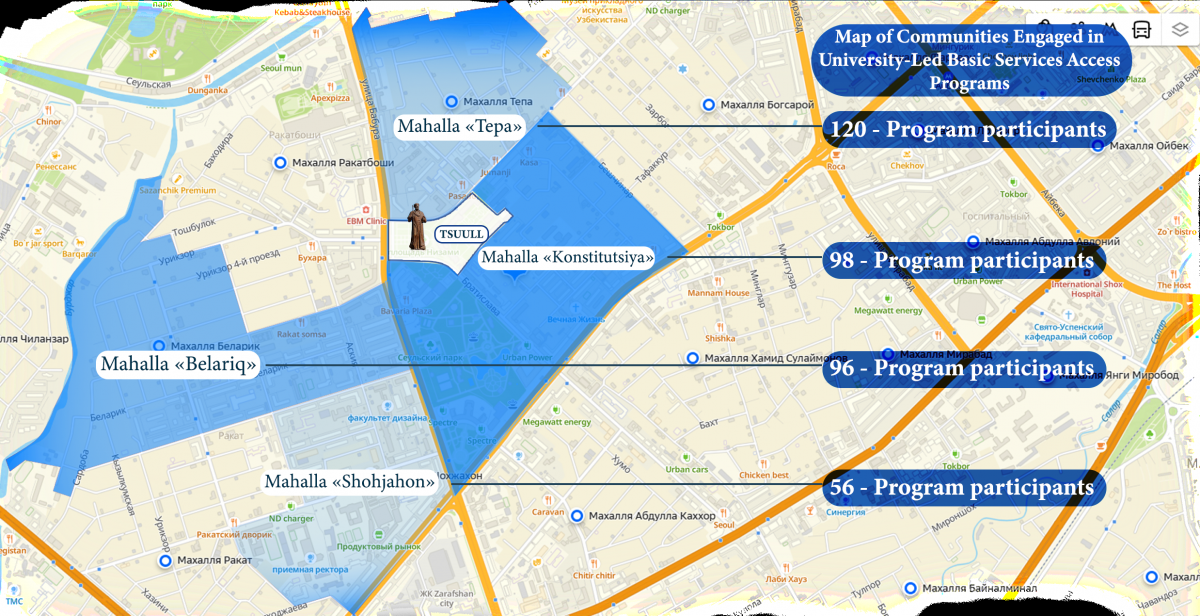
Leadership Engagement in Poverty Reduction Policy-Making
Rector Shuhrat Sirojiddinov serves as a deputy in the national parliament, placing TSUULL at the centre of policy-making on social development and poverty reduction. He regularly visits mahallas to meet low-income families, youth, and vulnerable groups, gaining first-hand insight into unemployment, housing problems, limited educational access, and barriers to services.
As a member of the Tashkent City Standing Commission on Industry, Transport, Construction and Public Services, he contributes to socially oriented urban initiatives, including improving transport links to education hubs, expanding municipal services in underserved districts, and promoting inclusive urban planning. By integrating community needs into legislative and municipal discussions, the Rector ensures that grassroots realities shape social protection and public service policies in line with SDG 1.
Institutional Contribution to National and Global Scholarship Policy
Vice-Rector Nozliya Normurodova, as a permanent member of the El-yurt umidi Grant Commission, helps shape national priorities in human capital development and academic mobility, with attention to candidates from disadvantaged backgrounds. As a HERE expert, she supports higher education reforms, quality assurance, and the expansion of equitable access, reinforcing the sector’s role in long-term poverty reduction.
Participation in National Policy-Making Bodies
Many TSUULL professors serve on the Scientific and Technical Council under the Ministry of Higher Education, Science and Innovation, contributing to national strategies and reforms that influence access to education, innovation, and social mobility.
Community-Based Policy Engagement
Through its Community Support HUB, TSUULL cooperates with nearby mahallas to identify low-income families and provide free preparatory courses, digital and financial literacy training, sign language courses, and psychological support. The HUB also implements skill-building programmes that promote employability and self-employment among youth and women, directly supporting local poverty reduction.

An important reminder: today is the International Day of Charity [established by the United Nations in 2012], a time for everyone to think about the ways we can help those less fortunate than us.

As part of its ongoing commitment to ensuring equal access to education and supporting student well-being, our University has introduced a permanent initiative to provide free daily lunches to students from low-income families.

At the same time, the Fund receives a significant part of donations in the form of food products and other consumer goods from university staff and partners from all regions of Uzbekistan.
