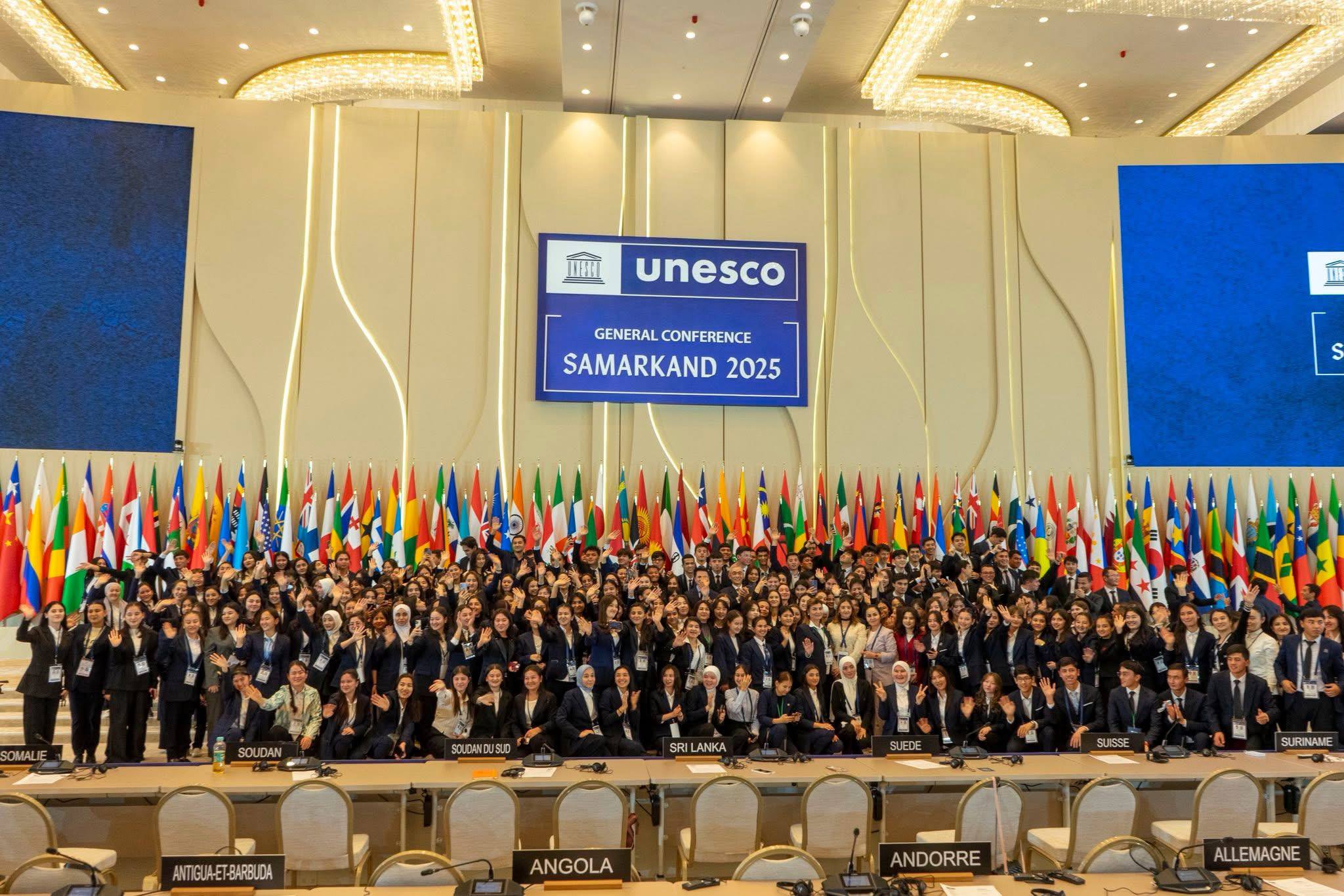
Governance Through Representation: TSUULL’s Council and Board of Trustees in Action

Alisher Navo’i Tashkent State University of Uzbek Language and Literature upholds a transparent, participatory, and accountable system of strategic governance through its two highest governing bodies: the University Council and the Board of Trustees. Together, they form an integrated governance model that ensures elected representation of the university community while enabling meaningful participation of external stakeholders, including local government, civil society, employers, and community organizations. This structure guarantees that major decisions are shaped collectively, through shared leadership, rigorous oversight, and inclusive consultation, reflecting TSUULL’s commitment to democratic governance, institutional integrity, and long-term sustainable development.

Diploma in Arts

Duration

Founded 2016

Next Start Date

Opens at 9 a.m.

Closing Date

Closes at 6 p.m.

Campuses^
Working hours
Indicative 2024 Annual Fee
?

interdep@navoiyuni.uz

Additional Information

Yakkasaray District St. Yusuf Xos Hojib, 103

Inclusive External Governance: Role of the TSUULL Board of Trustees

The Board of Trustees at TSUULL serves as the university’s primary public governance body, ensuring that local stakeholders—including local government representatives, civil society organizations, employers, community groups, and socially oriented agencies—have a formal and meaningful role in institutional decision-making. Established under national legislation and presidential decrees, the Board brings together a diverse membership representing municipal authorities, ministries, non-governmental organizations, media, philanthropic partners, and organizations working with vulnerable and displaced populations.

Through scheduled meetings, structured consultations, and active participation in strategic planning, the Board provides oversight and contributes directly to decisions on educational quality, infrastructure development, resource allocation, workforce needs, and community-engagement priorities. The Board also reviews and advises on major institutional plans, including strategic development programs, business plans, admission parameters, and KPIs for university leadership and academic staff. Key decisions require a qualified majority, ensuring that external voices carry genuine weight in shaping the university’s direction.

By integrating community stakeholders into high-level governance, TSUULL demonstrates a strong commitment to transparency, social responsibility, and public accountability. This inclusive model ensures that the university operates not only as an academic institution but as a proactive civic partner—responsive to local needs, aligned with societal priorities, and engaged in advancing sustainable development across the region.


Decisions on the following matters are made by the Board with the approval of at least three-fourths (75%) of the members present at the meeting:

  • •   Approval of the long-term and medium-term strategic development program of the higher education institution;
  • •   Approval of the medium-term business plan and the parameters of income and expenditure;
  • •   Setting the parameters for admission to fee-based education programs for various disciplines, specialties, and qualifications;
  • •   Independently determining the procedures for utilizing the extra-budgetary development fund of the higher education institution, including the allocation proportions for expenditures.

Minutes are recorded for each Board meeting. The minutes are formalized no later than five days after the meeting.

    ad-promo-destination-college

    Board of Trustees — Public Governance and Community Participation
    The Board of Trustees serves as TSUULL’s primary public governance body, ensuring that the university remains accountable to society and aligned with national and regional priorities. Established under state legislation and presidential decrees, the Board includes representatives from Parliament, ministries, local government, civil society, employers, media, and organizations supporting youth and vulnerable groups. This broad composition guarantees that the voices of community stakeholders are fully incorporated into institutional decision-making.
    The Board plays a key role in strategic planning, infrastructure development, quality enhancement, and resource management. It reviews and provides recommendations on the university’s strategic programs, business plans, admission parameters, and leadership performance indicators (KPIs). Major decisions—including the approval of long-term strategies and financial frameworks—require a qualified majority, ensuring that external members have real influence and oversight. Through regular meetings and structured consultations, the Board provides a formal mechanism for local stakeholders to participate in the governance of TSUULL. This model strengthens transparency, reinforces public trust, and supports the university’s mission to contribute to sustainable, community-engaged development.

    Female student on campus outdoors with a black top

    BOARD OF TRUSTEES AND YOUTH PARLIAMENT

    The Board of Trustees of the higher education institution (hereinafter referred to as "the Board") is established in accordance with the Law of the Republic of Uzbekistan "On Education" and Presidential Decree No. PF–5847 of October 8, 2019, "On Approval of the Concept for the Development of the Higher Education System of the Republic of Uzbekistan until 2030." It serves as a public governance body within the university. The Board is a strategic entity dedicated to ensuring the effective governance of the higher education institution.
    The Board may include deputies, representatives from ministries and agencies, representatives of non-governmental organizations, members of the academic community and media, sponsors, as well as workforce employers and private individuals.
    The main objectives of the Board of Trustees include enhancing the quality of education, strengthening the material and technical base of the higher education institution, and improving the educational process.
    The Board of Trustees discusses and makes recommendations to the University Council on the following areas:
    Strengthening the material, technical, and educational-methodological base of higher education institutions.
    Improving social and household infrastructure, optimizing the use of buildings, and beautifying campus grounds.
    Enhancing the quality and effectiveness of the educational process. Defining strategic directions for training specialists and scientific-technical personnel based on future labor market needs. Improving working conditions for academic staff, organizing opportunities for their professional development and retraining.
    Ensuring the sustainable development of higher education institutions by attracting sponsorships, technical assistance (grants), and other off-budget funds.
    Additionally, the Board of Trustees participates in discussions on institutional work plans, event schedules, programs, and other documents, providing suggestions for their improvement. It also recommends parameters for fee-based admissions in various educational fields and specialties, assesses the performance of the institution’s leadership and staff, and offers advice to the University Council on Key Performance Indicators (KPIs) to evaluate the effectiveness of university personnel.
    The responsibilities of the Youth Parliament include:
    • Developing proposals to improve legal provisions protecting youth rights and interests.
    • Discussing pressing issues in lawmaking and law enforcement with youth participation and preparing relevant proposals.
    • Assisting the Legislative Chamber with oversight and analytical activities.
    • Increasing youth awareness of parliamentary activities and all stages of lawmaking.
    • Organizing discussions on important issues with youth and drafting proposals for addressing them.
    • Conducting practical discussions on legislative matters, legislative techniques, and rules for legal documentation.
    • Working with youth organizations to enhance political knowledge and patriotic spirit among young people.
    • Supporting the development of international cooperation in youth policy.
    In accordance with its responsibilities, the Youth Parliament performs the following functions:
    • Identifies legal gaps in youth legislation and develops proposals for its improvement.
    • Participates in the oversight and analytical activities of the Legislative Chamber upon request.
    • Holds discussions on issues of concern to young people with their involvement.
    • Organizes professional development courses and events to increase legal literacy among Youth Parliament members.
    • Holds various events to foster patriotism and promote initiatives among youth.
    • Conducts extensive outreach to increase youth awareness of parliamentary activity and lawmaking processes.
    • Communicates the content and essence of laws and the activities of the Legislative Chamber to youth through the media.
    • Establishes partnerships with Youth Parliaments abroad to advance international cooperation in youth policy, with the approval of the Youth Issues Commission.
    • Assists the Legislative Chamber and other relevant organizations in protecting the rights and interests of youth studying or working abroad.
    The Youth Parliament has the right to:
    • Request and obtain documents, materials, and information from government bodies, educational and scientific institutions, and other organizations necessary for its duties, with the consent of the Youth Issues Commission.
    • Participate in sessions of the Legislative Chamber or its Council with the Speaker’s or Deputy Speaker’s consent, as well as committee and commission meetings with respective chairs' consent.
    • Use libraries and electronic databases of the Legislative Chamber, educational institutions, and information centers.
    • Form working groups of scholars and specialists to prepare proposals on draft laws and other responsibilities within the scope of the Youth Parliament.
    The Youth Issues Commission assists the Youth Parliament by:
    • Coordinating the formation process of the Youth Parliament.
    • Reviewing candidates’ compliance with the requirements for Youth Parliament membership as outlined in this Regulation.
    • Confirming candidates nominated by political parties for Youth Parliament membership.
    • Reviewing the early termination of a Youth Parliament member’s authority, as per the grounds specified in this Regulation.
    • Notifying relevant political parties within ten days to recommend new candidates for any vacant positions.
    • Approving and issuing the Youth Parliament’s logo, member badges, and identification certificates.
    The process of forming the Youth Parliament is announced by the Youth Issues Commission in the media at least two months before the current term expires. The Youth Issues Commission may involve the Youth Affairs Agency of Uzbekistan, the Youth Union of Uzbekistan, and other state and non-state organizations responsible for youth policy.
    Candidate Requirements for Youth Parliament Membership
    • Candidates are recommended by national political parties and should be proactive, highly ethical, and knowledgeable in state and public affairs, demonstrating leadership abilities.
    • Candidates must be between 18 and 30 years old, citizens of Uzbekistan, and able to inspire their peers.
    • Each political party nominates candidates from electoral districts of deputies elected to the Legislative Chamber.
    The following individuals are ineligible for nomination:
    • Members of the Legislative Chamber or Senate.
    • Citizens with unresolved convictions for serious crimes.
    • Citizens who have not resided in Uzbekistan for the last five years.
    • Active military personnel and employees of certain law enforcement and security agencies.
    • Professional employees of religious organizations and associations.
    The Youth Parliament conducts at least two open and transparent sessions annually. The organization and conduct of meetings are specified in the Youth Parliament’s Regulations.
    The Youth Parliament:
    • Makes decisions on discussed issues and its internal activities with a majority vote.
    • Elects a Chair and Deputy Chairs for the term with a majority vote, with a limit of two consecutive terms for the Chair position.
    Responsibilities of the Youth Parliament Chair
    The Chair of the Youth Parliament: (Additional details on the Chair’s responsibilities can be added here, if available).

    Elected Representation on the University’s Highest Governing Body

    University Council — Supreme Decision-Making Authority

    The University Council is the highest governing body of TSUULL, entrusted with ultimate responsibility for academic, financial, and strategic decision-making. In accordance with principles of democratic governance and institutional transparency, TSUULL ensures that the Council includes elected representatives from all key constituencies of the university community.

    Elected Members Include:

    This system of internal elections guarantees that students, faculty, and staff have a formal and influential role in shaping university policies, contributing to budget decisions, and participating in long-term institutional planning.

    Shared Governance Through Standing Committees

    The University Council carries out its responsibilities through a structured network of standing committees responsible for:

    Each committee includes elected representatives from the academic community and student body, ensuring that decision-making is collaborative, evidence-based, and reflective of diverse perspectives across the institution. This integrated model strengthens accountability, enhances transparency, and supports TSUULL’s commitment to inclusive governance at every level.


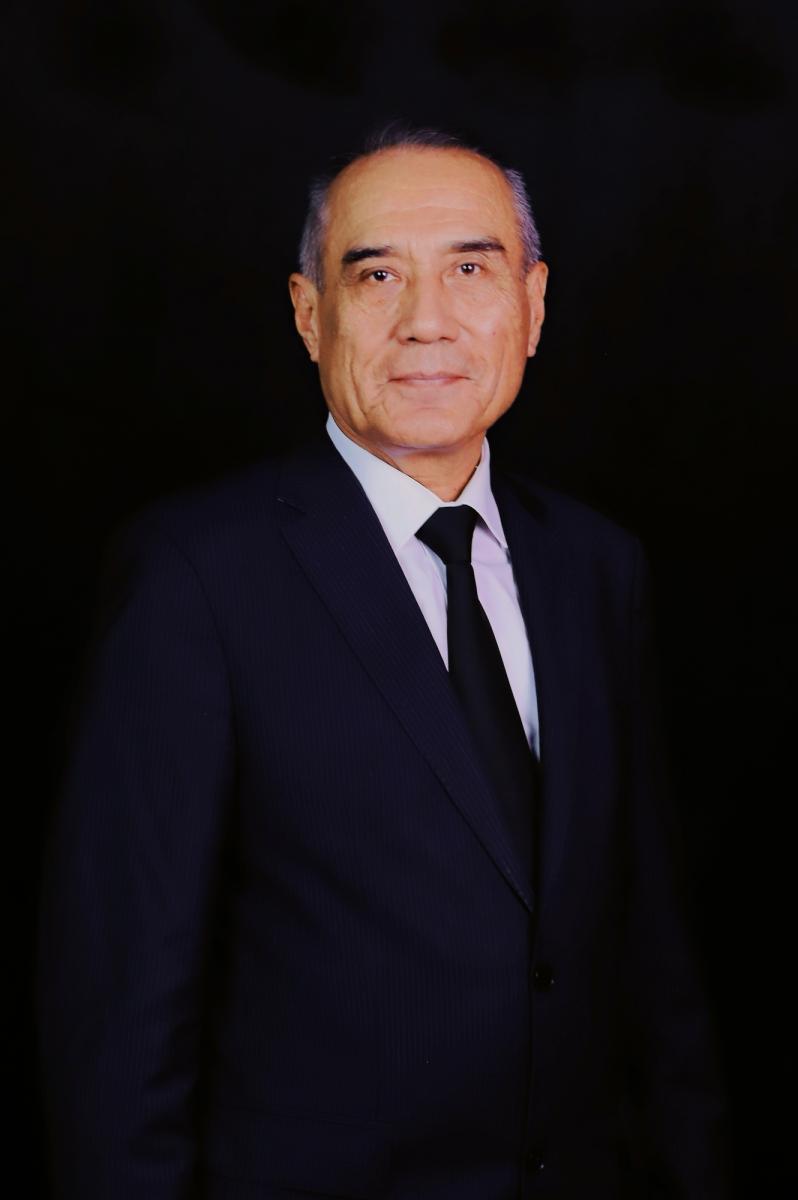
    Shuhrat Sirojiddinov
    Rector
    Read CV


    Hamidulla Dadaboyev
    Senior Advisor
    Read CV


    Orzu Davronov
    Vice-Rector
    Read CV


    Gulnoza Jo‘rayeva
    Vice-Rector
    Read CV


    Nozliya Normurodova
    Vice-Rector
    Read CV


    Ilyos Ismoilov
    Secretary of the Council
    Read CV


     Ashirboyev Samixon
    Read CV

    Jabborov Nurboy
    Read CV

     Xolmanova Zulxumor
    Read CV

     Saodat Muhamedova
    Read CV

    Odinakhon Jamoldinova
    Read CV

    Jura Khudoyberdiyev
    Read CV

    Karimov Bahodir
    Read CV

     Elov Botir
     Read CV

    Sulton Normamatov
    Read CV

    Asadov Mahmadiyor
    Read CV

    Ahror Qodirov
    Read CV

    Kamolakhon Abdurazakova
    Read CV

    Abdiyev Akmal
    Read CV

    Nazarov Vahobjon
    Read CV

    Obidjonova Ma’suma
    Read CV

     Azizova Ra’no
    Read CV

    Nasridinov Abdug'ani
    Read CV

    Ozoda Gulyamova
    Read CV

    Sanjar Mavlyanov
    Read CV

    Nurbek Nuradullayev
    Read CV

    Aminov Jonibek
    Read CV​​​​​​

    Zamira Jumayeva
    Read CV

    Nurzod Norqulov
    Read CV

    Sevinch Eshbayeva
    Read CV

    Shared Governance Through Elected Representation and External Oversight

    TSUULL ensures elected representation on its highest governing body, the University Council. Academic staff, researchers, administrative staff , and students elect their own representatives through formal internal voting procedures and the Student Government/Youth Parliament structures. Alongside these elected members, the Council includes official members such as the Rector, Vice-Rectors,  Heads of Departments, and senior academic leaders. This structure ensures that diverse internal stakeholders participate in decision-making at the highest level.
    TSUULL additionally demonstrates transparency by publicly displaying on its website the full list of Council members, including official photographs, CVs, and clearly defined governance roles (elected or ex-officio). This allows the university community and external stakeholders to understand who represents them and how decisions are made.
    Through this mixed representation model, TSUULL guarantees democratic, inclusive governance and ensures that students, faculty, staff, and the wider community have a meaningful voice in shaping institutional direction.
     

    University ensures elected representation on its highest governing body, the University Council. Academic staff, researchers, administrative/support staff, and students each elect their own representatives through formal internal voting procedures at faculty, departmental, and unit level. Undergraduate and postgraduate student representatives are elected through the Student Union and Youth Parliament structures, following approved student election regulations.

    Alongside these elected members, the Council includes official members such as the Rector, Vice-Rectors,  Heads of Departments and senior academic leaders. This mixed composition guarantees that core strategic decisions on academic policy, quality assurance, finance, and institutional development are taken with direct input from all key constituencies of the university community.

    TSUULL additionally demonstrates transparency by publicly displaying on its website the full list of Council members, including official photographs, CVs and clearly defined governance roles (elected or ex-officio). This enables students, staff, and external stakeholders to understand who represents them and how decisions are made. Through this model, TSUULL guarantees democratic, inclusive governance and ensures that the university community has a meaningful voice in shaping institutional direction.

    • •  University governance webpage: University Council 
    • •  Internal regulations on elections to the University Council (staff and student representatives) 
    • •  Student Union and Youth Parliament statutes and election procedures 
    • •  Sample minutes/agenda of University Council meetings indicating participation of elected members

    The Board of Trustees at TSUULL serves as the primary public governance body, ensuring that local stakeholders have a formal and meaningful role in university decision-making. Established under the Law “On Education” and Presidential Decree PF-5847, the Board includes representatives of Parliament and local government, ministries and agencies, civil society organizations, employers, media, philanthropic partners and other community stakeholders, including groups working with youth, vulnerable and displaced populations.  The Board of Trustees participates in the development and review of the university’s strategic plans, business plans, admission parameters, quality and infrastructure priorities, and performance evaluation frameworks (KPIs) for leadership and academic staff. Key decisions on strategic development programmes, financial parameters, and extra-budgetary funds require a qualified majority, ensuring that external voices carry genuine weight.

    Through regular meetings, consultation processes, and joint working groups, the Board provides a structured mechanism for local stakeholders to contribute to TSUULL’s direction and community-engagement agenda. In this way, TSUULL operates not only as an academic institution, but also as a civic partner that is accountable to its local community and aligned with regional and national development priorities.

    Positional Guidelines for Academic Leadership and Faculty

    POSITIONAL GUIDELINES FOR RECTOR AND VICE-RECTORS
    POSITIONAL GUIDELINES FOR DEANS
    POSITIONAL GUIDELINES FOR HEAD OF DEPARTMENTS
    POSITIONAL GUIDELINES FOR PROFESSORS


    Council Report: Strategic Updates

    January Council Report: New Year Initiatives and Strategic Goals
    February Council Report: Mid-Winter Updates and Key Achievements
    March Council Report: Spring Developments and Project Milestones
    April Council Report: Progress Check and Upcoming Initiatives
    May Council Report: Key Decisions and Growth Highlights
    June Council Report: Mid-Year Review and Future Planning
    July Council Report: Summer Updates and Community Engagement
    August Council Report: Strategic Insights and Project Advancements
    September Council Report: Fall Preparations and Major Achievements
    October Council Report: New Initiatives and Policy Updates
    November Council Report: Year-End Planning and Milestone Review
    December Council Report: Annual Summary and Future Vision

    TSUULL upholds a transparent and democratic process for electing representatives to its highest governing body, the University Council. Academic representatives are elected directly by faculty members through an internal ballot administered at the departmental and faculty levels. Researchers and teaching assistants elect their own delegates through peer voting coordinated by academic units. Administrative and support staff participate in elections through clearly defined internal voting procedures that ensure equal opportunity and representation across service departments. Student representatives—both undergraduate and postgraduate—are elected via the Student Union and the Youth Parliament, following formal election regulations that guarantee broad student participation. All candidates must meet established eligibility criteria, including ethical conduct, academic or professional standing, and compliance with university regulations. Representatives serve fixed-term mandates, which prevents the consolidation of influence and promotes renewal of ideas. Election announcements, candidate lists, and voting outcomes are publicly communicated to ensure transparency. TSUULL also maintains a Code of Conduct for elected representatives, defining principles of ethical behavior, conflict-of-interest management, and accountability in decision-making. This system directly demonstrates that TSUULL has genuine, elected representation on its highest governing body.

    The University Council operates through a structured system of standing committees that ensure collective, expert-driven, and participatory governance across all major institutional domains. The Academic Affairs Committee oversees curriculum development, academic standards, and program quality. The Quality Assurance Committee monitors compliance with national and institutional standards, accreditation requirements, and continuous improvement processes. The Research and Innovation Committee develops policies for research development, supervises postgraduate studies, and advances innovation priorities. The Student Welfare and Experience Committee addresses issues related to student life, wellbeing, inclusiveness, support services, and campus environment. The Finance and Resource Allocation Committee provides oversight of budget planning, financial sustainability, and the transparent use of institutional resources. Each committee includes elected faculty and student representatives alongside senior administrators, ensuring that decisions incorporate diverse perspectives. Committees report formally to the University Council through recorded minutes, policy recommendations, and periodic review presentations, creating a robust multi-level governance structure that aligns institutional planning with stakeholder needs.

    TSUULL is committed to the highest standards of transparency, public accountability, and ethical governance. The University Council follows a structured annual schedule of meetings, and summaries of key decisions are documented and made publicly accessible in accordance with institutional policies. The university publishes the complete list of Council members—including official photographs, CVs, and clearly defined governance roles—to ensure that students, staff, and external stakeholders understand who represents them and how decisions are made. Annual governance reports provide updates on strategic priorities, financial performance, academic developments, and institutional progress. TSUULL maintains a strict conflict-of-interest policy and an ethics framework that guide all Council members in their responsibilities. Open communication channels, such as feedback portals, dedicated governance contacts, and opportunities for public comment, allow students and staff to raise concerns, submit proposals, and participate in governance processes. These measures reinforce TSUULL’s commitment to transparent, accountable leadership aligned with the principles of SDG16.

    TSUULL ensures active engagement with students and the wider university community through a comprehensive set of participation mechanisms. The elected Student Government and the Youth Parliament play a central role in representing student interests and contributing to governance discussions at both committee and Council levels. TSUULL regularly organizes open forums, public discussions, and town hall meetings where students, faculty, and staff can express views on academic programs, campus life, and institutional priorities. Surveys and feedback instruments are systematically used to gather insights that inform policy decisions, strategic planning, and quality improvement initiatives. Community stakeholders—including alumni, local residents, and partner organizations—are invited to join consultative sessions, public events, and thematic discussions. This broad, participatory approach ensures that TSUULL remains responsive to the needs of its community and fosters an environment where all voices can influence the future of the institution.

    The Board of Trustees at TSUULL serves as the university’s primary public governance body, ensuring that local stakeholders—including local government representatives, civil society organizations, employers, community groups, and socially oriented agencies—have a formal and meaningful role in institutional decision-making. Established under national legislation and presidential decrees, the Board brings together a diverse membership representing Parliament, municipal authorities, ministries, non-governmental organizations, media, philanthropic partners, and organizations working with vulnerable and displaced populations. Through scheduled meetings, structured consultations, and active participation in strategic planning, the Board provides oversight and contributes directly to decisions on educational quality, infrastructure development, resource allocation, workforce needs, and community-engagement priorities. The Board also reviews and advises on major institutional plans, including strategic development programs, business plans, admission parameters, and KPIs for university leadership and academic staff. Key decisions require a qualified majority, ensuring that external voices carry genuine weight in shaping the university’s direction. By integrating community stakeholders into high-level governance, TSUULL demonstrates a strong commitment to transparency, social responsibility, and public accountability.

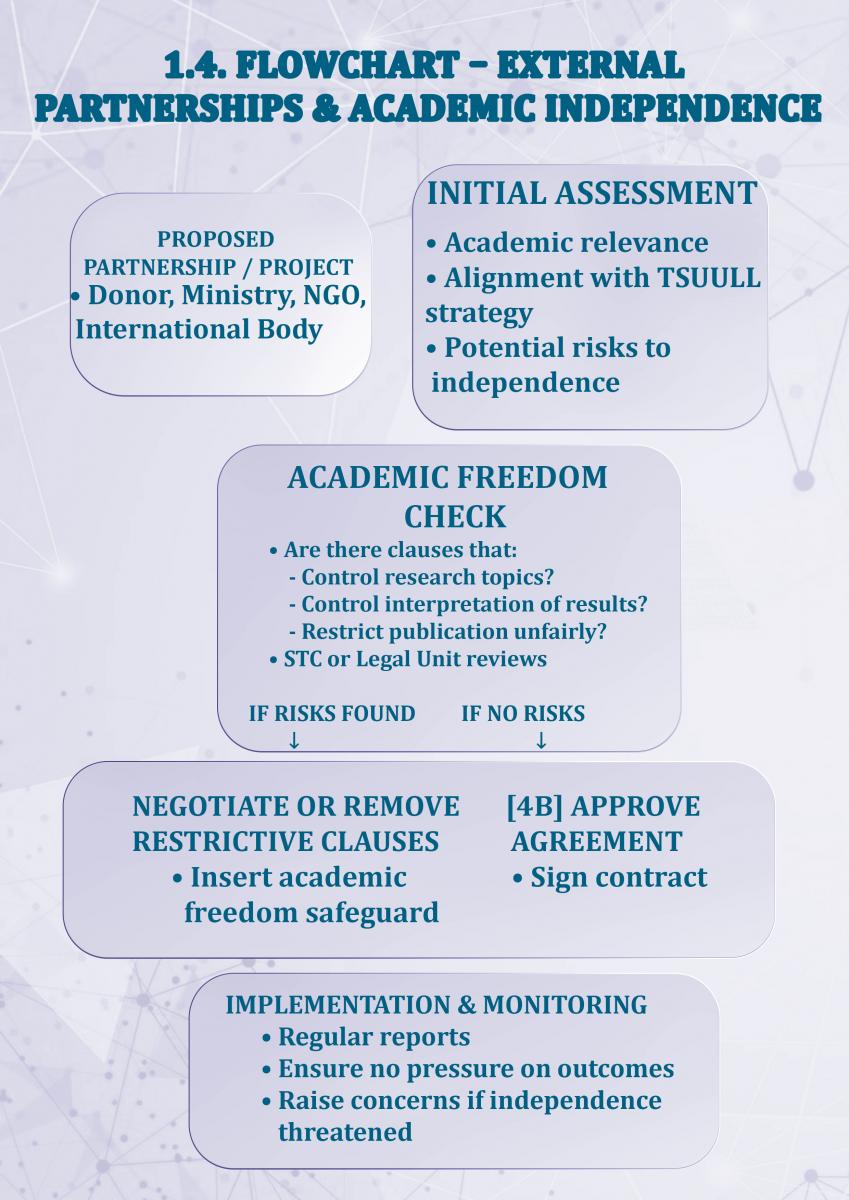
    TSUULL Academic Freedom and Scholarly Independence Policy

    Protecting Autonomy • Ensuring Integrity • Enabling Open Dialogue

    Alisher Navo’i Tashkent State University of Uzbek Language and Literature has formally adopted the Academic Freedom and Scholarly Independence Policy to guarantee a safe, autonomous, and intellectually open academic environment aligned with international standards. This policy establishes a comprehensive institutional framework that protects the rights of researchers, faculty, students, and invited experts to teach, publish, and engage in public debate without censorship, political influence, or retaliation. It positions TSUULL among the region’s leading institutions committed to institutional autonomy, free inquiry, and evidence-based dialogue, directly supporting SDG 4 (Quality Education) and SDG 16 (Peace, Justice & Strong Institutions).

    Why This Policy Matters
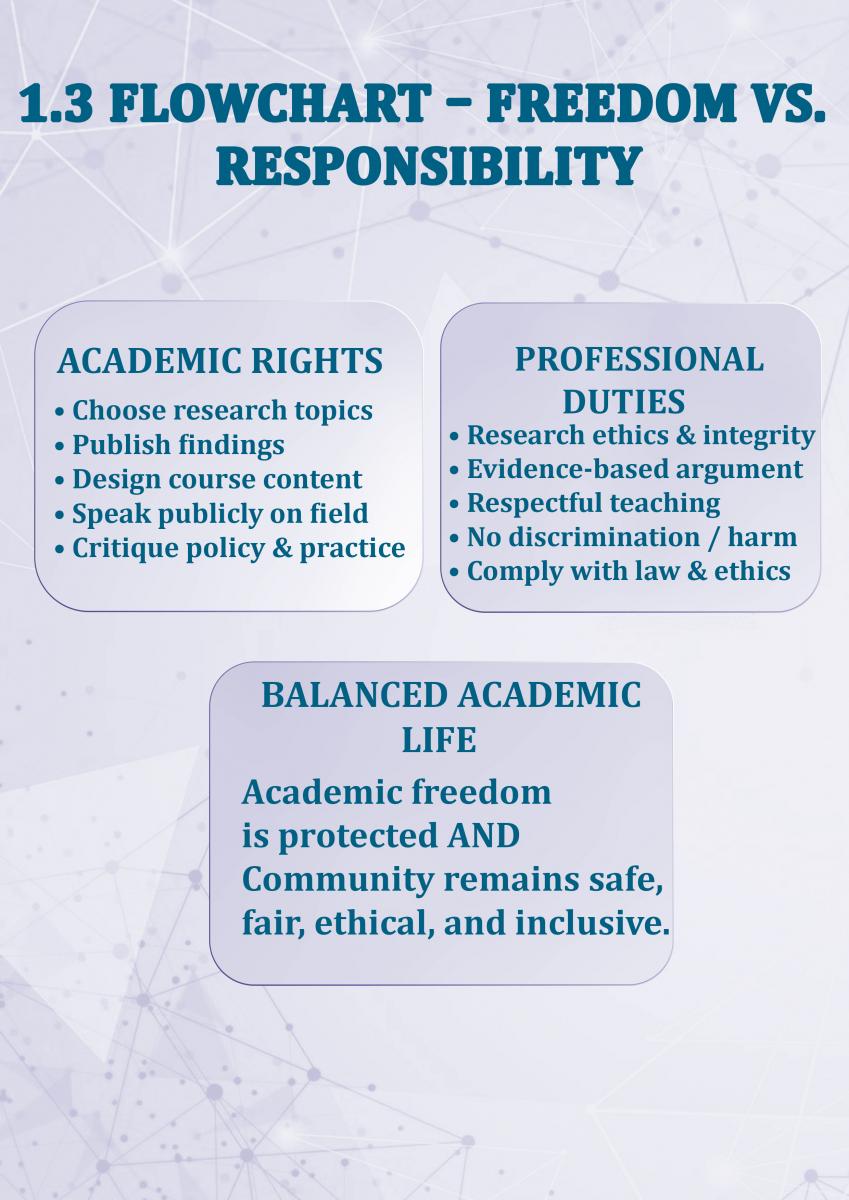
    This policy ensures that academic activity at TSUULL remains protected, ethical, and independent. It affirms that:

    • •  research and teaching are free from ideological, administrative, or political pressure;
    • •  scholarly expression—including challenging or sensitive topics—is safeguarded;
    • •  external partners, donors, and organizations cannot influence research outcomes;
    • •  staff, students, and public speakers are protected from retaliation;
    • •  academic integrity and transparency are upheld through clear governance mechanisms.
                    

    Key Guarantees and Safeguards
    The policy introduces robust protection mechanisms
    , including:

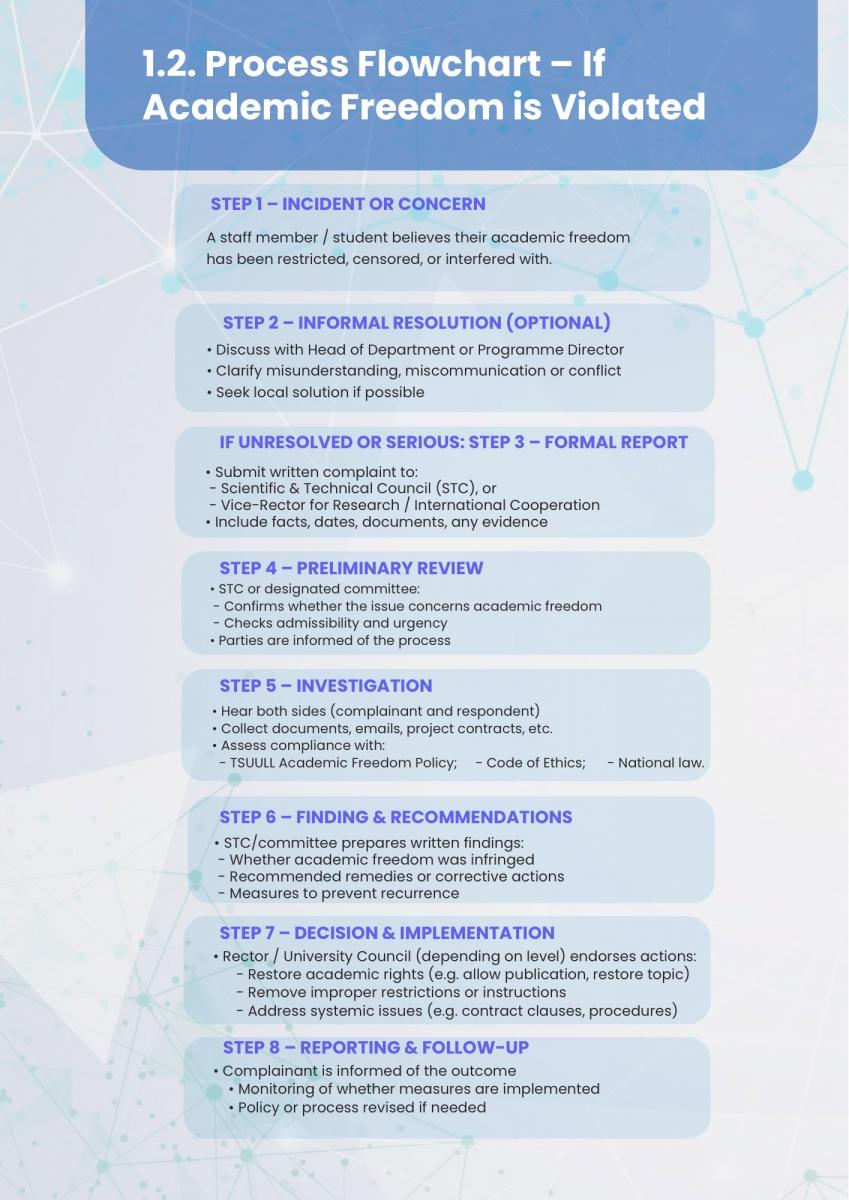
    • •  Zero-tolerance for retaliation against academic speech;
    • •  Confidential reporting channels for violations and academic pressure;
    • •  Independent oversight by the Scientific and Technical Council;
    • •  Mandatory autonomy clauses in all international and national partnership agreements;
    •  Alignment with global frameworks, including UNESCO standards, ESG, EUA, SPHERE and HERE principles.

    Institutional Commitment
    By adopting this policy, TSUULL reinforces its role as a neutral platform for civic and political dialogue, a safe academic environment, and a centre of independent research. This framework strengthens the University’s governance structure and demonstrates its commitment to transparency, accountability, and scholarly excellence—fully in line with global expectations for modern higher education institutions.

    Introduction to the TSUULL Stakeholder Engagement Policy

    A Modern Governance Framework Aligned with Global University Standards
    The TSUULL Policy for the Identification, Engagement, and Governance of Local Stakeholders establishes a high-standard institutional framework that aligns the University with the governance models of leading global institutions. This policy defines clear, transparent, and ethical procedures for how TSUULL identifies key partners, engages with local and regional stakeholders, and integrates their input into strategic decision-making. It ensures that the University’s collaborations with government bodies, cultural institutions, NGOs, employers, creative industries, and community groups are systematic, inclusive, evidence-based, and accountable.
                    

    Designed in accordance with international benchmarks—including the practices of top 100 universities, the UNESCO/OECD stakeholder engagement criteria, and SDG 4, SDG 5, SDG 11, and SDG 17 targets—this policy elevates TSUULL’s governance to global standards. It strengthens the University’s position as a leading civic institution, ensuring that engagement activities contribute directly to national development, cultural preservation, gender equality, decent work, and community well-being.
    The policy highlights TSUULL’s commitment to:

    • •  transparent and ethical governance, supported by formal procedures and risk assessments;
    • •  inclusive partnerships, ensuring participation of women, youth, civil society, cultural groups, and vulnerable communities;
    • •  strategic alignment, integrating stakeholder engagement into the University’s educational, cultural, digital, and research missions;
    • •  long-term societal impact, focusing on sustainable collaborations rather than one-time events;
    • •  international comparability, meeting criteria used in THE Impact Rankings, QS Third Mission Indicators, and global accreditation standards.

    By formalizing how TSUULL engages with more than 105+ active local and international partners, the policy ensures that all collaborations are meaningful, mutually beneficial, and strategically aligned with Uzbekistan’s national development priorities. This framework positions TSUULL as a model for transparent, responsible, and community-oriented governance—reinforcing its role as a national leader in stakeholder engagement and sustainable development.

    University Engagement Policy 
    Youth Parliament and University Governance: Driving Sustainable Progress through SDG 16

    Aligned with the principles of SDG 16: Peace, Justice, and Strong Institutions, the Youth Parliament under the Senate of the Oliy Majlis of Uzbekistan represents a progressive step in fostering inclusive governance and youth involvement. This initiative is part of the State Program "The Year of the Development of Science, Education, and the Digital Economy", highlighting a commitment to civic engagement and institutional transparency.
    Formed under a resolution by the Senate Kengash, the Youth Parliament consists of 84 members, including representatives from each region and prominent institutions like the Alisher Navo'i Tashkent State University of Uzbek Language and Literature. This platform serves as a dynamic space for young leaders to engage in meaningful discussions on youth and university governance issues.
    Strategic Objectives and Actions
    Guided by a comprehensive Charter and Program, the Youth Parliament’s activities include:

    • •  Symposiums, conventions, and roundtable discussions addressing youth and academic community challenges.
    • •  Regional outreach initiatives to foster understanding and address diverse regional needs.
    • •  Legislative dialogue and policy recommendations, helping members become informed advocates for youth-oriented policy improvements.

    Strengthening Civic Engagement and Legislative Collaboration
    Youth Parliament members are tasked with understanding and representing the challenges faced by the youth in their communities, which they bring to the national stage through consultations and legislative dialogues. This initiative not only amplifies youth voices but also fosters relationships between members and the Legislative Chamber of the Oliy Majlis Committees, enabling them to contribute directly to the legislative process.

    Advancing Future Leadership in Governance
    As an advisory body, the Youth Parliament nurtures a future generation of Senate members and policymakers, encouraging youth to actively participate in shaping Uzbekistan’s educational and policy landscape. Supported by national legislative and executive bodies, this initiative exemplifies a sustainable approach to building strong institutions and cultivating a skilled, engaged citizenry for Uzbekistan’s future.

    Profiles of Noteworthy Youth Parliament Members: Inspiring Change and Achievement

    Islom Oknazarov: Leader of Excellence and Innovation

    Islom Oknazarov stands as a prominent leader within the “Youth Academy,” organized by the Ministry of Higher Education, Science, and Innovation. An active participant in the national “Yuksalish” movement, Islom has a portfolio of significant achievements that exemplify his dedication to both academic and cultural advancement:

    • •    Awarded second place in the university category of “Student of the Year 2020” for his innovative contributions, receiving a substantial cash prize.
    • •    Earned second place again in the 2022 “Student of the Year” awards, accompanied by a commendable cash reward and an honorary certificate.
    • •    Honored by the Tourism Committee’s “Cultural Heritage Week” campaign, winning 3 million soums.
    • •    Led and won the “NIGOH” university photo project and took first place in the “Spring Breath” photo competition by the Ministry of Higher Education, earning a prestigious camera from the Rector.
    • •    Recognized as “Most Active Initiative Student of the Year” and winner of the “International Car Free Day” competition by the Ministry of Tourism and Sports, receiving a bicycle from Minister Aziz Abdukhakimov.
    • •    Awarded a first-degree diploma for participation in Osh State University’s international competition “Til uluttun juzü,” celebrating International Mother Language Day.

    Islom’s influence extends across various events, including the National Olympic Committee, European Union initiatives, and the “IIB Open Dialogue Quiz,” cementing his status as a role model for active, innovative youth leadership.

    Sevara Jumayeva: Pioneer for Positive Change

    Sevara Jumayeva, a dedicated member of the “Yuksalish” movement and the “Milliy Tiklanish” Democratic Party, embodies the spirit of transformative action. Born in the Oqdaryo district of Samarkand, Sevara has forged a path defined by civic engagement and dedication to social causes:

    • •    Recognized as “Student of the Year” at her university’s six-year anniversary, receiving a badge of distinction.
    • •    Instrumental in establishing impactful projects such as “Bexato yoz” (Write Right), “Til posbonlari” (Language Guides), and “Vatandosh bilan suhbat” (Conversation with Compatriots).
    • •    Active participant in the “Bir nuqtada birlashamiz” (Uniting at One Point) youth forum, earning certificates and commendations.

    Sevara’s contributions underscore her role as an advocate for educational and social development, setting a high standard for youth engagement in meaningful projects that benefit her community.

    Charos Olimova: Role Model of Resilience and Determination

    Charos Olimova, a resilient leader within the “Yuksalish” movement, channels her personal mantra—“Believe in yourself and all that you are”—into every endeavor. Her tenacity and commitment to overcoming obstacles have made her a respected figure within the Youth Parliament. Charos has actively championed initiatives that foster youth engagement and dialogue with policymakers:

    • •    Facilitated critical discussions with the Speaker of the Legislative Chamber of the Oliy Majlis and faction leaders, advocating for greater youth participation in lawmaking.
    • •    Worked toward building a strong connection between Youth Parliament members and the Legislative Chamber Committees, establishing a foundation for collaborative governance and active parliamentary involvement.

    These Youth Parliament members exemplify the power of dedication, resilience, and a vision for a better future, demonstrating how Uzbekistan’s youth are increasingly shaping the nation’s legislative and social landscape.

    Strengthening Institutional Governance and Youth Leadership at TSUULL: Advancing Transparency, Participation, and Sustainable Development

    At Alisher Navo’i Tashkent State University of Uzbek Language and Literature, our staff is building a modern governance ecosystem grounded in transparency, democratic participation, and shared leadership. Institutional governance and youth leadership development are deeply aligned with Uzbekistan’s national priorities and the UN Sustainable Development Goals, particularly SDG 16 (Peace, Justice and Strong Institutions).

    The University Council, as TSUULL’s highest decision-making body, brings together elected representatives of academic staff, researchers, administrative personnel, and students, alongside senior academic leaders. This diverse composition ensures that strategic planning, academic quality enhancement, financial oversight, and institutional development are shaped through broad, inclusive participation.

    Aligned with the university’s mandate to empower young people as future leaders, TSUULL also promotes active youth engagement through the Youth Parliament, a national platform under the Oliy Majlis. Through this structure, TSUULL students gain first-hand experience in civic leadership, public policy dialogue, and responsible governance. Members participate in legislative discussions, engage with government and civil society partners, and contribute proposals reflecting the needs and aspirations of the youth. University further advances civic responsibility through community-focused initiatives, public consultations, and regular open forums where students, faculty, and local stakeholders discuss institutional priorities, campus life, and policy directions. These mechanisms reinforce transparent governance, strengthen public accountability, and ensure that university decisions reflect the needs of its community.

    Together, the University Council and the Youth Parliament form a comprehensive governance and leadership framework that promotes integrity, participation, and shared responsibility. Through these structures, TSUULL is cultivating a new generation of responsible, socially committed leaders and building an inclusive institutional future supported by strong, participatory governance.
     

    Kingswood campus

    Strategic Leadership in Action

    University Council and Board of Trustees Driving Excellence in Governance