TSUULL promotes lifelong learning and community engagement by creating opportunities for knowledge sharing, cultural exchange, and public participation in educational activities. Through public lectures, educational events, interactive workshops, and cultural initiatives, the university extends learning opportunities beyond the campus and encourages dialogue between academia and society.
These initiatives support the SDGs, particularly SDG 4, by promoting inclusive and equitable learning opportunities, and SDG 11, by contributing to cultural participation and community development. Through its educational and public engagement activities, TSUULL strives to make knowledge more accessible and strengthen the university’s role in society.
Open Knowledge for a Global Audience
The Uzacademy Podcast platform makes educational, academic, and cultural content accessible to audiences in Uzbekistan and beyond. It provides a digital space for sharing knowledge, encouraging intellectual dialogue, and introducing the richness of Uzbekistan's linguistic, literary, and cultural heritage to a global audience.
The podcasts explore a wide range of subjects, including national history, literature, language, traditions, and intellectual heritage. Featuring discussions with scholars, researchers, educators, and invited experts, the programmes offer valuable insights into topics ranging from the Jadid movement and the legacy of Amir Temur to the cultural and intellectual achievements of the Renaissance.
Beyond sharing information, the platform encourages critical thinking, independent learning, and intercultural dialogue. Through engaging discussions and expert perspectives, listeners can deepen their understanding of historical developments, discover different viewpoints, and explore the connections between Uzbekistan's cultural heritage and wider global intellectual traditions.
Available online, these resources extend learning beyond the traditional classroom and allow students, researchers, educators, and the wider public to access educational materials at their convenience. This digital format removes geographical barriers and creates opportunities for continuous learning, knowledge exchange, and greater international engagement.
The initiative contributes to SDG 4 by expanding access to educational resources and promoting lifelong learning. It also supports SDG 10 through more inclusive access to knowledge and SDG 11 by raising awareness of and appreciation for cultural heritage.
FREE ACCESS TO INFORMATION RESOURCE CENTER
The Information Resource Center (IRC) of TSUULL serves as an essential academic and educational hub, providing students, lecturers, researchers and the wider community with access to diverse learning materials and information resources. Open to the general public and free of charge, the IRC ensures inclusive access to knowledge for everyone. Through its extensive library holdings, digital services and specialised collections, the IRC promotes academic excellence, independent learning, research development and lifelong learning.
The Center maintains a collection of 20,571 titles comprising 54,532 copies, covering a wide range of disciplines and publication types, including educational, scientific, literary, political and foreign-language materials, as well as publications in Braille. By combining traditional library resources with digital technologies, the IRC continues to strengthen the university’s learning and research environment.
Library Collection: A Diverse Knowledge Resource
The IRC collection is designed to meet the educational, professional and research needs of different user groups. Its holdings include academic textbooks, scientific publications, literary works, political literature, international publications and accessible reading materials.
Library Collection at a Glance
The collection is organised into six principal categories:
This diverse collection supports curriculum-based learning, scientific investigation, linguistic research and cultural development. The availability of Braille publications also reflects the Center’s commitment to making educational resources more accessible to readers with visual impairments.
Digital Transformation: IRBIS64+ Library System
To expand access to academic information and modernise library services, TSUULL operates the IRBIS64+ library information system, which facilitates the digital management and use of library resources.
The system provides users with opportunities to discover available publications, search the electronic catalogue, download digital resources, submit book orders and access library services online. It supports students, teachers and researchers in locating relevant academic materials and conducting independent study beyond the physical library environment.
The 2021–2026 statistical overview demonstrates the development of three important indicators of digital library engagement:
Together, these indicators illustrate the role of digital technologies in improving the accessibility, convenience and efficiency of library services. The continued development of the IRBIS64+ system contributes to TSUULL’s broader digital transformation and supports flexible access to educational resources.
IRC Users and Community Engagement
The Information Resource Center serves a broad academic and public community, providing access to information for researchers, teachers, students and other readers. Its services extend beyond the university’s immediate academic environment, encouraging wider participation in reading, research and lifelong learning.
User Distribution
The illustrative distribution of IRC users highlights the Center’s engagement with different groups:
Researchers represent the largest share of the user community, demonstrating the importance of the IRC as a resource for academic investigation and scholarly work. At the same time, its services provide teachers and students with essential materials for teaching, coursework and professional development, while community access extends the benefits of the university’s information resources to a wider audience.
Through this inclusive approach, the IRC contributes to a culture of knowledge-sharing, reading and continuous education.
Donated Collections: Preserving Knowledge and Academic Heritage
An important part of the IRC holdings consists of donated collections, comprising publications presented to the library by individuals and organisations. These collections are maintained as distinct groups associated with their respective donors and contribute to the academic, cultural and linguistic diversity of the university’s library resources.
TSUULL’s Information Resource Center currently houses seven donated collections, established through the contributions of five individual donors, the collection named after the poet A.S. Pushkin, and a collection donated by the U.S. Embassy.
Donated Collections at a Glance
The seven collections contain a combined total of 3,593 titles, representing publications in six languages and covering areas such as linguistics, literary studies and other humanities disciplines.
Their distribution is as follows:
The collections vary considerably in size, with the largest containing 1,287 titles and the smallest 128. Together, they offer a valuable body of literature for comparative linguistic research, literary analysis and the study of cultural and intellectual heritage.
The donated collections also demonstrate the importance of academic cooperation and individual contributions in enriching university library resources. By preserving these materials under the names of their donors, the IRC recognises their contributions while ensuring that the publications remain available for future generations of students and researchers.
Advancing Knowledge, Digital Learning and Inclusive Access to Education
The Information Resource Center of TSUULL promotes academic excellence, independent learning and equal access to information. Through its diverse library collections, digital services and inclusive resources, the Center supports students, teachers, researchers and the wider community.
Library Resources and Collection Statistics
The IRC maintains an extensive collection of educational, scientific, literary, political and foreign-language publications, alongside accessible Braille materials. These resources support teaching, academic research and lifelong learning while ensuring broader access to knowledge for different groups of readers.
Digital Library Usage Statistics (2021–2026)
Through the IRBIS64+ library information system, TSUULL facilitates convenient online access to academic resources and library services. The statistics highlight three key areas of digital engagement: resource downloads, book orders and online applications, reflecting the growing role of digital technologies in library services.
Speaker: Professor Abdumajit Mamadaliyev
PhD in Education | Former BBC World Service Monitoring professional
Professor Abdumajit Mamadaliyev shared his academic and professional journey across Uzbekistan, Moscow and the United Kingdom, including nearly 22 years of experience at BBC World Service Monitoring. The talk explored the importance of accessible and quality education in creating equal opportunities for students and helping individuals achieve their full potential. Key discussions focused on the role of family support, personal motivation and educational opportunities in shaping academic and professional success. The session encouraged students to recognise the value of lifelong learning, personal development and equal access to educational opportunities.
Area: Education | Academic Development | Equal Opportunities
The TSUULL Public Talks Programme contributes to SDG 4 by providing an open platform for knowledge exchange, promoting inclusive learning opportunities, and sharing experiences that inspire students to pursue academic and professional development. The talk highlights the importance of equal access to quality education, lifelong learning and creating opportunities for every student to succeed.
Speaker: Abubakir Tolipov
CELTA-Certified English Language Teacher | IELTS Band 9 Holder
Abubakir Tolipov shared his perspectives on language learning beyond examination scores, highlighting why consistency, effective communication and personal growth are more valuable than simply pursuing a perfect IELTS result. The talk explored practical approaches to developing effective study habits, maintaining motivation and building confidence in using English in real-life situations. Particular attention was given to the importance of meaningful language acquisition, continuous practice and developing communication skills beyond standardised testing. The session encouraged students to rethink traditional approaches to English learning and focus on practical language competence and lifelong learning.
Area: Language Learning | English Language Education | Personal Development
The TSUULL Public Talks Programme contributes to SDG 4 – Quality Education by promoting accessible learning opportunities, encouraging effective language education and supporting students’ personal and academic development. The talk emphasised the importance of continuous learning, practical communication skills and developing competencies that extend beyond formal examinations, encouraging a more inclusive and lifelong approach to education.
Speakers: Shodiya Uktamova and Nasiba Abdullayeva
Shodiya Uktamova (Translation Theory and Practice, English, 4th year) and Nasiba Abdullayeva (Uzbek Philology, 4th year) shared their experiences of studying abroad through the Orhun Exchange Program at Azerbaijan University of Foreign Languages and Ege University in Türkiye, respectively. The talk provided students with practical insights into the exchange programme application process, international academic life and adapting to new educational and cultural environments. The alumni discussed their personal experiences, challenges and opportunities encountered during their studies abroad. An interactive question-and-answer session allowed participants to receive first-hand advice and guidance on pursuing international academic mobility opportunities. The session encouraged students to explore international exchange programmes and broaden their academic and intercultural perspectives.
Area: International Academic Mobility | Student Exchange | Intercultural Learning
The TSUULL Public Talks Programme contributes to SDG 4 – Quality Education by promoting international learning opportunities, knowledge exchange and access to diverse educational experiences. By sharing first-hand experiences of academic mobility, the session encouraged students to pursue international education, develop intercultural competencies and broaden their academic horizons. It also supports SDG 10 – Reduced Inequalities by raising awareness of international study opportunities and encouraging wider student participation in academic exchange programmes.
Speaker: Abdurahmon Subkhonov
IT Project Manager at Eurosoft | Community Manager at Shiroq Business School | UNICEF UPSHIFT Mentor
Abdurahmon Subkhonov shared his personal journey as an active student and young changemaker, highlighting how involvement in social initiatives shaped his professional and personal development. Drawing on his experience in international youth programmes, including YPIP’25 (U.S. Embassy, Tashkent), YouthSail’24 (Germany) and Eurasia’24 (Russia), he discussed the role of international opportunities, mentorship, education and technology in promoting social activism. The talk explored the challenges students face when engaging in community projects and demonstrated how individual initiative can develop into meaningful contributions to society. An interactive discussion allowed students to learn about international programmes, exchange experiences and gain practical motivation to launch their own community initiatives.
Area: Social Activism | Youth Empowerment | Community Development
The TSUULL Public Talks Programme contributes to SDG 4 – Quality Education by promoting lifelong learning, mentorship and opportunities for young people to develop practical skills beyond formal education. The session also supports SDG 16 – Peace, Justice and Strong Institutions by encouraging active citizenship, youth participation and engagement in community development. Through real-life experiences and practical insights, the talk inspired students to become responsible, proactive contributors to positive social change.
Speaker: Shoiraxon Nurdinova
Acting Professor at Kimyo International University in Tashkent | Researcher in Gender Studies and Social Development
Shoiraxon Nurdinova shared her expertise and research perspectives on women’s participation in science and academic development in Uzbekistan. Drawing on her professional experience in research and development projects, she explored the opportunities available to women in scientific fields, as well as the challenges they encounter in pursuing academic careers. The talk addressed key issues related to gender equality in research, women’s representation in academia, labour migration and behavioural factors influencing social development in Central Asia. Particular attention was given to the importance of creating supportive academic environments and expanding opportunities for women researchers. The session encouraged participants to reflect on gender equality in science and the role of women in advancing research and innovation.
Area: Women in Science | Gender Equality | Research and Innovation
The TSUULL Public Talks Programme contributes to SDG 5 – Gender Equality by raising awareness of women’s participation and representation in science, research and academic leadership. The session highlighted the importance of equal opportunities, addressing gender-related barriers and creating inclusive environments where women can pursue scientific careers and contribute to innovation. It also supports SDG 4 – Quality Education by promoting equal access to academic development, research opportunities and lifelong learning.
Speakers: Samandar Yusupov and Zaure Kertayeva
Samandar Yusupov and Zaure Kertayeva shared their experiences and insights into pursuing postgraduate education at leading international universities through academic opportunities supported by “El-Yurt Umidi”. Samandar Yusupov discussed how his interest in TESOL research and academic development shaped his journey towards the University of Warwick, highlighting the importance of consistency, research skills and continuous self-development throughout the application process. Zaure Kertayeva shared her experience of pursuing graduate studies at the University of Sydney, reflecting on balancing family responsibilities with academic commitments and adapting to a new cultural and educational environment. The session provided students with practical perspectives on international scholarship opportunities, postgraduate applications and the challenges of studying abroad. It encouraged participants to pursue their academic ambitions and consider international education as a pathway to professional and personal growth.
Area: International Education | Academic Mobility | Research and Professional Development
The TSUULL Public Talks Programme contributes to SDG 4 – Quality Education by raising awareness of international higher education opportunities, promoting academic development and encouraging lifelong learning. By sharing first-hand experiences of studying at international universities, the session inspired students to pursue further education, strengthen their research competencies and access broader academic opportunities. It also supports SDG 10 – Reduced Inequalities by highlighting scholarship opportunities that can help expand access to international education for talented students from diverse backgrounds.
Speaker: Fahriddin Hayitov
Software Engineering Student | Chief Specialist of International Cooperation Department at New Uzbekistan University | Founder of Hogwarts School and Tashkent STEAM Festival
Fahriddin Hayitov shared his journey as a young leader, innovator and social entrepreneur, highlighting how personal ambition, dedication and initiative can contribute to meaningful social change. Drawing on his experience in founding Hogwarts School and the Tashkent STEAM Festival, he discussed the process of transforming ideas into impactful community projects. He also reflected on his achievements in international scholarship programmes, youth initiatives and leadership activities, including the Latvian Government Scholarship, Digital Generation 2023 and 2024, and the U-START Acceleration Programme. The talk explored the importance of leadership, self-motivation, teamwork and taking responsibility for social initiatives. Through his personal experiences, Fahriddin encouraged students to develop their ideas, overcome challenges and actively contribute to their communities.
Area: Youth Leadership | Social Innovation | Community Engagement
The TSUULL Public Talks Programme contributes to SDG 11 – Sustainable Cities and Communities by encouraging youth-led initiatives, social innovation and active participation in community development. The session also supports SDG 16 – Peace, Justice and Strong Institutions by promoting youth leadership, responsible citizenship and student participation in institutional and community initiatives. By sharing practical experiences, the talk inspired students to become proactive changemakers and contribute to positive social transformation.
Speaker: Blake Amann
2023 Fulbright Scholarship Recipient | International Exchange Programme Participant
Blake Amann shared his personal experience as a Fulbright scholar during an insightful session focused on international academic mobility and educational opportunities in the United States. Drawing on his journey through the Fulbright Programme, he discussed the academic, cultural and professional benefits of studying abroad and provided practical guidance on the scholarship application process. The talk explored application requirements, selection criteria, preparation strategies and ways to make the most of international academic experiences. Students actively participated in an interactive discussion, asking questions about scholarship opportunities, cross-cultural adaptation and professional development. The session highlighted how international exchange programmes foster intercultural understanding, strengthen global academic networks and create opportunities for knowledge exchange and professional growth.
Area: International Education | Academic Mobility | Intercultural Communication | Scholarship Opportunities
The TSUULL Public Talks Programme contributes to SDG 4 – Quality Education by raising awareness of international scholarship opportunities, promoting access to higher education and encouraging lifelong learning. The session demonstrated how international academic exchange can broaden students' educational perspectives, strengthen professional competencies and facilitate knowledge sharing across borders. It also supports SDG 17 – Partnerships for the Goals by highlighting the role of international educational cooperation and exchange programmes in building global academic networks and fostering cross-cultural collaboration.
TAM SEMINARS: INTERNATIONAL EXPERTISE FOR HIGHER EDUCATION REFORM
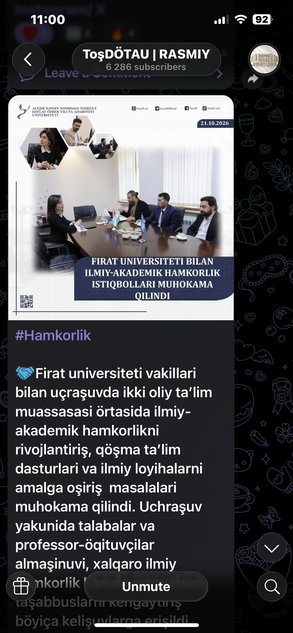
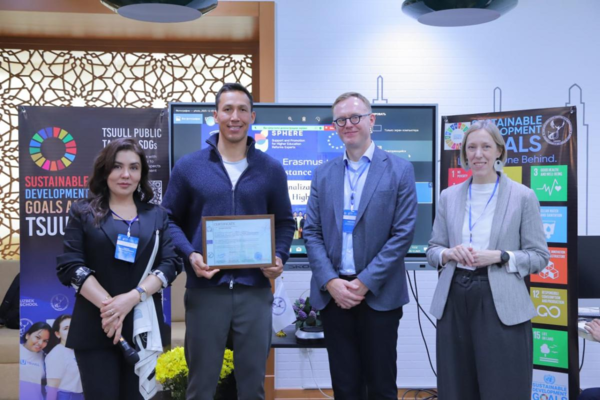
TSUULL, in cooperation with the Ministry of Higher Education, Science and Innovations of the Republic of Uzbekistan and the National Erasmus+ Office in Uzbekistan, actively contributes to international higher education reform through the European Union’s Technical Assistance Mission (TAM) seminars. Implemented within the framework of the Erasmus+ Programme and supported by the Higher Education Reform Experts (HERE) initiative, these activities provide a platform for international knowledge exchange, institutional capacity-building and the promotion of effective higher education policies.
TAM seminars bring together international experts, university leaders, academic staff, policymakers and representatives of higher education institutions to address key priorities in the development of higher education. Through expert presentations, interactive workshops, panel discussions and the exchange of European best practices, the initiatives support universities in improving educational quality, strengthening institutional management, advancing international cooperation and aligning their development strategies with international standards.
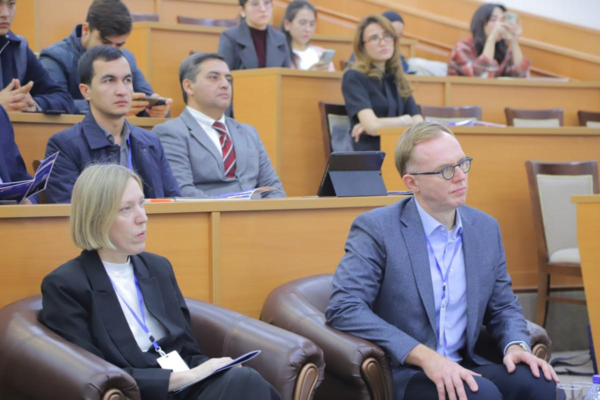
Building on this cooperation, TSUULL hosted important international initiative on 4–5 December 2025, entitled “Inclusive Internationalisation: Expanding Access and Equity in Global Higher Education Programs.” Jointly organised by the Ministry of Higher Education, Science and Innovations, the National Erasmus+ Office in Uzbekistan and TSUULL, the two-day seminar focused on making internationalisation policies more inclusive, equitable and accessible to diverse student and academic communities.
The seminar featured European higher education experts Ninoslav Šćukanec Schmidt and Ana Skledar Matijević, who shared European Higher Education Area (EHEA) policies, international frameworks and practical approaches to diversity, equity, inclusion and the social dimension of higher education. The programme explored barriers to international academic mobility, inclusive student support systems, institutional internationalisation strategies, sustainable international partnerships, and mechanisms for monitoring and evaluating inclusive policies. TSUULL Vice-Rector and HERE expert Professor Nozliya Normurodova contributed to the discussions by examining the internationalisation landscape of Uzbekistan’s higher education institutions and emphasising the importance of embedding equal opportunities and social responsibility into institutional development strategies.
The 2025 seminar registered 140 participants representing 15 universities, with 50 participants attending both days. Its interactive format combined expert presentations, moderated panel discussions and group activities, enabling participants to examine national and institutional challenges and identify practical solutions. The discussions resulted in recommendations on integrating inclusive internationalisation into university strategies, expanding mobility support services, developing sustainable international partnerships and improving institutional monitoring and evaluation systems.
Through TAM seminars, TSUULL helps make international knowledge and educational resources more accessible to the wider academic community. By bringing together experts, universities and policymakers, these initiatives encourage the sharing of experience, good practices and new ideas. They also promote equal learning opportunities and support the continuous development of higher education in Uzbekistan. The seminars and their follow-up activities demonstrate the University’s commitment to strengthening institutional capacity, facilitating access to international knowledge, supporting evidence-based policy development and promoting equitable, sustainable and internationally competitive higher education.
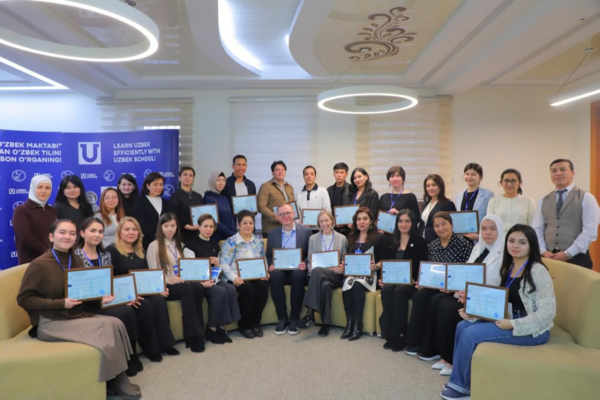
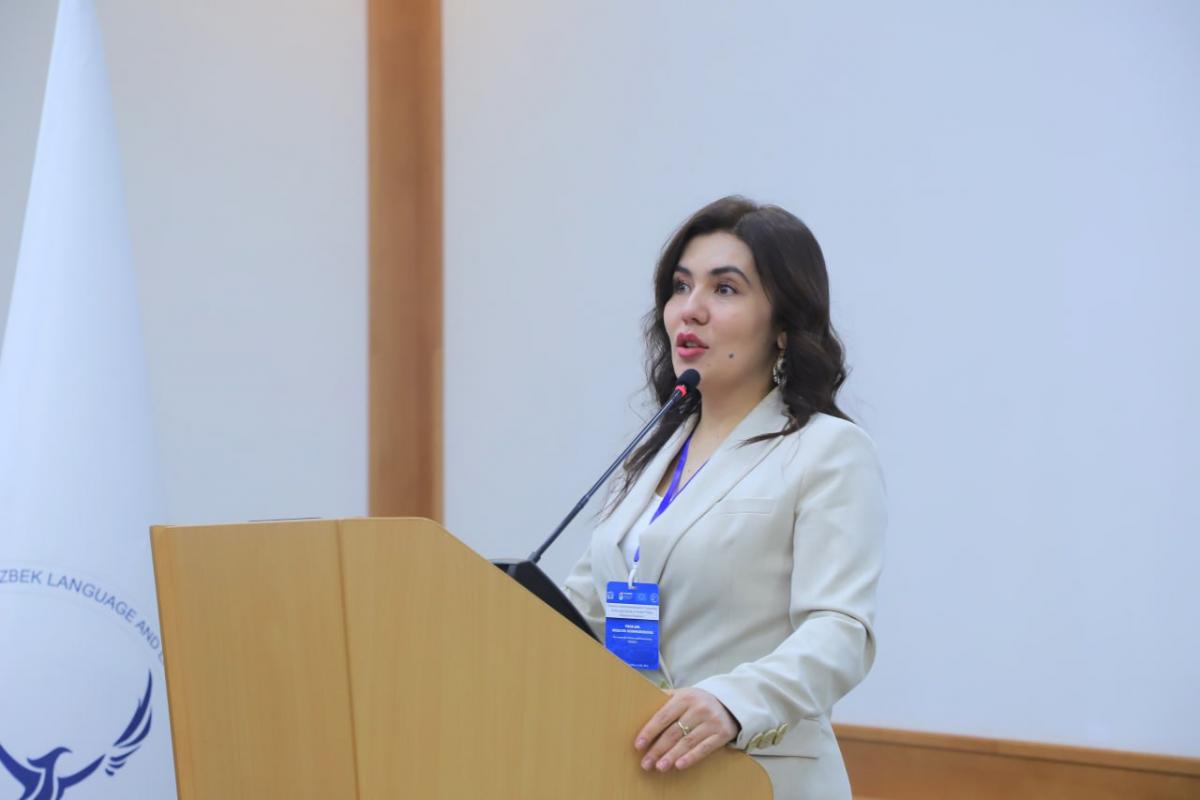
“We Speak Uzbek” Club
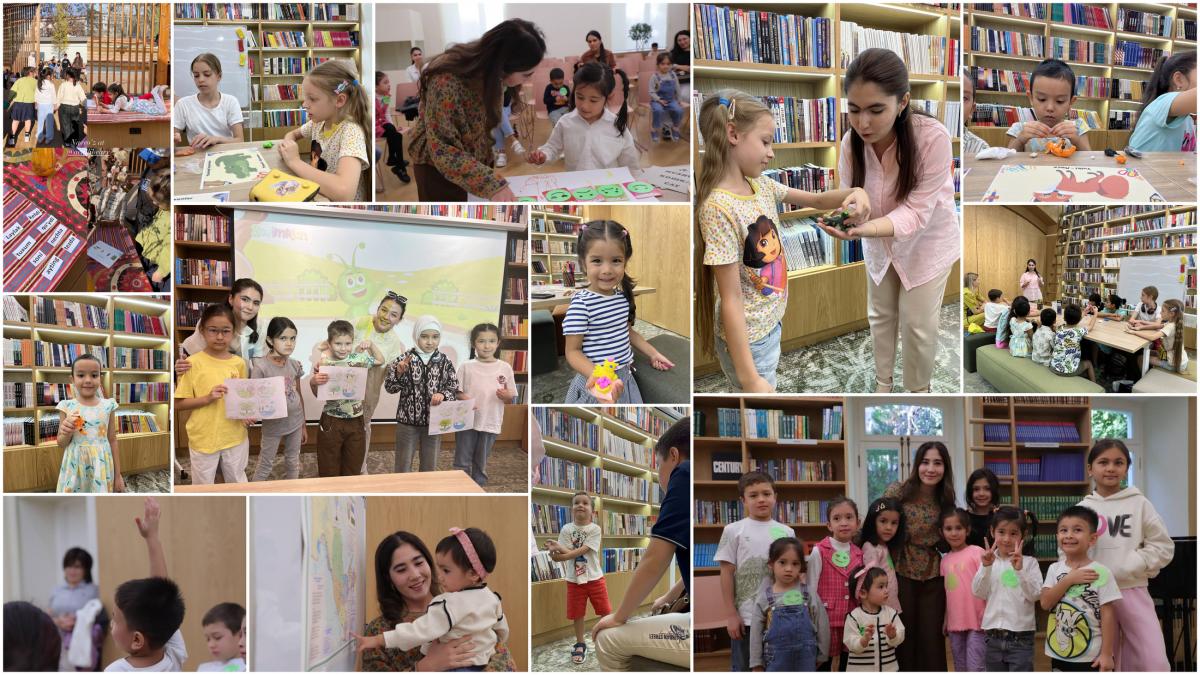
The “We Speak Uzbek” Club is an educational and community-oriented initiative organized by the Uzbek School team at TSUULL in cooperation with the Republican Children’s Library. The initiative aims to promote the Uzbek language among children from different linguistic backgrounds, encourage early language development, and create opportunities for young learners to communicate confidently in Uzbek.
The club provides free Uzbek language classes for Russian-speaking children, offering an inclusive, welcoming, and engaging learning environment where language acquisition takes place through interaction, exploration, and practical experience. Recognizing the importance of developing communication skills from an early age, the programme introduces children to Uzbek through age-appropriate activities that make learning both accessible and enjoyable.
Learning Through Interaction and Creativity. The teaching approach combines communicative language learning with play-based and activity-oriented methods. Rather than focusing exclusively on memorizing vocabulary and grammatical rules, children are encouraged to use Uzbek in meaningful, everyday contexts. Lessons incorporate interactive language games, role-playing, storytelling, picture-based exercises, group discussions, creative tasks, and guided conversations.
These activities help learners gradually expand their vocabulary, improve pronunciation, develop listening comprehension, and strengthen their speaking abilities. Children are encouraged to ask questions, express their thoughts, describe familiar objects and situations, and participate in simple conversations. Particular attention is given to building confidence and reducing the language barriers that may prevent children from using Uzbek in their daily lives.
Language Learning and Cultural Discovery. An important dimension of the club is introducing children to Uzbek culture, traditions, and everyday life through language. Learning activities may include exploring traditional celebrations, discovering national symbols, becoming familiar with Uzbek customs, learning about traditional food, and engaging with elements of the country's cultural heritage.
By connecting language instruction with cultural experiences, the club helps children understand that learning a language is not simply about acquiring new words but also about discovering the people, traditions, and values associated with it. This approach encourages curiosity, intercultural understanding, and a positive attitude towards the Uzbek language.
Schedule and Venue. The “We Speak Uzbek” Club meets twice a month at the Republican Children’s Library. Each session combines structured language learning with interactive games, creative exercises, and opportunities for communication. The welcoming atmosphere of the library provides an inspiring space for children to learn, explore, interact, and develop their interest in the Uzbek language.
Through this initiative, TSUULL and the Republican Children’s Library seek to nurture a new generation of confident Uzbek-language speakers, making language learning an enjoyable experience and bringing children closer to the linguistic and cultural heritage of Uzbekistan.