We connect academic knowledge, international partnerships and community needs to create meaningful learning opportunities and lasting social impact.


Duration
Next Start Date
Closing Date
Additional Information
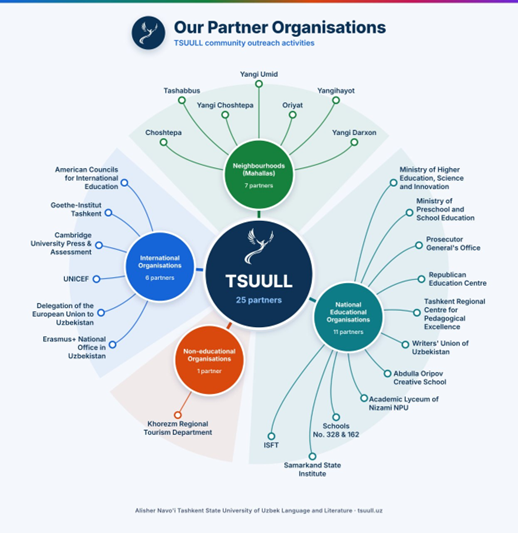
TSUULL is committed to extending educational opportunities and academic expertise beyond its campus. Through partnerships with national and international organisations, the university translates institutional cooperation into practical educational and social benefits for local communities. Collaborations with the European Union and its Erasmus+ Programme, American Councils for International Education, the Goethe-Institut, the Ministry of Higher Education, Science and Innovation, and the Writers’ Union of Uzbekistan, alongside higher education institutions, local schools and neighbourhood communities, create opportunities to share expertise, promote educational innovation, strengthen community learning and address local social needs. These partnerships enable TSUULL to extend its academic resources beyond the university and contribute to more inclusive, informed and engaged communities.
These partnerships are translated into practical initiatives, including international seminars on higher education reform, quality assurance and inclusive internationalisation; professional development workshops for educators and translators; literary events and reading promotion activities for school pupils; university–school mentoring and educational engagement; and community dialogues addressing local social needs, educational opportunities and civic participation. The diversity of these activities reflects the university’s commitment to interdisciplinary and cross-sectoral collaboration, bringing together expertise from education, literature, translation studies, cultural development and public administration. By connecting international knowledge with local priorities, TSUULL strengthens university–community engagement and contributes to inclusive education, lifelong learning and community development.
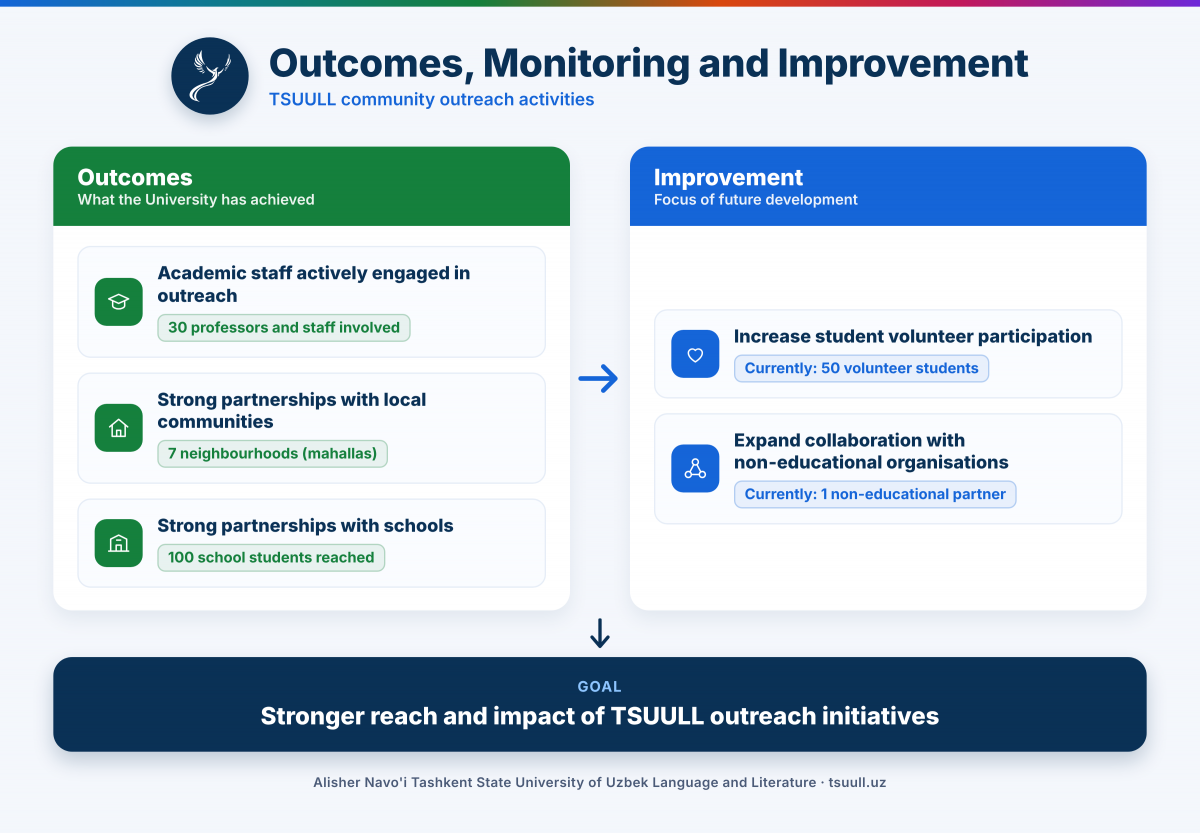
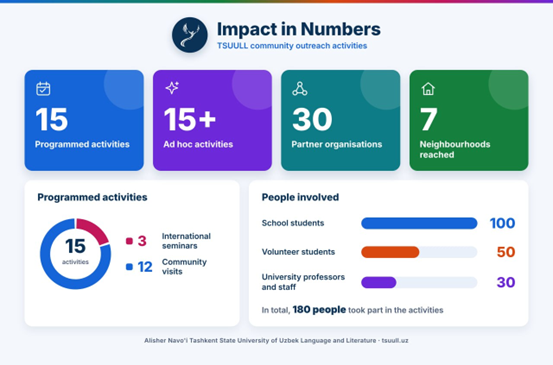
The reach of these initiatives is reflected in the participation of approximately 100 school students, 50 student volunteers, and 30 university professors and staff members. Through these activities, TSUULL has expanded opportunities for community learning, encouraged student volunteering, strengthened institutional partnerships and connected university expertise with the educational and social needs of local communities.
The activities engaged participants through interactive educational sessions, literary presentations, professional knowledge-sharing workshops and community discussions, creating opportunities for direct interaction between university representatives and diverse community groups. Student volunteers contributed to organising and delivering outreach activities, gaining practical experience in communication, teamwork, public speaking and civic engagement, while university academics shared their disciplinary expertise with school pupils, educators and local residents.
We Speak Uzbek: Free Language Learning for Children
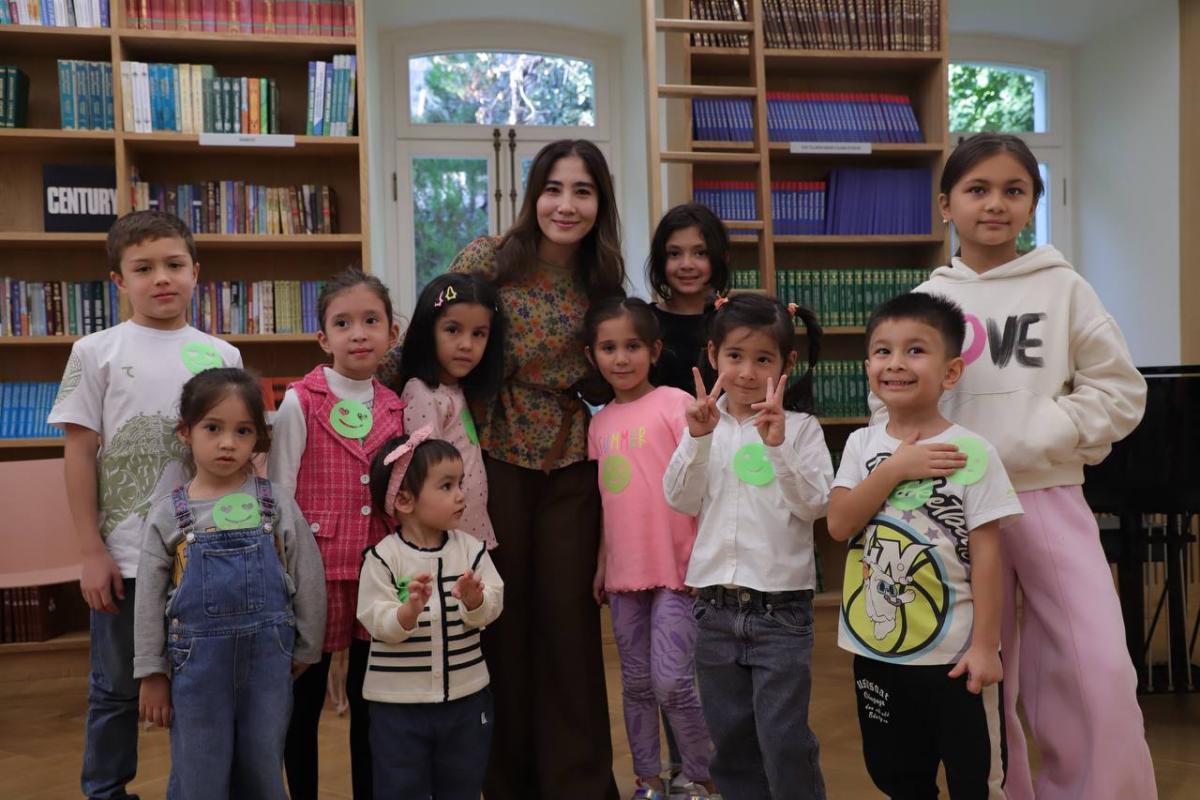
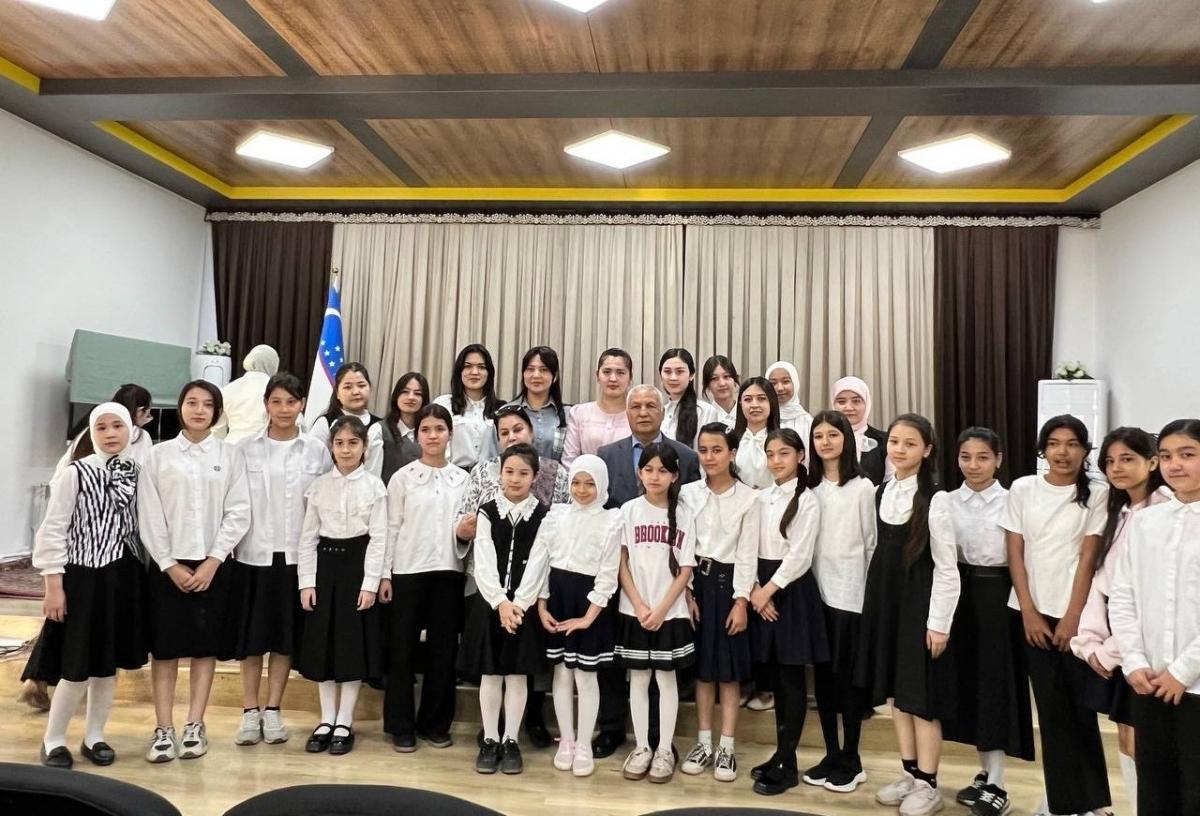
The “We Speak Uzbek” Club is a programmed educational outreach activity delivered by TSUULL Uzbek School team in partnership with the Republican Children’s Library, providing free Uzbek language learning opportunities for Russian-speaking children. Meeting twice a month at the library, the club supports early language development and helps children from different linguistic backgrounds communicate in Uzbek.
Sessions combine communicative teaching with games, storytelling, role-play, picture activities and creative tasks. Children practise everyday conversations, describe familiar objects, ask questions and share ideas. These activities develop vocabulary, pronunciation, listening and speaking skills while building confidence in using Uzbek beyond the classroom.
The programme also introduces learners to Uzbek traditions, celebrations, food and cultural heritage, connecting language practice with cultural discovery. Its interactive approach encourages curiosity, participation and intercultural understanding. These beyond-campus classes are providing children with accessible language learning and opportunities to engage with Uzbekistan’s linguistic and cultural heritage in a supportive learning environment.
Public Education, Community Wellbeing and Social Inclusion
TSUULL extends its community outreach to address local social and health-related challenges, using educational initiatives and direct engagement to raise awareness, empower vulnerable groups and promote community wellbeing.
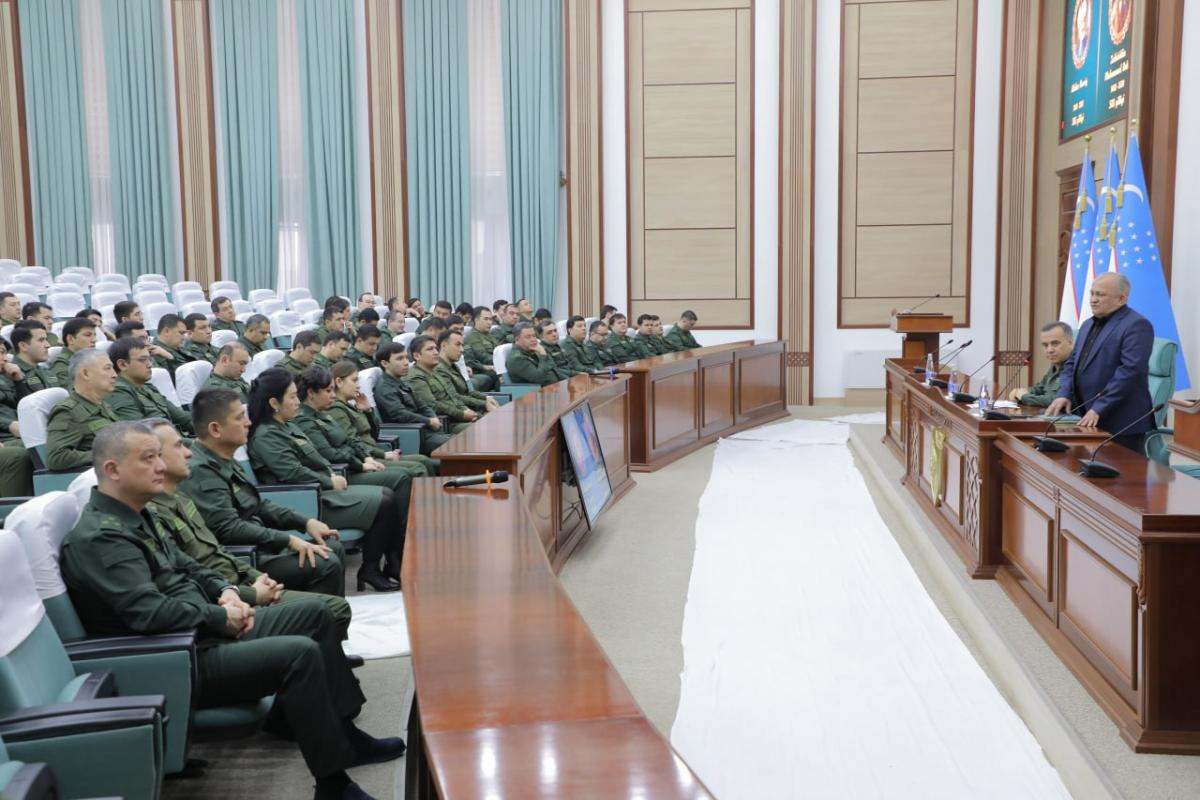
TSUULL scholars equipped professionals at the Prosecutor General’s Office with deeper insights into the works of Alisher Navo’i and Zahiriddin Muhammad Bobur, connecting their literary and intellectual heritage to ethical decision-making, professional conduct and civic responsibility.
TSUULL engaged with women and female students in Nurafshon neighbourhood, Kokand, to promote girls’ access to education, professional development opportunities, legal awareness and informed decision-making on issues such as early marriage.
Through the “Healthy Children, Healthy Future” initiative, the university representatives engaged 25 local residents in Tepa neighbourhood, Yakkasaray District, in discussions on hereditary diseases, preventive healthcare, healthy lifestyles and family wellbeing. Collaboration with healthcare professionals and neighbourhood representatives helped provide expert guidance and strengthen community health awareness.
Promoting Equitable Access to Education for Displaced Persons
In accordance with a Resolution of the Cabinet of Ministers of the Republic of Uzbekistan, the Educational Center for the Training of Afghan Citizens was established under the Ministry of Higher and Secondary Specialized Education of the Republic of Uzbekistan and is officially located in Termez, Surkhandarya region.
The Center operates as a state educational institution with independent legal status, offering higher education, secondary specialized and vocational education, professional retraining, and continuing professional development programmes.
Functioning as an official branch of Alisher Navo’i Tashkent State University of Uzbek Language and Literature, the Center provides education to Afghan students in accordance with the University's academic standards and curricula. Teaching is conducted by TSUULL academic staff, while students and educators have access to the University's educational, methodological, digital, library, research, technical, and administrative resources. This institutional arrangement supports the delivery of structured educational programmes and extends access to higher education and professional development opportunities for Afghan citizens.
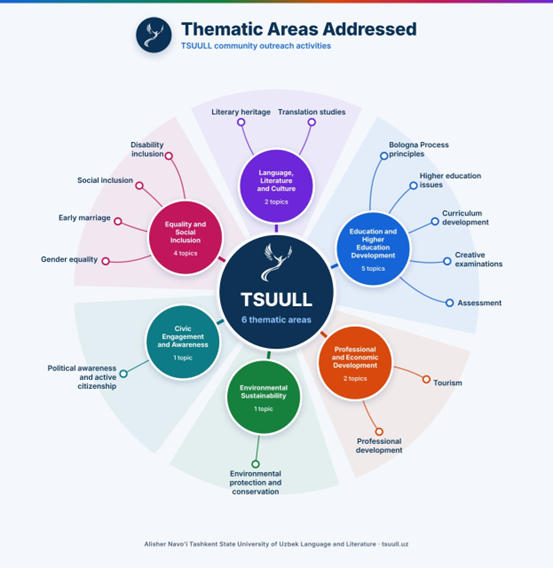
In 2025–2026, TSUULL conducted 15 programmed outreach activities and more than 15 additional ad hoc events, addressing a broad range of educational, cultural and social challenges. These initiatives included international seminars, professional development workshops, university–school engagement activities, literary and cultural events, and direct consultations with local communities. They provided opportunities for university academics, students, education professionals, public institutions and community members to exchange knowledge, share experiences and discuss practical solutions to emerging challenges. Key topics included gender equality, girls’ educational opportunities and the prevention of early marriage; higher education reforms, European quality assurance standards and inclusive internationalisation; curriculum development, innovative teaching and assessment practices; literary heritage and translation studies; social inclusion and support for vulnerable groups; active citizenship and civic awareness; and environmental sustainability. Through both planned programmes and responsive ad hoc initiatives, the university sought to address identified community needs while making academic knowledge and educational resources accessible to audiences beyond the university.
Leadership Engagement in Community Development
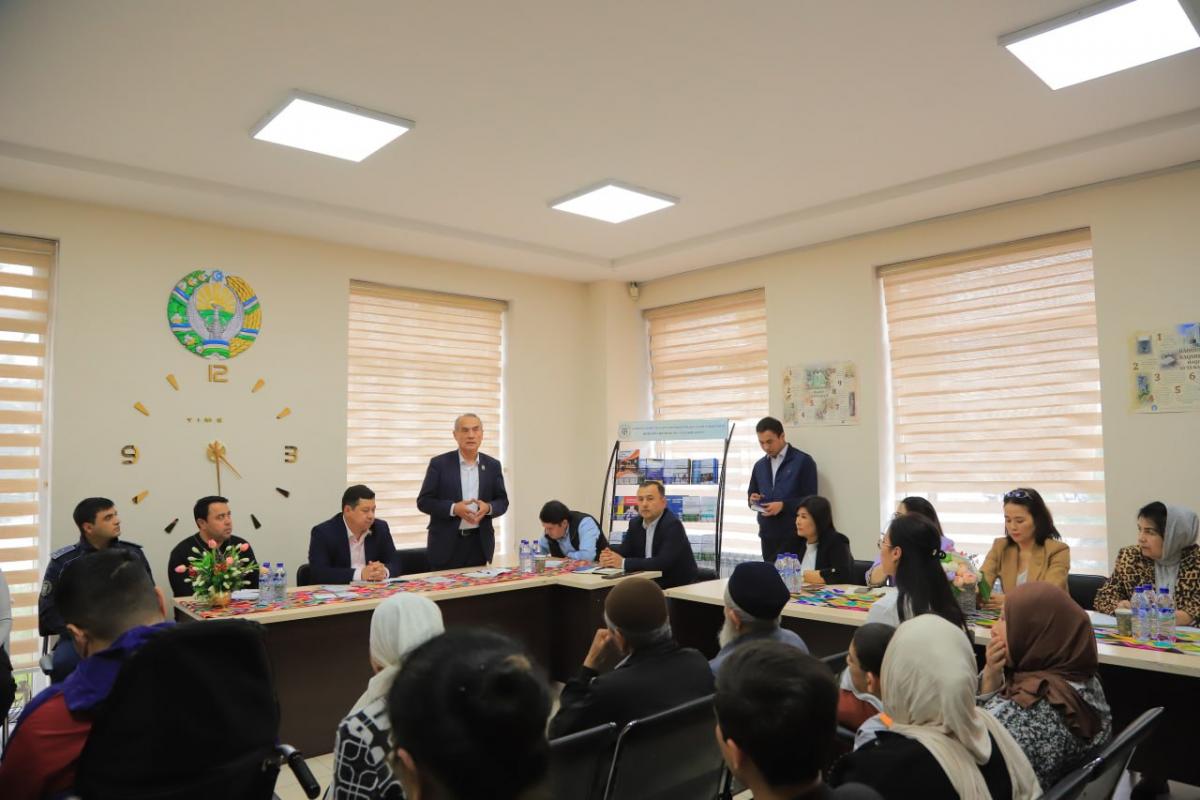
As part of the university’s community outreach programme, the Rector conducts scheduled monthly visits to seven neighbourhoods in Yangihayot District, alongside additional visits in response to urgent community concerns. During these visits, the Rector and university team engage directly with local residents, promote civic participation and support community learning through discussions on rights and access to public services. These visits provide a platform for open dialogue, enabling residents to voice concerns, bring unresolved local issues to the attention of responsible authorities and contribute to identifying strategic and practical solutions. Through this regular engagement, our university supports stronger communication between communities and local leadership, encourages civic participation and contributes to addressing neighbourhood development priorities.
University - School Partnerships
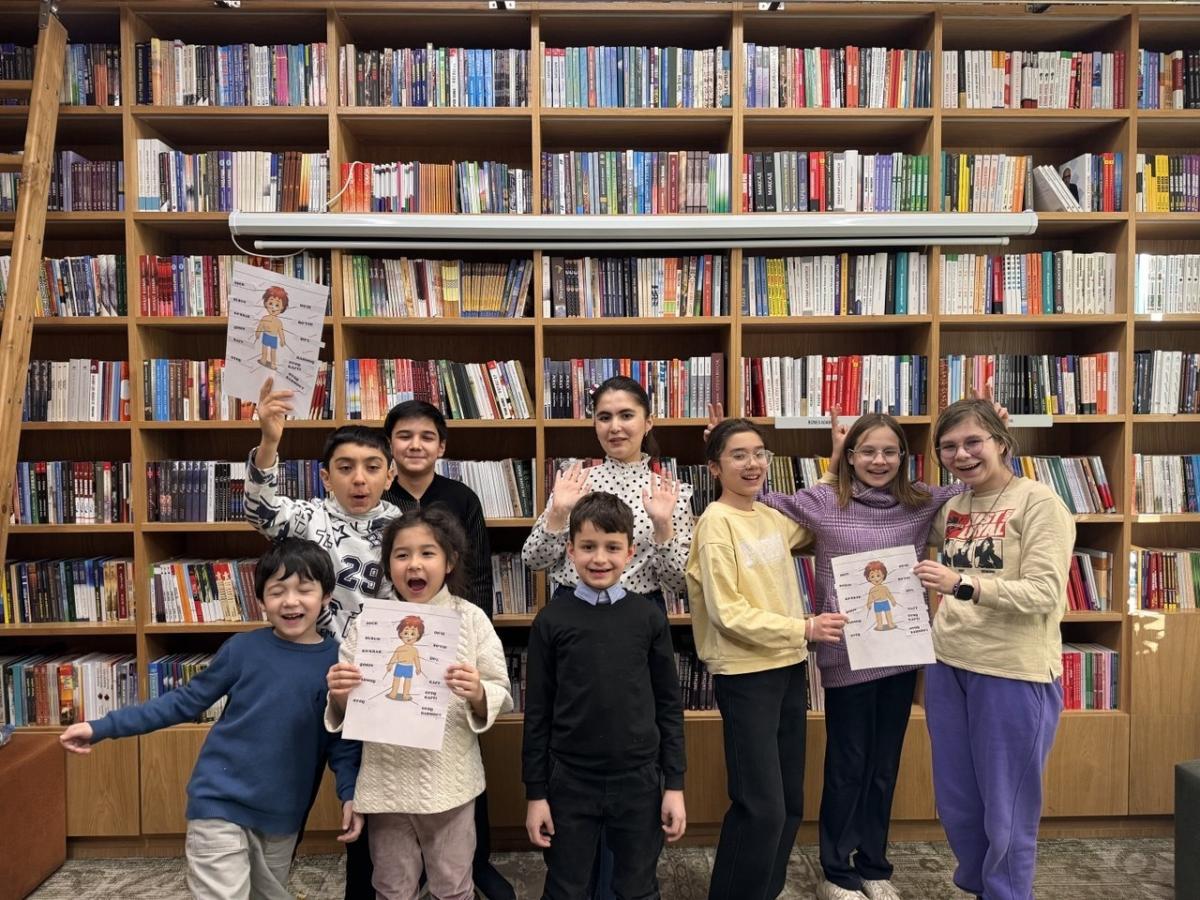
The university works with local schools to extend educational and cultural opportunities beyond the university campus, connecting academic expertise, student engagement and school-level learning. These partnerships support pupils’ intellectual and cultural development, reading habits, and encourages practical teaching through direct engagement with school communities.
In partnership with Abdulla Oripov Creative School in Kashkadarya, TSUULL provided academic expertise for creative entrance examinations, supporting the fair identification of talented pupils, the development of their creative potential and pathways from specialized secondary education to university study.
In cooperation with School No. 282 in Yashnabad District, the university introduced pupils to the historical legacy of Amir Temur through interactive learning, theatrical performances and creative presentations, strengthening their knowledge of national history, cultural identity and civic values.
Through the “Take a Book in Your Hands!” initiative at School No. 131 in Chilanzar District, TSUULL connected school pupils with university academics and children's poet Dilshod Rajabov, encouraging reading habits, engagement with Uzbek literature and direct interaction with a contemporary writer, while giving TSUULL students practical experience in educational outreach
Professional Development and Training
The university extends its academic expertise beyond the university by supporting educational development and professional capacity-building at national and regional levels.
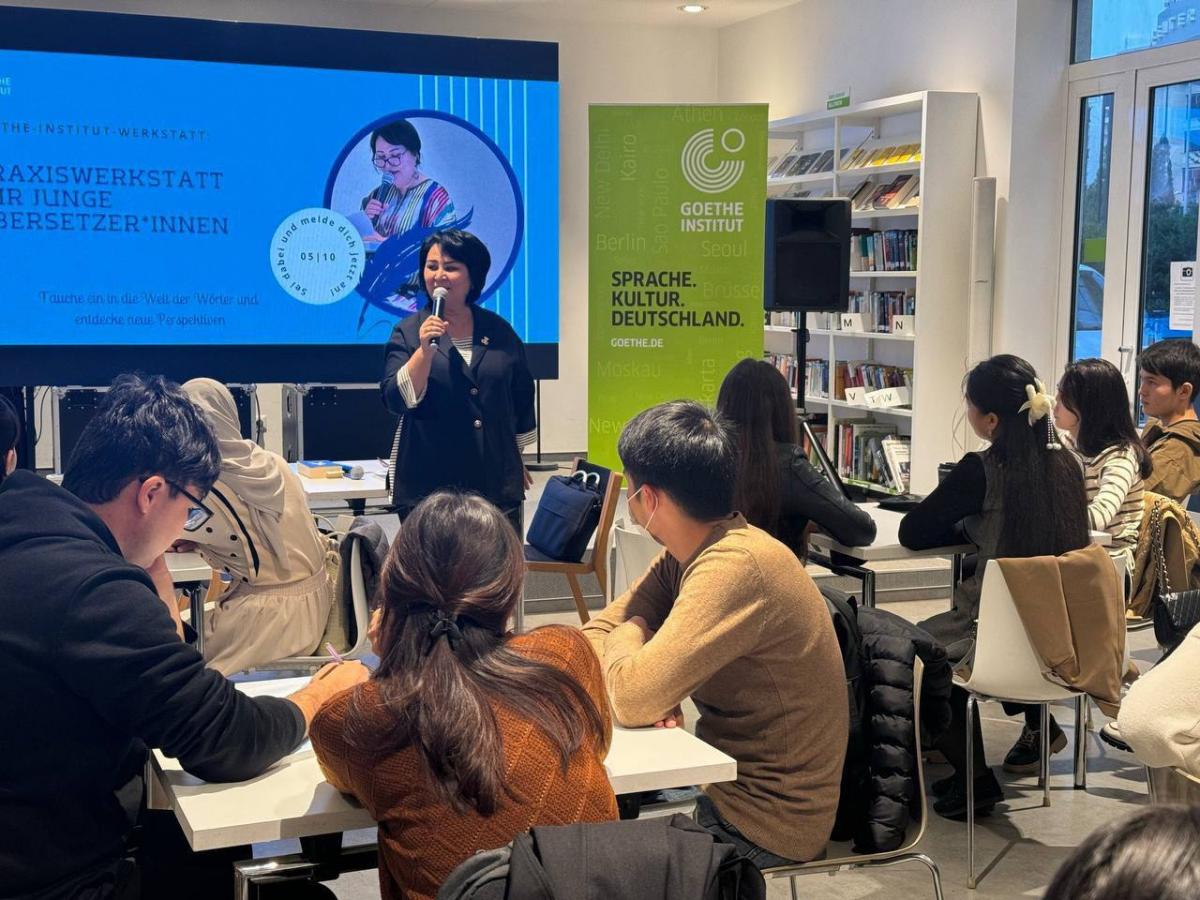
In cooperation with the Goethe-Institut, the university extended access to translation education beyond the university by offering open workshops and masterclasses, mentoring young translators in German–Uzbek literary translation, and sharing accessible content on German literature with wider audiences. The initiative also generated tangible student outcomes, including completed literary translations and plans for a bilingual translation collection.
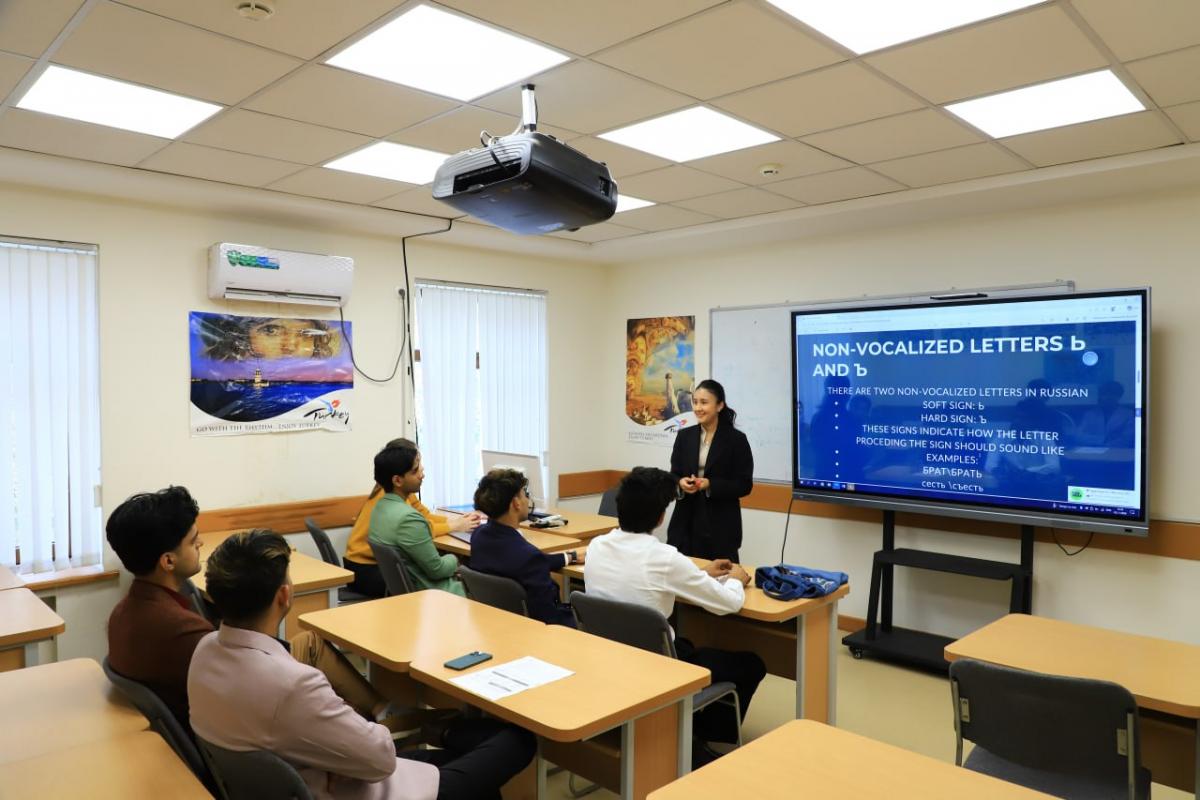
In collaboration with the Tashkent Regional Centre for Pedagogical Excellence, the University also shared innovative language-teaching methods and practical classroom strategies with schoolteachers, supporting their professional development and the improvement of pupils’ communication and language skills.
Furthermore, professional training delivered to tour guides in Khiva strengthened their public-speaking, presentation and communication competencies, helping them present Uzbekistan’s cultural and historical heritage more effectively to local and international visitors.
Continued Alumni Engagement, Networking, and Professional Support
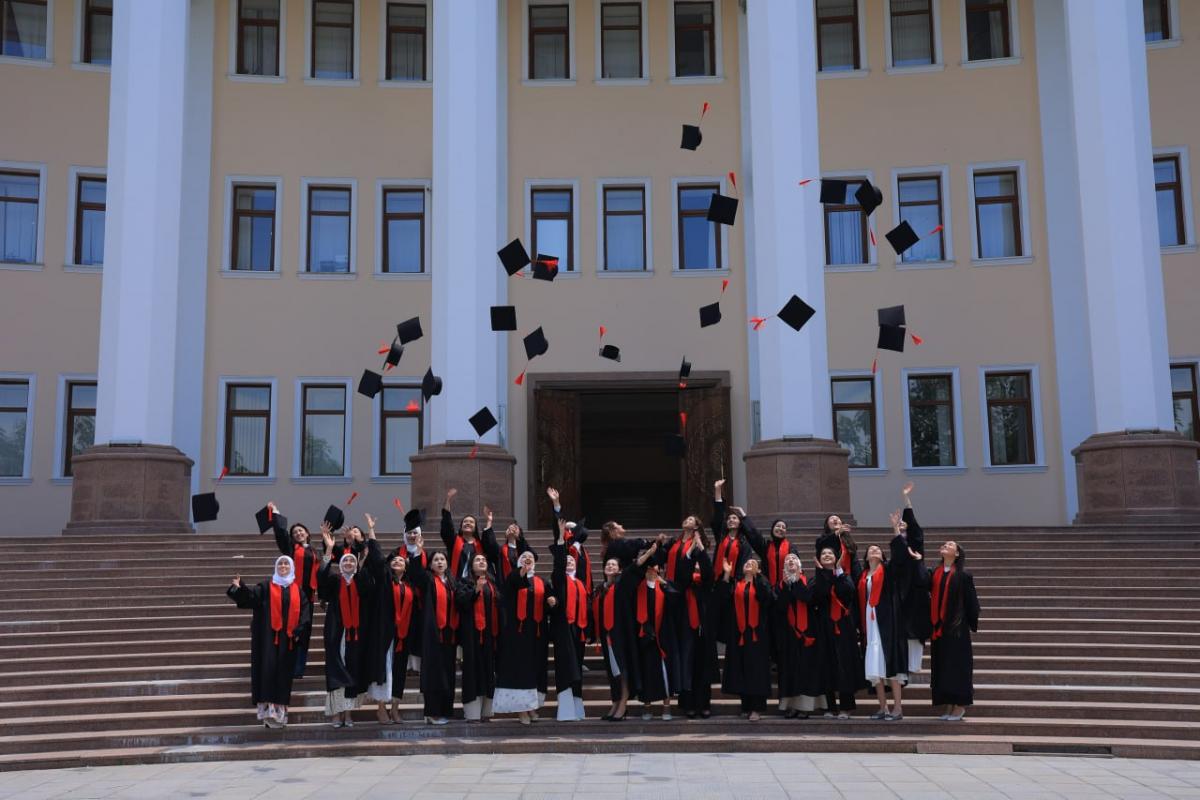
The University also maintains ongoing engagement with its alumni, ensuring that institutional support and opportunities for professional development extend beyond graduation. Through networking events, career guidance, professional development activities, access to educational resources, and cooperation with institutional and external partners, the university supports graduates in their continued learning, career development, and professional advancement.
The University also organises podcasts and interviews featuring alumni, providing a platform for graduates to share their professional experiences, career pathways, achievements, and practical advice with current students.These activities strengthen university–alumni relationships and support graduates' transition into employment, continued learning, and long-term career development.
Student Leadership and Volunteering
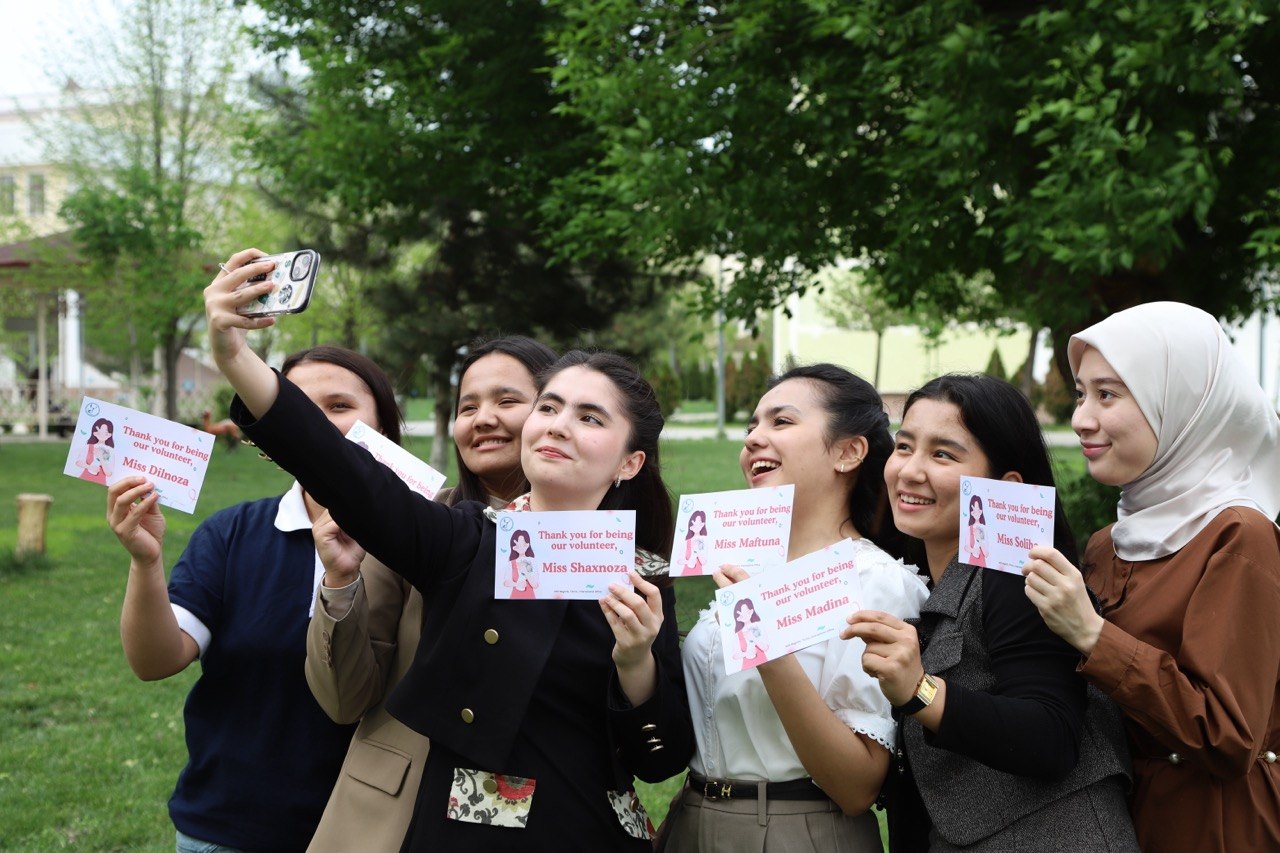
Our university encourages students to take an active role in community outreach by providing opportunities to apply their academic knowledge, demonstrate leadership and contribute to educational and cultural initiatives beyond the university. Through this activities, students develop communication, teamwork, public-speaking, event-management and organisational skills while contributing to the wider community.
Second-year students, as part of their professional practicum, organised an educational and cultural event at the Academic Lyceum of Nizami National Pedagogical University dedicated to Muhammad Yusuf, engaging 50 pupils through poetry readings, presentations and theatrical performances while developing their practical teaching and event-management skills.
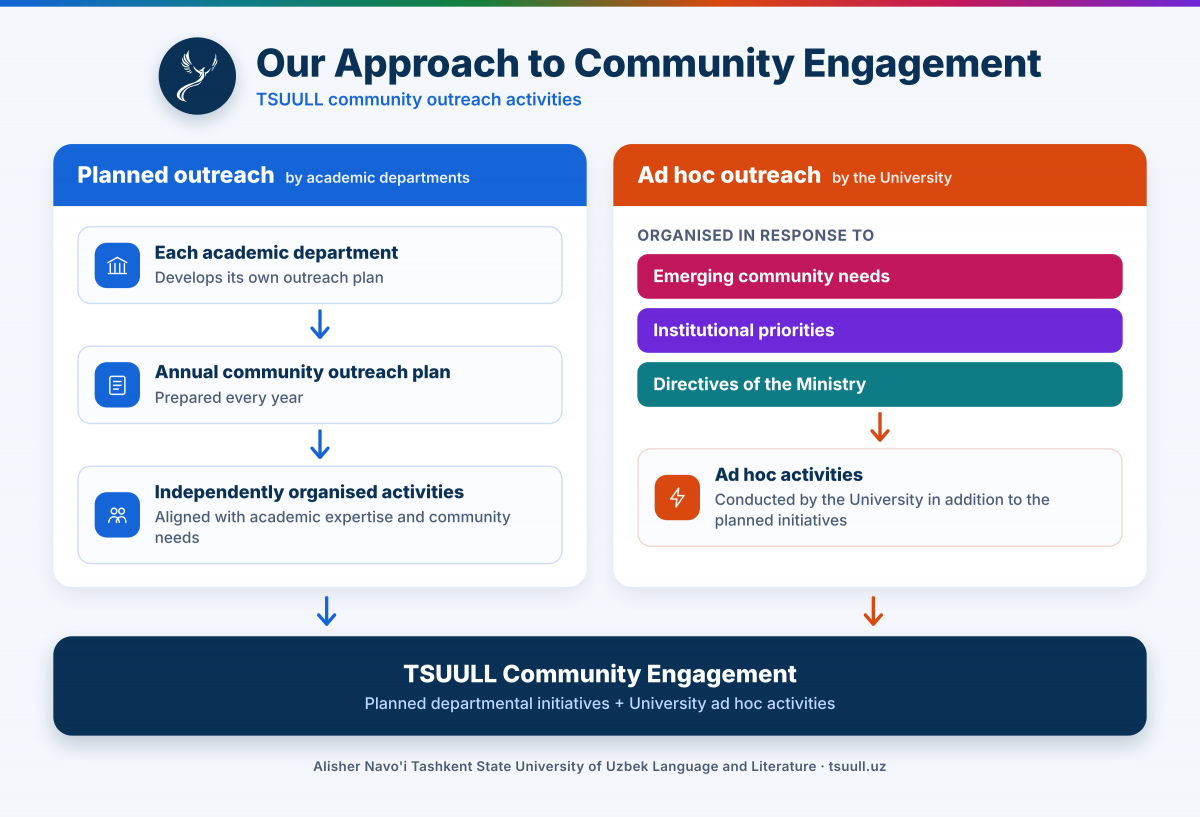
Each academic department at the university develops an annual community outreach plan and independently organises activities aligned with its academic expertise and community needs. In addition to these planned initiatives, the University conducts ad hoc outreach activities in response to emerging community needs, institutional priorities, and directives from the Ministry of Education and Science.
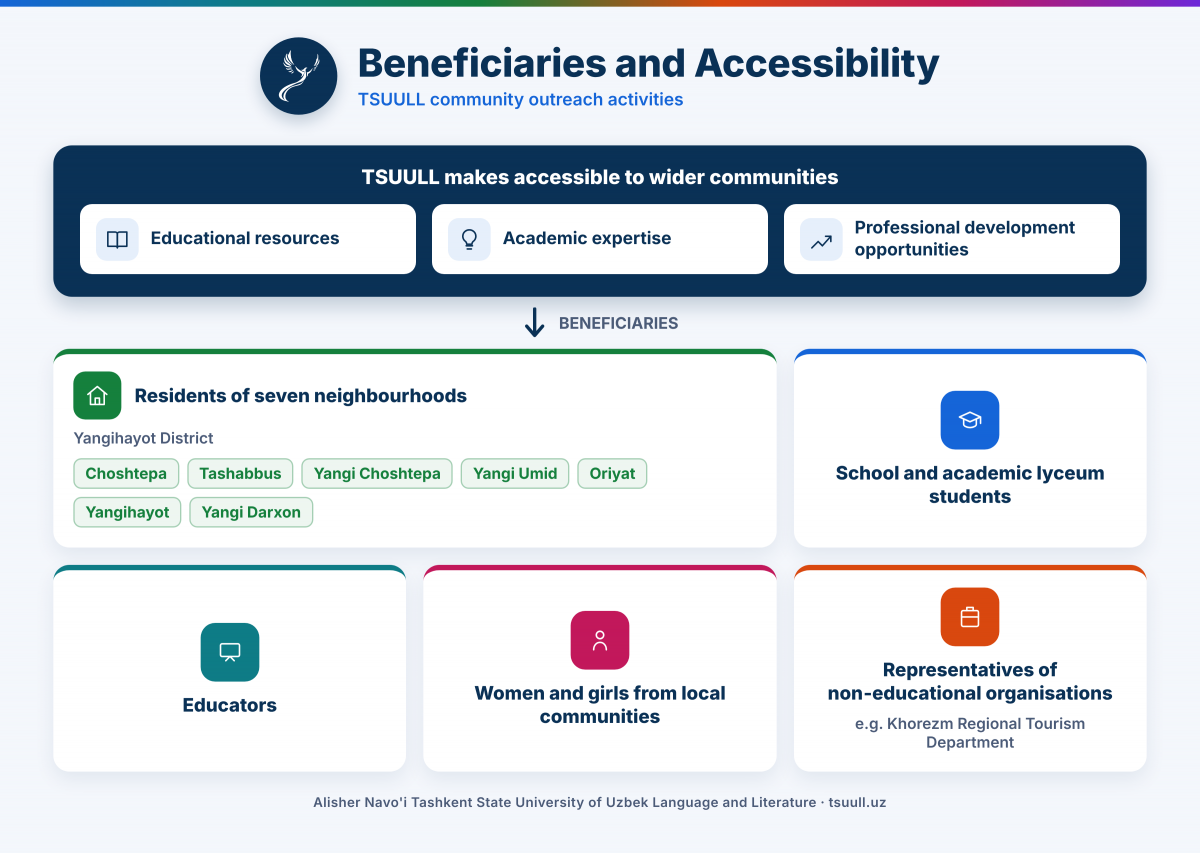
The university’s outreach activities benefit diverse groups, including residents of seven neighbourhoods (Choshtepa, Tashabbus, Yangi Choshtepa, Yangi Umid, Oriyat, Yangihayot, Yangi Darxon) in Yangihayot District, school and academic lyceum students, educators, women and girls from local communities, and representatives of non-educational organisations, such as the Khorezm Regional Tourism Department. Activities are delivered to make educational resources, academic expertise, and professional development opportunities accessible to wider communities.
The university actively engages its academic staff in community outreach activities and maintains strong partnerships with local communities and schools. Future development will focus on increasing student volunteer participation and expanding collaboration with non-educational organisations to strengthen the reach and impact of its outreach initiatives.