
We have established a comprehensive, data-driven framework to evaluate and advance the UN Sustainable Development Goals across all dimensions of university life. Through systematic performance monitoring, annual SDG literacy assessments, staff training, and large-scale student engagement, TSUULL ensures that sustainability is not only taught — but practiced, measured, and continuously improved.
Each year, immediately after the publication of the Times Higher Education Impact Rankings, TSUULL conducts a full institutional briefing for the entire student and staff community. This outreach communicates the university’s performance indicators, highlights achievements, and explains how SDG principles are embedded into strategies, curricula, governance, and campus-wide initiatives. This annual system reaches over 5,000 students, including the full international cohort, and is supported by a structured SDG engagement cycle.
1. Annual Institutional Sustainability System
To ensure accountability and measurable progress, TSUULL conducts:
1 Annual SDG Results Presentation (over 1,200 students + 150 staff attending)
30+ SDG workshops, public talks, and interactive sessions every year
2,000+ students evaluated annually through SDG literacy surveys and tests
Staff SDG Training: 210 academic and 95 administrative staff participating in 2024–2025
4,800 volunteer-hours recorded by students in SDG-related activities (a 34% increase compared to 2024)
This system guarantees transparency, a culture of sustainability, and engagement across the university community.
2. TSUULL’s SDG Monitoring & Evaluation (M&E) Framework
TSUULL operates a comprehensive university-wide SDG evaluation system that measures sustainability indicators among both students and staff. The data forms part of the university’s Annual Sustainability Dashboard, informing planning, accreditation, and Impact Rankings submissions.
Student Evaluation Indicators (2025 Dataset)
Total respondents: 2,140 students
Survey response rate: 82%
Statistical confidence interval: ±3.5%
Foreign respondents: 161 foreign students from 12 countries
Volunteer-hours completed: 4,800
Open Access Library users: 92%
Uzacademy learning platform users: 68%
Lifelong learning participants (micro-courses): 34%
Assessed dimensions include SDG literacy, participation in learning activities, engagement in volunteering, use of open-access resources, sustainability knowledge, and perceptions of university policy.
Overview
Each year, following the release of our university’s results in the Times Higher Education Impact Rankings, we formally communicate our progress and accomplishments related to the Sustainable Development Goals (SDGs) to the entire student body. The university systematically presents its annual achievements, clarifies the core principles of each SDG, and demonstrates how these goals are integrated into institutional strategies and campus-wide initiatives.
This outreach is inclusive of both local and international students, encouraging their active engagement in sustainability education. A wide range of academic and campus-wide educational activities, including public and open talks, workshops, interactive events, and elective courses are organized throughout the year to deepen students’ understanding of the SDGs and enhance their global awareness.
Moreover, the number of student volunteers contributing to SDG-oriented projects on campus grows steadily each year. Their involvement significantly strengthens the university’s sustainability efforts, supports the implementation of development initiatives, and contributes to continuous improvement in our performance within the Impact Rankings.
Student Engagement and Literacy in Key Sustainability Topics
We aim to evaluate the effectiveness of our SDG-based initiatives by assessing TSUULL students’ literacy across key sustainability themes. This study identifies which SDG areas students engage with most actively and reviews the learning activities, interventions, and campus initiatives already implemented to strengthen their competencies in these priority topics:
|
|
|
|
|
|

Participation and statistical confidence
This year, we assessed students from the Faculty of BA and international programs to determine how well they understood the SDG goals that had been explained and implemented by the university. Using interactive methods such as surveys and tests, we examined their knowledge, interests, and engagement with the SDGs, identifying which goals they recognized most actively and how effectively they perceived the university’s initiatives. This approach provided valuable insights into how both local and international students interpret and respond to the SDG efforts carried out on campus.
Undergraduate Student Participation in SDG Awareness Survey by Academic Direction
As part of the university’s SDG impact evaluation, a survey was conducted among undergraduate students to assess their awareness, participation, and attitudes toward sustainability and the UN Sustainable Development Goals (SDGs). The survey covered the following academic directions:
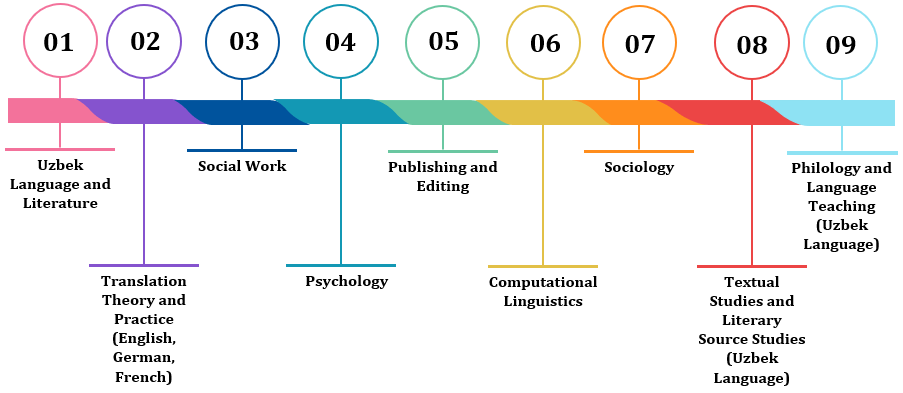
The SDG awareness survey was conducted among undergraduate students across nine academic programs at TSUULL to assess participation levels and sustainability engagement. The results reveal a varied distribution of responses among disciplines. The Translation Theory and Practice program demonstrated the highest completion rate at 22%, reflecting strong engagement among language students. This was followed by Uzbek Language and Literature at 18% and Philology (Uzbek Language) at 15%, both showing notable participation in sustainability-related initiatives. Moderate response levels were observed in Psychology (10%) and Computational Linguistics (9%), indicating growing interest in interdisciplinary SDG learning. Meanwhile, Textual and Literary Studies (8%) and Sociology (7%) showed consistent yet lower participation rates. The Publishing and Editing (6%) and Social Work (5%) programs recorded the lowest response shares, suggesting potential areas for further engagement and awareness campaigns. Overall, the data reflect an encouraging level of student involvement across diverse academic backgrounds in the university’s sustainability performance evaluation.
|
Table 1
|
Table 2 |
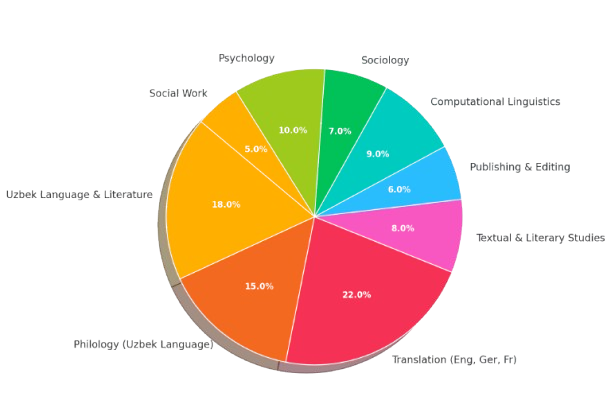
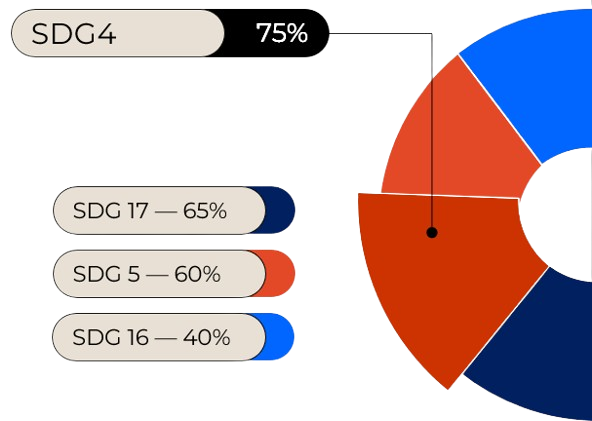
Table 2 illustrates the results, which indicate that students show the highest engagement with SDG 4: Quality Education (75%), reflecting the university’s strong commitment to equal access, open educational resources, outreach activities, and inclusive learning environments. Awareness of SDG 17: Partnerships for the Goals (65%) also remains high, supported by TSUULL’s collaborations, government expertise contributions, joint initiatives, and SDG-focused educational projects. Engagement with SDG 5: Gender Equality (60%) demonstrates students’ recognition of institutional measures promoting non-discrimination, women’s admission, parental leave, and protection mechanisms for reporting persons. Meanwhile, SDG 16: Peace, Justice and Strong Institutions (40%) records developing student understanding of university governance, anti-corruption frameworks, public principles, and the role of the Student Union in ensuring transparency and accountability.
Foreign Student Engagement Overview
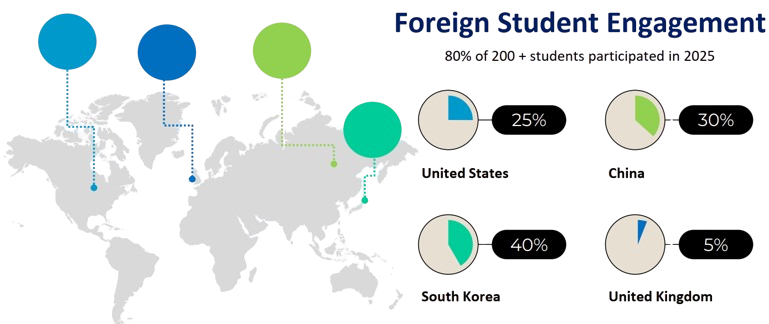
In 2025, TSUULL recorded strong participation among its international student community. Out of more than 200 foreign students, 80% took part in the SDG survey, demonstrating a high level of engagement with the university’s activities related to SDG 4 (Quality Education), SDG 5 (Gender Equality), SDG 16 (Peace, Justice & Strong Institutions), and SDG 17 (Partnerships for the Goals).
Take the TSUULL SDGs Survey!
Are you a TSUULL student and curious to know how well you understand Sustainability and the UN Sustainable Development Goals (SDGs)? Check out our newly introduced SDGs Survey and discover your level of awareness and engagement with sustainability on campus. Share your results with us and contribute to TSUULL’s ongoing SDG Impact Evaluation and global performance initiatives.
Take the survey here
FREQUENTLY ASKED QUESTIONS
1. Why does TSUULL conduct SDG surveys every year?
TSUULL conducts annual SDG surveys to systematically measure students’ knowledge, engagement, and behavioral attitudes toward sustainability. The results help the university evaluate the effectiveness of its SDG-related policies, academic programmes, outreach activities, and campus initiatives, enabling continual improvement in alignment with global standards such as the UN SDGs and the Times Higher Education Impact Rankings.
2. Which SDGs do TSUULL students engage with the most?
Survey results consistently show strong student engagement with:
- • SDG 4: Quality Education, due to wide participation in academic, digital, and open-access learning programmes.
- • SDG 5: Gender Equality, driven by TSUULL’s extensive mentoring, women’s empowerment networks, and inclusive campus environment.
- • SDG 17: Partnerships for the Goals, reflecting high interest in international mobility, global collaboration, and community-oriented projects.
3. How does TSUULL support students in learning about the SDGs?
TSUULL integrates sustainability education through multiple channels:
- • Open-access digital learning platforms (e.g., UzAcademy).
- • Faculty-led SDG modules, lectures, and elective courses.
- • Campus-wide awareness campaigns, workshops, leadership labs, and public events.
- • International seminars with partner universities, ministries, and NGOs.
- • Multilingual educational materials for both local and international students.
4. How does TSUULL ensure equal academic opportunities for all students?
The university operates under a commitment to equity, fairness, and non-discrimination, ensuring:
- • Equal access to programmes, facilities, and academic support.
- • Inclusive learning policies for women, students with disabilities, and those from low-income backgrounds.
- • Free access to digital libraries, open courses, and online learning materials.
- • Student protection guidelines aligned with national legislation and international best practices.
5. How are students involved in TSUULL’s sustainability initiatives?
Students participate through:
- • Volunteering in SDG-led projects and community activities.
- • Membership in sustainability clubs, youth councils, and research groups.
- • Participation in SDG workshops, public talks, and innovation competitions.
- • Leadership roles in campus initiatives promoting gender equality, wellbeing, and environmental awareness.
6. How are SDG survey results used in university decision-making?
Survey data directly informs:
- • Annual sustainability action plans.
- • Curriculum updates and new course development.
- • Resource allocation and improvement of student services.
- • Reports submitted to the THE Impact Rankings.
- • Transparent communication with students, staff, and external partners.
7. Do international students participate in the SDG evaluation?
Yes. All SDG awareness programmes are inclusive of international students. Surveys, training sessions, and events are available in multiple languages, ensuring that global learners can fully engage with TSUULL’s sustainability initiatives.
8. How does TSUULL promote gender equality through its sustainability agenda?
As a leading national institution in gender research and advocacy, TSUULL:
- • Provides structured mentoring programmes for women.
- • Offers leadership academies, wellbeing workshops, and peer-support networks.
- • Ensures gender-sensitive policies in academic mobility, governance, and student support.
- • Conducts research and public dialogue on gender issues across Central Asia.
9. What mechanisms ensure transparency in TSUULL’s sustainability efforts?
TSUULL maintains transparency through:
- • Publicly available SDG reports, policies, and governance information.
- • Annual publication of institutional achievements and sustainability rating results.
- • Open-access communication platforms for students and staff.
- • Regular updates aligned with the THE Impact Rankings framework.
10. How does TSUULL integrate sustainability into its teaching and curriculum?
Sustainability principles are embedded across:
- • Core and elective courses in linguistics, humanities, digital humanities, and education.
- • Project-based learning linked to SDG topics.
- • International collaboration projects focusing on inclusivity, digital access, gender equality, and cultural heritage.
- Workshops and guest lectures from leading global experts.
11. How does TSUULL evaluate staff engagement with sustainability?
Staff are assessed through:
- • Participation in SDG-related training, research projects, and outreach activities.
- • Contributions to digital transformation and open access.
- • Involvement in community programmes, gender initiatives, and policy dialogue.
- • Reporting mechanisms included in departmental annual evaluations.
12. What are the main outcomes expected from TSUULL’s Sustainability Evaluation & Rating system?
Expected outcomes include:
- • Improved sustainability literacy among students and staff.
- • More effective planning of campus initiatives.
- • Stronger alignment with global university rankings.
- • Broader student participation in community-oriented activities.
- • Increased visibility of TSUULL as a national leader in SDG implementation.