
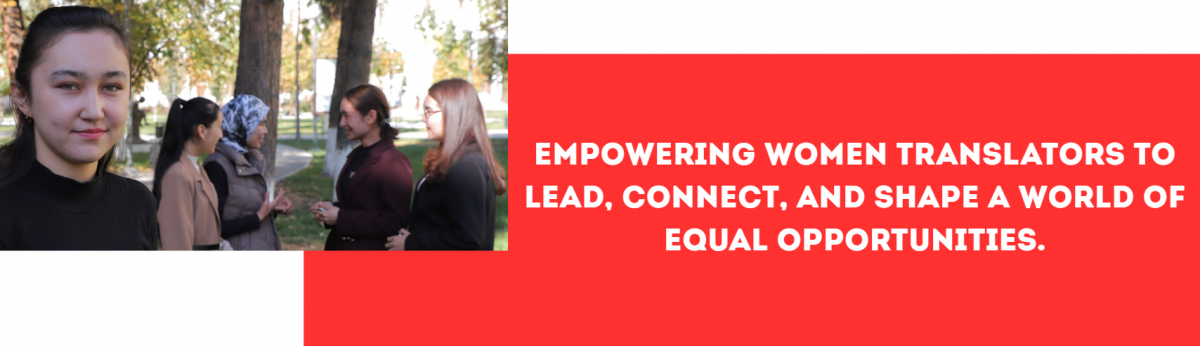
The International Office at TSUULL acts as a vital bridge between the university and the women translators,contributing directly to the achievement of the United Nations Sustainable Development Goals (SDGs) – especially SDG 4 (Quality Education), SDG 5 (Gender Equality), and SDG 17 (Partnership for the Goals).
The Women’s Translators Network has been established at Alisher Navoiy Tashkent State University of Uzbek Language and Literature to empower, connect, and inspire women in the field of translation and interpreting.
This initiative aims to create a supportive community where female students, researchers, and professionals can exchange experiences, enhance their translation skills, and collaborate on local and international projects. Through workshops, mentorship programs, and networking events, the Network will highlight women’s contributions to linguistic and cultural exchange, promoting visibility and leadership in translation studies.
At TSUULL, we believe that empowering women in language professions strengthens not only academic excellence but also social progress.
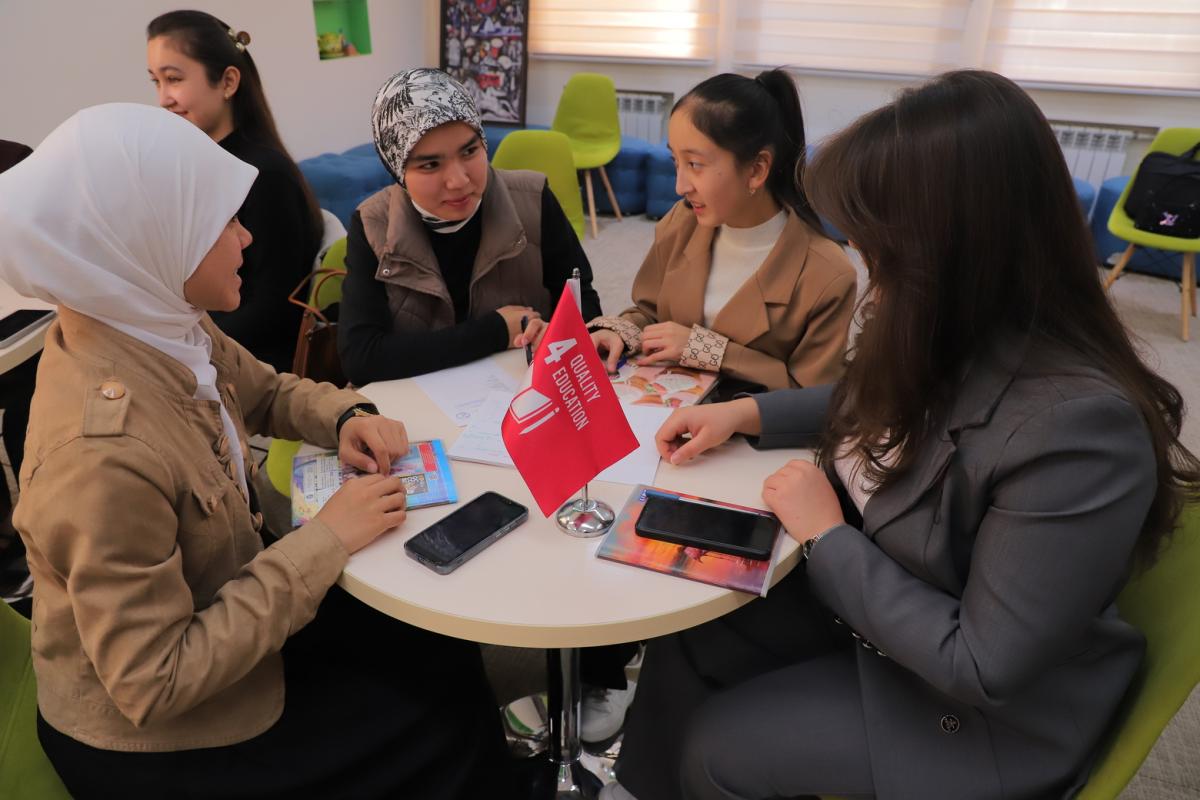
The TSUULL International Office also actively supports events such as workshops and meetings with experienced translators that help enhance professional skills, allowing participants to refine crucial aspects such as speech culture, terminology, style, and the accurate interpretation of intercultural nuances. Moreover, the Office plays a key role in organizing and supporting these events, ensuring that young translators receive valuable guidance and opportunities for professional growth.
|
Women’s Empowerment in Translation
|
Skills Development in Translation & Interpreting
|
Mentorship & Professional Networking
|
|
This module is dedicated to strengthening the role of women in translation and interpreting, aligning with global initiatives such as SDG 5 (Gender Equality). Participants explore the significance of women’s contributions to linguistic and cultural development, learn strategies for overcoming professional challenges, and build the confidence needed to take on leadership roles. Through thematic discussions, case studies of successful female translators, and empowerment-focused sessions, the module cultivates a sense of purpose, visibility, and collective identity among women in the language profession.
|
Focused on practical mastery, this module provides intensive training in key translation competencies. Participants gain advanced skills in terminology management, stylistic precision, speech culture, and the interpretation of intercultural nuances. Real-world translation exercises, guided feedback, and simulations help students refine accuracy, clarity, and professionalism. By the end, participants will have strengthened their ability to produce high-quality translations suitable for academic, literary, and institutional contexts.
|
This module centers on meaningful guidance and professional connection. Participants engage with experienced translators, editors, and linguists who share their expertise, insights, and career pathways. Through structured mentorship programs, networking meetings, and collaborative activities, students learn how to develop professional portfolios, build their credibility, and access international opportunities. The module fosters a supportive ecosystem where women can grow through shared experience, encouragement, and long-term mentorship.
|
|
International Collaboration & SDG Integration
|
Cultural and Linguistic Exchange Workshops
|
Community Engagement & Joining the Network
|
|
Designed to highlight the global dimension of translation, this module explores partnerships, joint projects, and the role of the International Office in advancing SDGs 4, 5, and 17. Participants learn how translation contributes to international cooperation, academic diplomacy, and sustainable development. The module also introduces students to global translation initiatives, cross-border collaborations, and opportunities with universities, cultural institutions, and organizations. It encourages a future-oriented mindset where participants understand their role in global communication and progress. |
This module emphasizes the importance of cultural awareness and linguistic diversity. Through interactive workshops, seminars, and discussions, participants explore cultural nuances, translation ethics, and the dynamics of multilingual communication. Activities include comparative translation tasks, cultural case studies, and dialogue with experts in intercultural exchange. The module highlights how women translators preserve, promote, and connect cultures, reinforcing their significance in both local and global contexts.
|
This module guides participants on how to become active members of the Women’s Translators Network and benefit from the support of the TSUULL International Office. It explains the registration process, year-round event schedule, and available resources. Participants are encouraged to engage with office activities, visit the International Office (open Monday to Saturday, 9:00 a.m.–5:00 p.m.), and follow official communication channels for updates. The module inspires ongoing involvement, ensuring that students remain connected, informed, and supported throughout their professional journey. |
When and Where:
The International Office is open during the year, Monday to Saturday, from 9:00 a.m. to 5:00 p.m., located in the main administrative building of TSUULL.
How to join:
Female students and staff interested in translation and partnership can visit the office in person, follow TSUULL’s official social media channels, or send inquiries via email to interdep@navoiy-uni.uz
FAQ