Support for Students from Low and Lower-Middle Income Countries

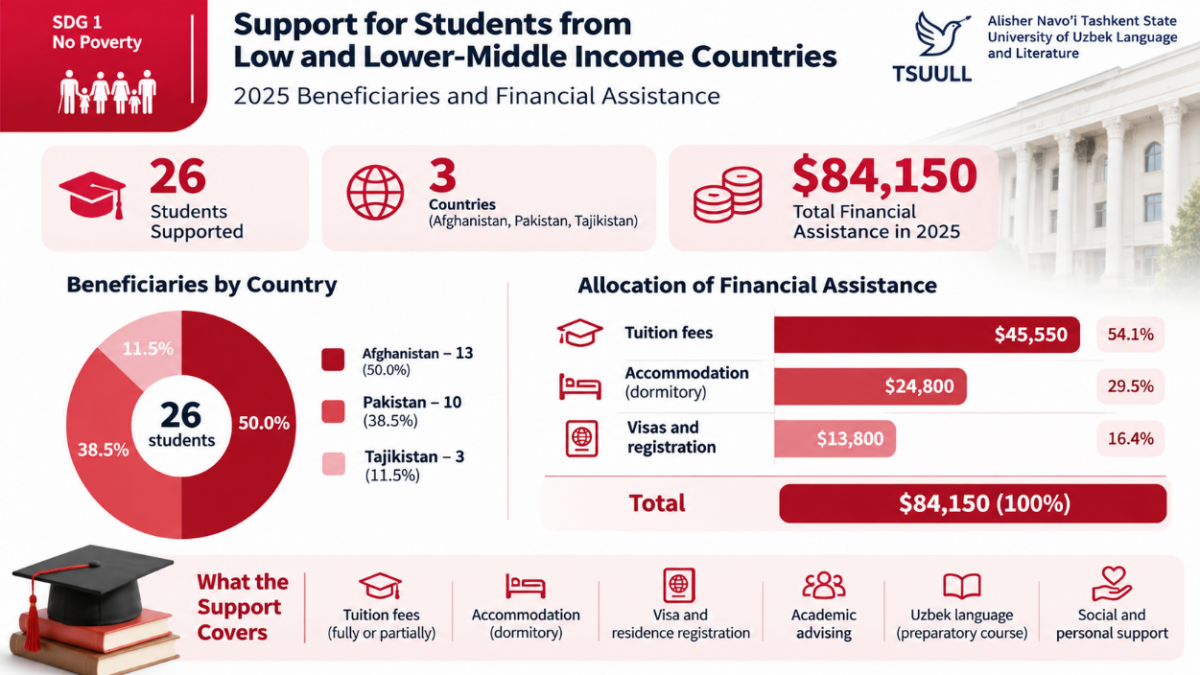
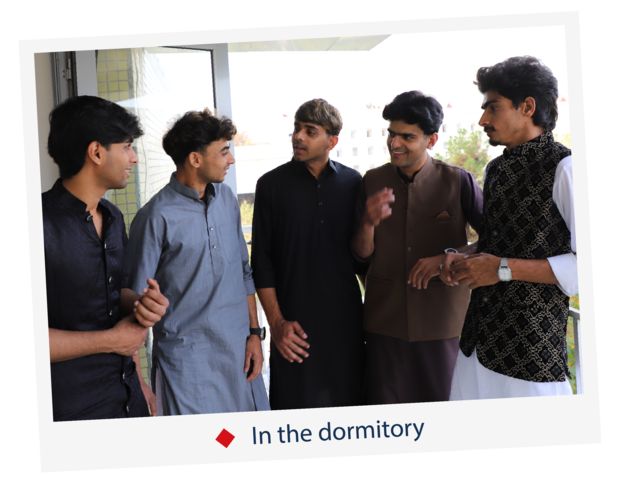
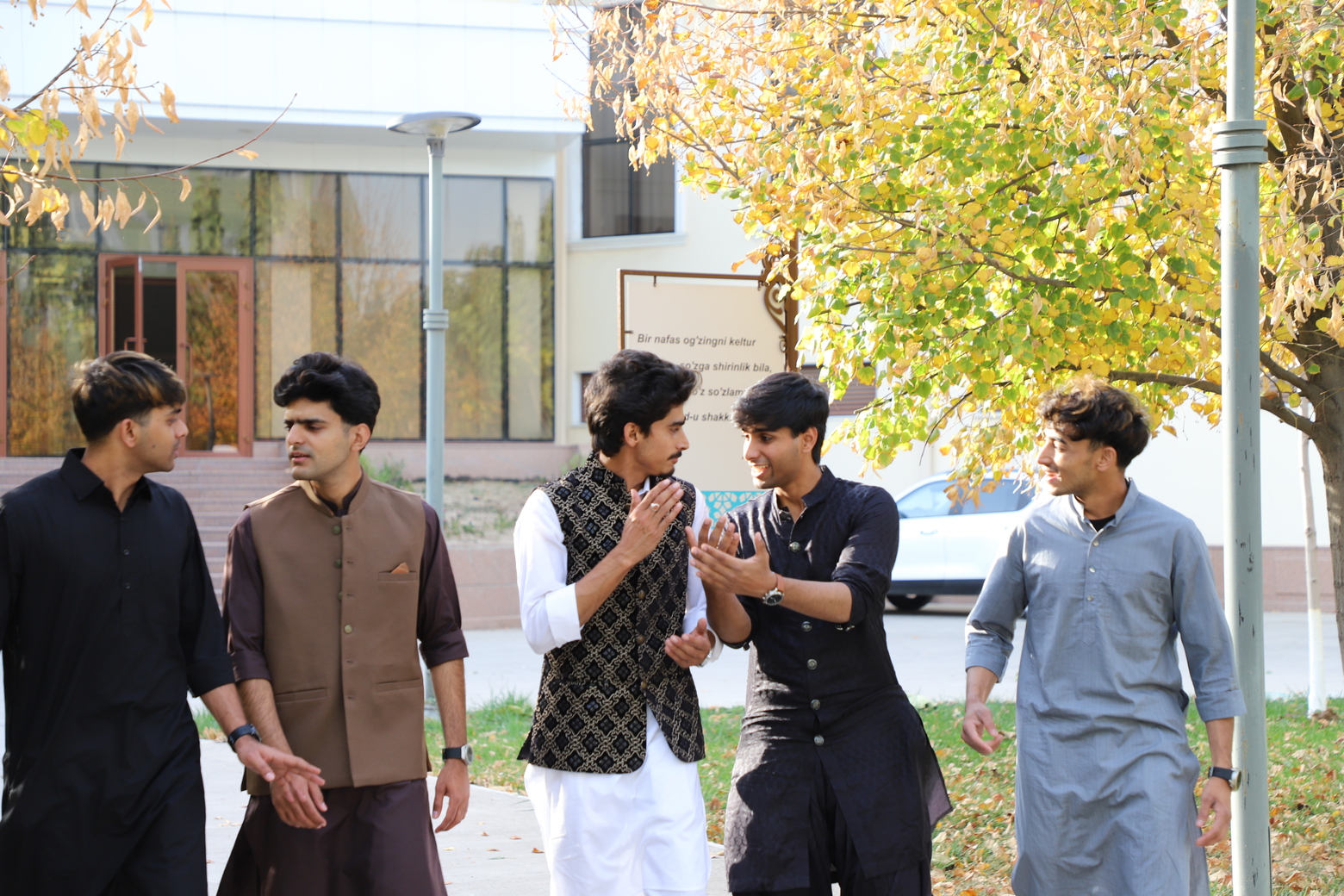
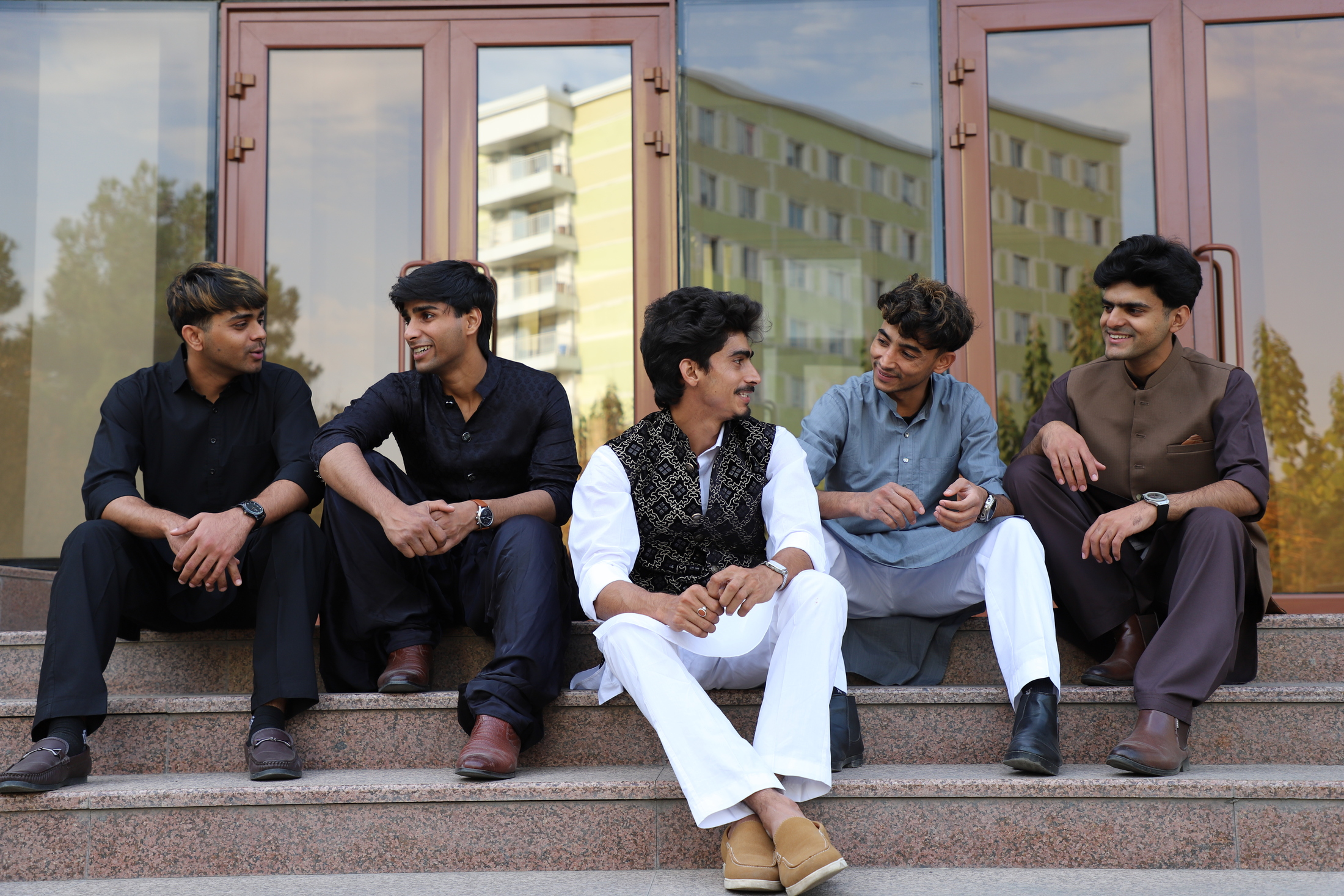
In 2025 TSUULL supported 26 students from low and lower-middle income countries, from Afghanistan, Pakistan and Tajikistan. Depending on a family’s situation, a student can receive a full or partial tuition waiver, a scholarship or grant, and help with living costs. For students from Afghanistan and Pakistan the university pays for everything: the dormitory, visa and registration, health insurance and a preparatory Uzbek Course. Each of them also has an academic adviser and takes part in student life on equal terms with local students. Decisions on support are made by the University Council together with the Student Union and other student bodies. In 2025 the university spent 84 150$ on this support.

Diploma in Arts

Duration

Next Start Date

Closing Date

Campuses^
Indicative 2024 Annual Fee
?

Additional Information

Inclusive Education Support for Economically Disadvantaged International Students

Support for students from low and lower-middle income countries

TSUULL helps students from low and lower-middle income countries pay for their studies and living costs. Depending on the student’s situation, this can be a tuition fee waiver, a scholarship or grant, a free or subsidised place in the dormitory, and help with meals and transport.
This support is part of the university’s Strategic Development Plan, under the priority direction “Education for All: Reducing Poverty through Access, Opportunity, and Empowerment”. It follows SDG 1 No Poverty: a student from a poor family should be able to study here without worrying about how to pay for it. The University Council, Admission Office, University Youth Parliament, Student Union, Board of Trustees and Gender Equity Committee work on it together. They decide who receives support, check how the money is spent, and change the rules when something does not work.

Our students from Afghanistan, Pakistan and Tajikistan

For the last three years the university has fully supported 13 doctoral students from Afghanistan and 10 bachelor’s students from Pakistan. In 2025 three students from Tajikistan joined them. They came to TSUULL for six months on an academic mobility programme.

The university pays tuition and accommodation for all 26 students. It also pays for their annual visas and residence registration, as the laws of Uzbekistan require. In 2025 these students made up about 41% of the 64 international students at TSUULL. For many of these students, especially those from Afghanistan, studying abroad would not be possible without this help.


Medical Care on Campus

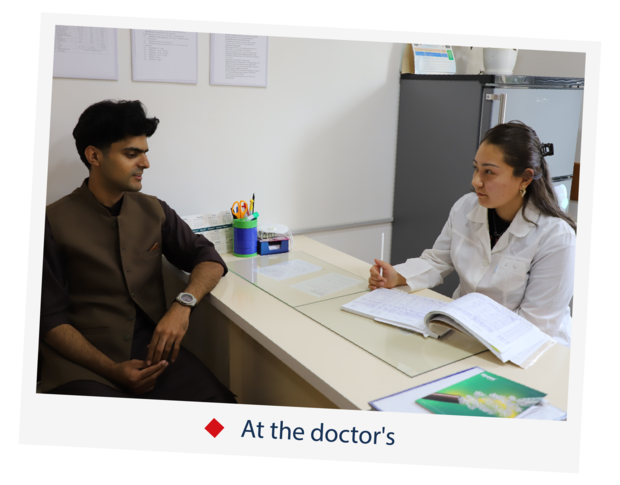
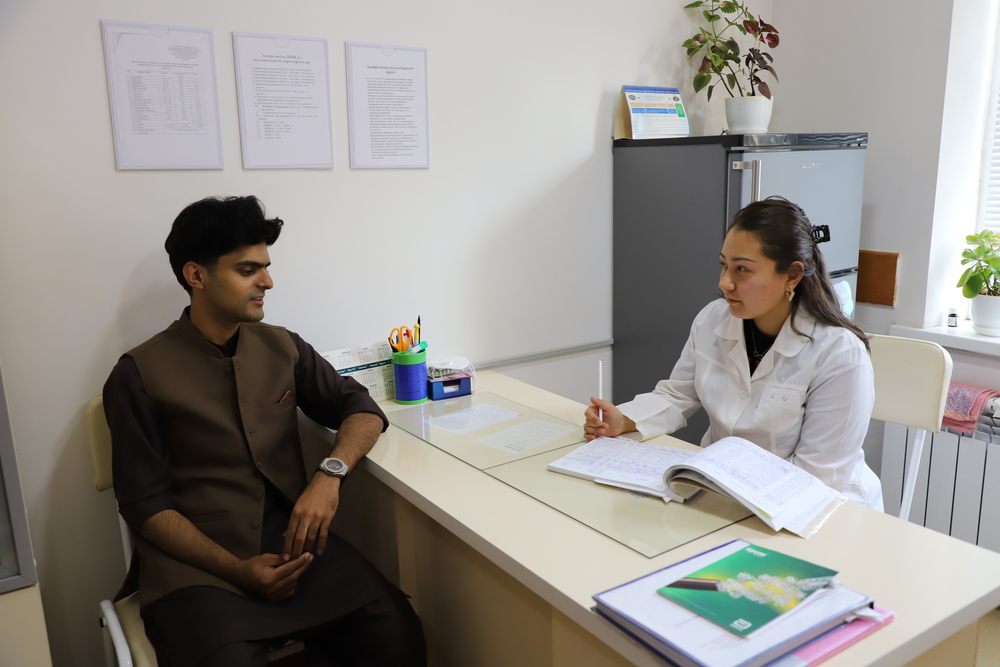
The university has a medical room that is open 24 hours a day, seven days a week. Any student can go there in an emergency, and the help is completely free. This includes our international students. Students from Afghanistan, Pakistan and Tajikistan use the medical room on the same terms as students from Uzbekistan.

For a student who has just arrived in a new country, this matters a lot. They may not yet know where the nearest clinic is, may not speak Uzbek well, and may not have money to pay a doctor. Here they do not have to think about any of that. If something happens during the day or at night, they know where to go on campus, and that a doctor will see them without asking for payment.

ad-promo-destination-college

Life Beyond the Classroom

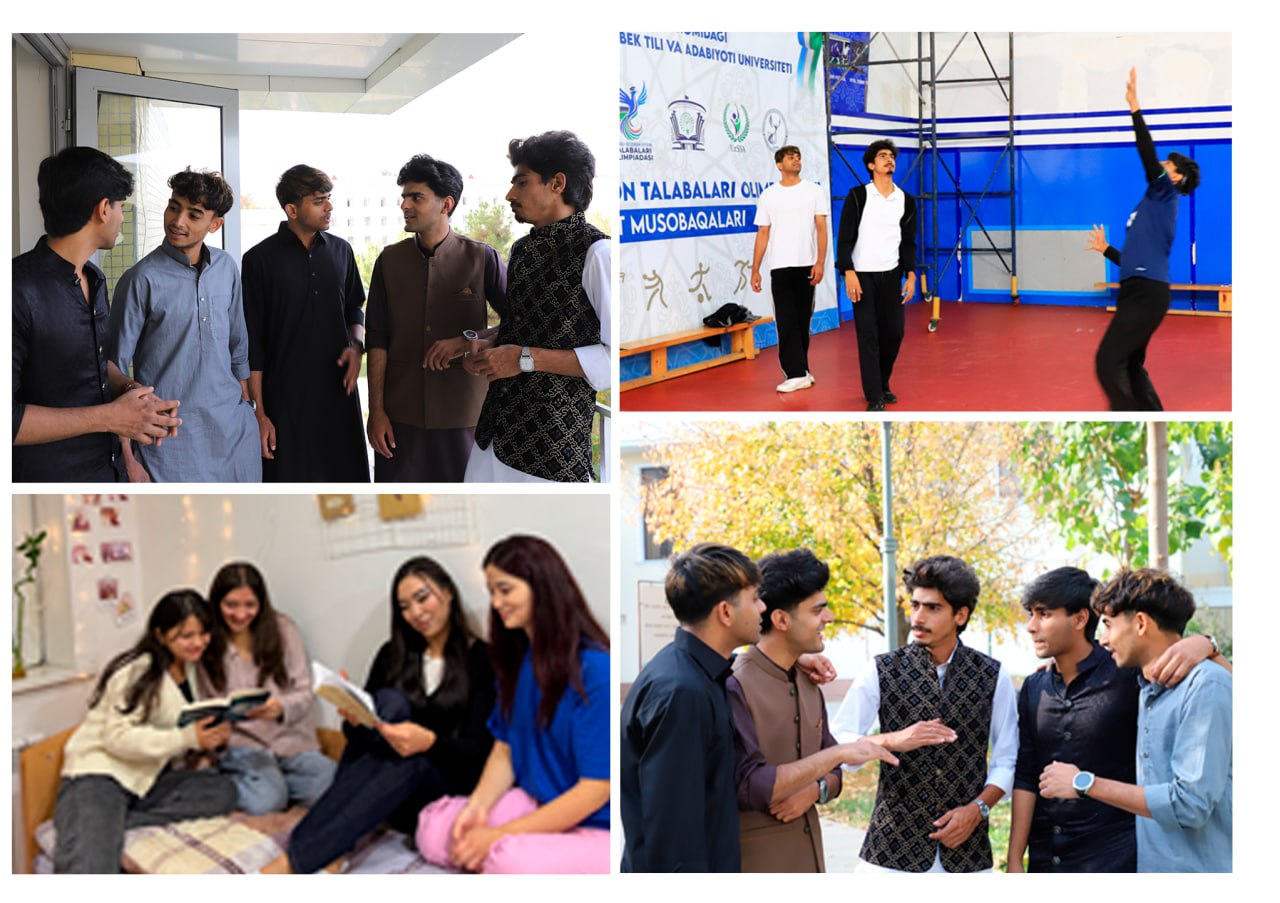
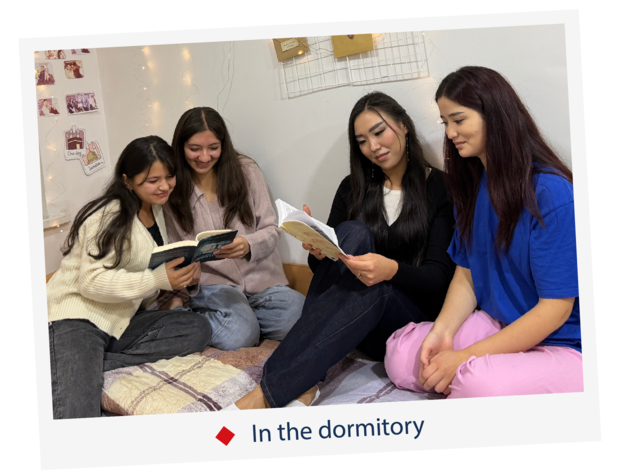
Studying is only part of student life. The 26 students from Afghanistan, Pakistan and Tajikistan who receive full support from TSUULL use the same campus facilities as all other students, and they pay nothing for any of them.

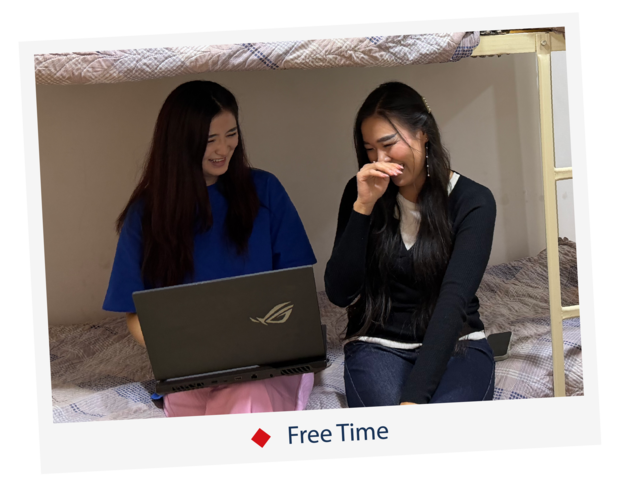
After classes many of them go to the university gym to train or play sports. They have full access to the university library and its electronic resources. In the dormitory there is an information centre with computers, internet and a printer. Students go there to prepare for classes, write papers and print what they need, without leaving the building where they live.

If they feel unwell, they can see a doctor at the university medical centre. Students who want to speak better Uzbek can join Uzbek language courses. Attendance is voluntary, and the courses are free, like everything else listed here.


Female student on campus outdoors with a black top

Institutional Policy and Eligibility Criteria

TSUULL offers full support to international students from low and lower-middle income countries who could not otherwise afford to study abroad. A student accepted into the programme does not pay tuition and lives in the university dormitory free of charge. The university also pays for the student’s annual visa and residence registration, as required by the laws of Uzbekistan. This support is part of the university’s Strategic Development Plan and is reviewed every year.

The programme is open to applicants who meet all of the following:

  • 1.  They are citizens of a country classified by the World Bank as low or lower-middle income.
  • 2.  They come from a low-income family.
  • 3.  They will be the first in their family to receive higher education, meaning neither parent has a university degree.
  • 4.  They meet the university’s standard academic admission requirements for the chosen programme: bachelor’s, master’s, doctoral or academic mobility.

If there are more applicants than places, the university gives priority to orphans, students with disabilities, refugees and young women from rural areas.
 

Together with the standard admission documents, applicants submit:

  • •  a document confirming family income;
  • •  a family composition certificate;
  • •  documents confirming the parents’ level of education;
  • •  where relevant, documents confirming refugee status, disability or loss of parents.

1.  The Admission Office receives applications and checks that the documents are complete.
2.  A selection commission reviews each application and draws up a list of recommended candidates. The commission includes representatives of the Admission Office, the International Relations Department, the Student Union and the University Youth Parliament.
3.  The University Council approves the final list, and the rector issues an order.

Support continues for the full period of study as long as the student passes their exams and attends classes. If a student falls behind, the faculty first gives them academic help. Support is withdrawn only by a decision of the University Council.
Who oversees the programme

  • •  University Council: approves the policy and the list of students.
  • •  Admission Office: handles applications and documents.
  • •  International Relations Department: visas, registration and contact with partner institutions abroad.
  • •  Student Union and University Youth Parliament: take part in selection and represent the students’ interests.
  • •  Board of Trustees: monitors how the funds are spent.
  • •  Gender Equity Committee: makes sure women and men have equal access to the programme.


Campus Life

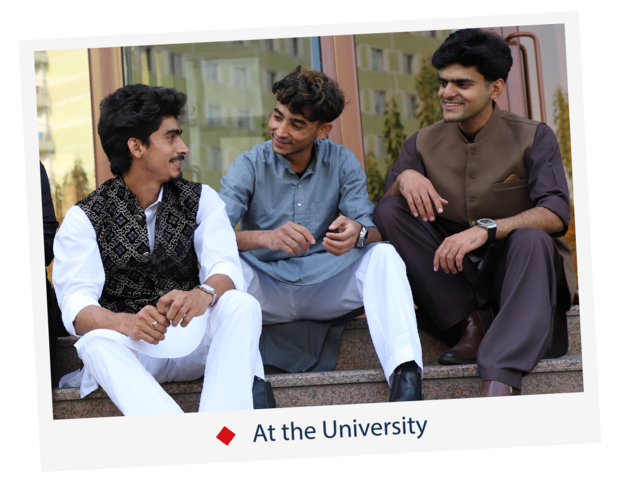
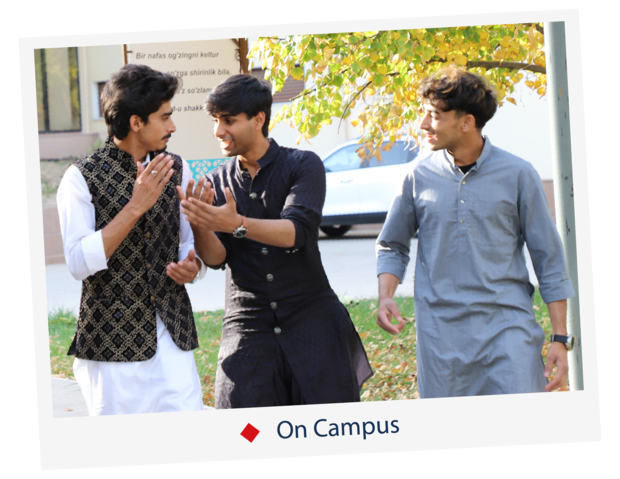
At the University On Campus At the doctor In the dormitory Free Time In the dormitory

Kingswood campus