The Executive Educational Training Centre, established under TSUULL by Resolution No. 117 of the Cabinet of Ministers of the Republic of Uzbekistan (3 March 2020), runs short, non-degree executive education and vocational training courses that are open to the general public. They are open to people who are not enrolled at the university: civil servants, educators, media professionals, private-sector employees, members of the public without permanent employment, foreign nationals and compatriots living abroad. Participants can enrol through the online platform, and certificates are issued under the established procedure.
The Center works from its headquarters at TSUULL and through 13 regional branches in Karakalpakstan and the regions of Uzbekistan. Regular courses cover official correspondence and the norms of the Uzbek literary language, written speech norms (free for the public), speech culture for presenters, oratory for civil servants, Uzbek as a foreign language and online teacher development for teacher working abroad.
Advancing State Language Policy in Public Administration
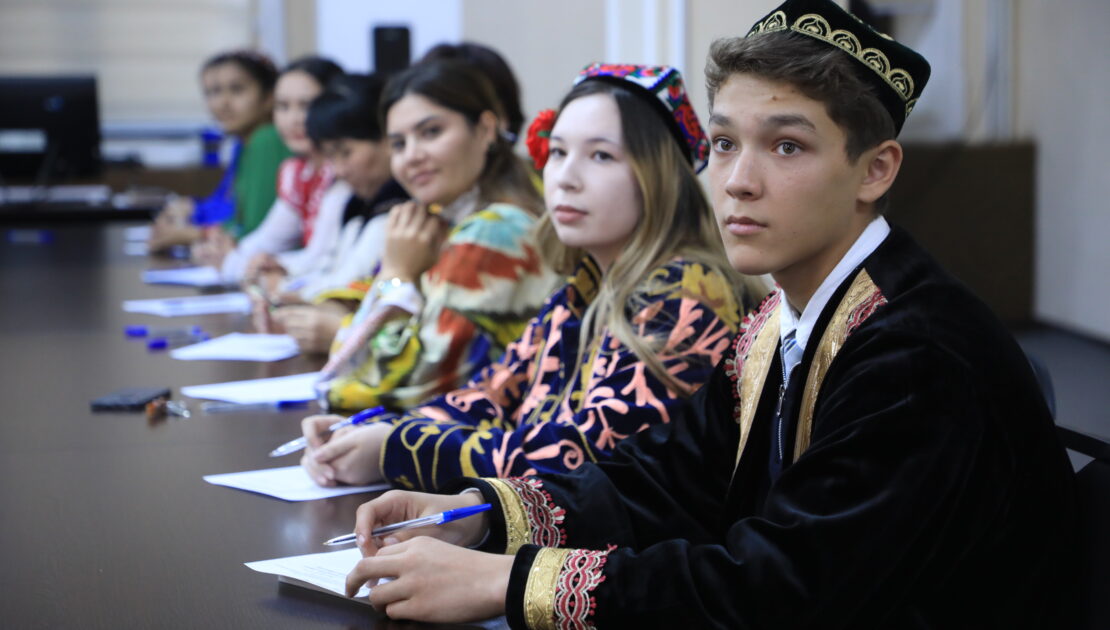
Since 2020 the Center and its regional branches have delivered short, non-degree courses open to people outside the university. Each course ends with an assessment and a certificate. In 2025–2026, 126 staff of national-cultural centres were trained and certified in Uzbek language proficiency under a memorandum with the Committee on Interethnic Relations and Compatriots Abroad. A further 78 foreign students from higher education institutions of Uzbekistan have completed the Uzbek language course and received certificates.
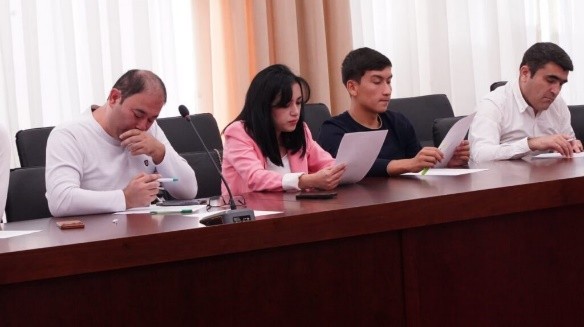
Every year the Center holds more than 100 round tables and seminars with ministries and public institutions. Topics include administrative language norms, drafting official documents, terminology consistency, workplace communication and public-facing institutional messaging. The Center also provides consultations and tailored materials, including linguistic expertise of draft normative documents and free review of citizens' appeals addressed to the President.
144-hour certified training packages for government agencies, healthcare providers, banks and insurers, schools and universities, and media outlets. Course details and enrolment are available at edu.dtrm.uz.
The Center's online programmes are open year-round.
Shorter modules take 1–2 weeks. In addition, 53 video lessons on the Latin-based Uzbek alphabet, literary norms, speech culture and official writing are published on the DTRM-Ta'lim YouTube channel and have been viewed more than 50,000 times. Teachers abroad complete their professional development courses online.
Conferences, Publications & Knowledge Dissemination
Open public events
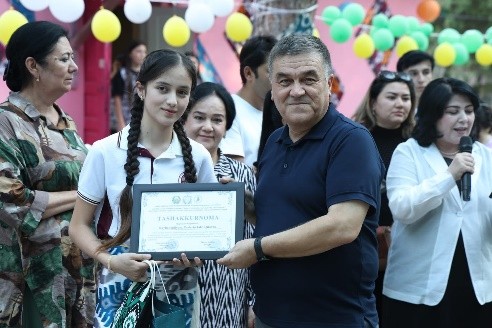
Mass Dictation campaign. In 2025, 5,659 students of higher education institutions took part in the “Mass Dictation” held on 16 October through the tilbilig.uz platform under the slogan “The future of Uzbekistan is in the hands of literate youth”. Dictations held with state bodies, local authorities, universities and a political party brought together a further 8,743 members of the public, civil servants and students. The Karakalpak-language mass dictation for the Karakalpak Language Day was held on 26 November.
Annual Scientific-Practical Conference. “State Language and Development: Problems and Solutions” (5th Republican Conference, 20 October 2025), held every year since 2021 with guests from abroad.
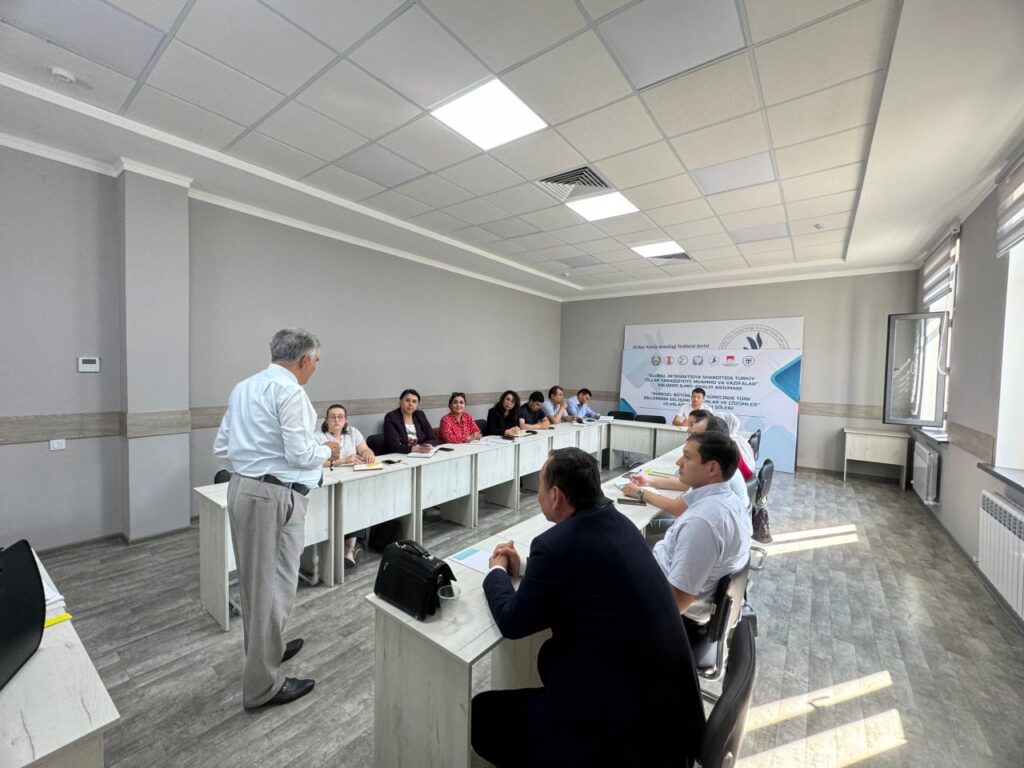
International conference “Development of Turkic Languages in Global Integration: Problems and Tasks”. The 3rd conference took place in Namangan on 3–4 June 2026 with the Turkish Language Association and Ankara Hacı Bayram Veli University, and it has been held yearly since 2024.
Regional and republican events, including the regional competition “Expert on the State Language and Related Legislation” (Bukhara, 2022) and the conference “Language and Spelling Problems” (Syrdarya, 2023).
Publications and methodological materials
Media and webinars
The Center appears regularly on national television and radio (including Uzbekistan 24, Madaniyat va Ma’rifat, Sevimli, Mening Yurtim and Renessans TV) and in the press (Ma’rifat, Yangi O‘zbekiston), and shares quarterly webinars with about 120 live attendees, archived online on dtrm.uz, Facebook and Telegram.
Training Close to Where People Live and Work
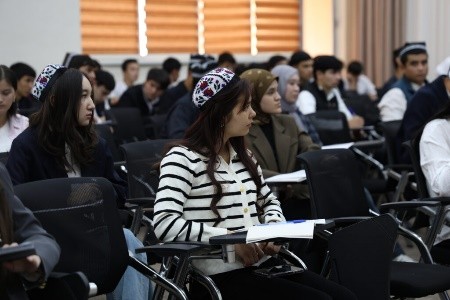
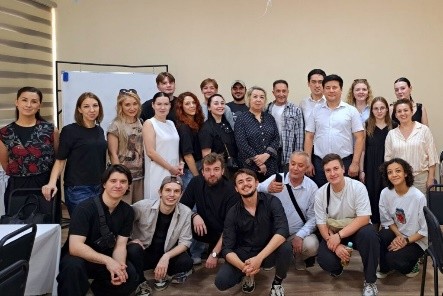
Courses are not limited to Tashkent. The Center delivers its training through its headquarters at TSUULL and 13 regional branches in Karakalpakstan and the regions of Uzbekistan. Each of the 14 locations has a team of three staff, 42 in total. This lets civil servants, teachers, entrepreneurs, people without permanent employment and foreign nationals study in their own region, without travelling to the capital.
The regional branches teach the Center’s open courses and help participants enrol. They also hold monthly language proficiency exams for people who need an official certificate, organise round tables and seminars with local authorities and state organisations, and run Mass Dictation events together with local administrations and higher education institutions. They also speak regularly in local media about the Center’s courses and about the state language.
Between 2020 and 2026, this network helped train more than 52,000 employees of ministries, agencies, local authorities and business associations, and issued certificates in accordance with the established procedure. Over the same period 3,978 people applied to take the state language proficiency exam, and 3,701 received certificates. Follow the Center’s news and announcements to find the nearest branch and the next course.

This is the Center’s main course. It helps staff of ministries, agencies, local authorities and business associations write and speak correctly in the state language and draft official documents. It runs at the headquarters in Tashkent and at the Center’s 13 regional branches, and participants who complete it receive a certificate. Since 2020 the course has trained 52,002 employees, with 8,000–9,500 people trained in each full year from 2021 to 2025.
Explore more: https://dtrm.uz/ozbek-adabiy-tili-me-yorlari-va-nutq-madaniyati-kursi/
This course is open to everyone and free of charge, including people without permanent employment. It teaches correct spelling, punctuation and written style, and it is offered at the Center and its regional branches. Participants receive a certificate. From 2020 to 2026, 1,624 members of the public attended; 2024 was the peak year with 623.
Explore more: https://dtrm.uz/keng-aholi-qatlami-uchun-ozbek-adabiy-tilining-yozma-nutq-meyorlari-kursi/
This course is for presenters and announcers of national TV and radio channels. It trains correct pronunciation, stress and speech culture for people who speak to a wide audience. Classes are held in person in Tashkent. Since 2021, 157 presenters have completed the course and received certificates.
Explore more: https://dtrm.uz/ozbek-adabiy-tili-me-yorlari-va-nutq-madaniyati-kursi/
Launched in 2024, this course teaches civil servants and managers to speak clearly and confidently in public and in official settings. In 2024, 40 managers completed it (two groups of 20, in May and July) and received certificates.
Explore more: https://dtrm.uz/davlat-xizmatchilarining-nutq-madaniyati-va-notiqlik-mahoratini-oshirish-kursi/
This course is for non-native speakers, foreign nationals and anyone who wants to learn Uzbek. It was set up under the Presidential Decree on developing the Uzbek language, and participants can receive a certificate that shows their level of Uzbek. From 2020 to 2026, 1,181 people studied and 960 received certificates (916 in Uzbekistan and 44 in Türkiye). Learners include 126 staff of national-cultural centres and 78 foreign students from Uzbek universities.
Explore more: https://dtrm.uz/xorijliklar-uchun-ozbek-tili/
This distance course supports teachers of Uzbek language and literature who work abroad. It has two tracks: one for university teachers and one for school teachers. Because it is online, teachers can join from their own countries. In total, 14 university teachers and 72 school teachers received certificates, from Kyrgyzstan, Kazakhstan, Afghanistan and Pakistan.
Explore more: https://dtrm.uz/ozbek-adabiy-tili-meyorlari-va-davlat-tilida-ish-yuritish-kursi/