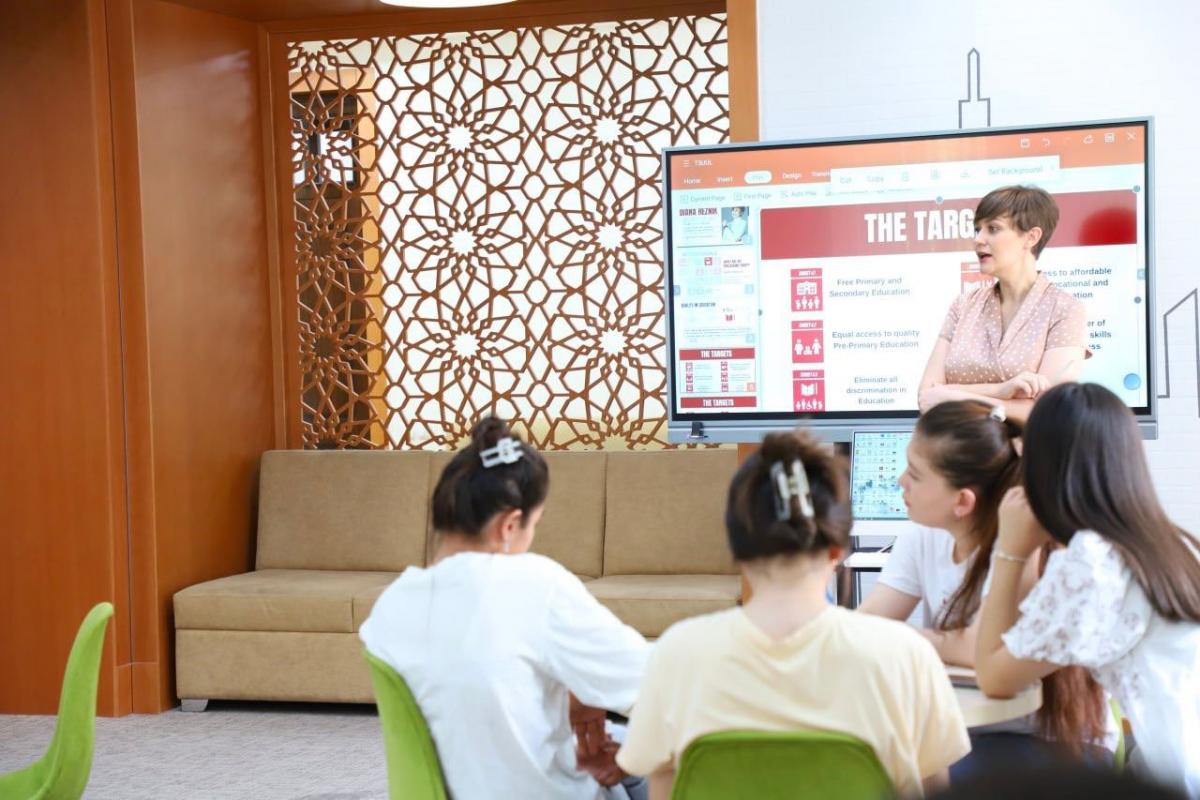
SDG 4: Quality Education

TSUULL is committed to supporting both financially and educationally. One the main perspective of SDG 4 is to ensure quality education and encourage lifelong learning opportunities for all. This goal focuses on the transformative power of education in building societies, reducing inequalities and improving global peace and development.

Diploma in Arts

Jobs and Skills Atlas

You can use this tool to research different jobs and industries, including 5-years trends of how many people are employed and the demand in different regions and LGAs.

Provided by Jobs and Skills Australia, part of the Australian Government.

Skills Priority List

Skills Priority List

You can use this tool to research the likely future need for different jobs and skills, as well as filter by your State or Territory.

Provided by Jobs and Skills Australia, part of the Australian Government.

TSUULL is contributing to the achievement of Sustainable Development Goal 4 (SDG 4) by improving quality education while encouraging lifelong learning opportunities for all. In 2024, TSUULL affirms its commitment to making progress education as a cornerstone of sustainable development. TSUULL provides accessible and inclusive education to students from different cultures, ensuring no one is left behind.
TSUULL maintains its strong position in international rankings, especially in quality education and global cooperation for sustainable goals. New initiatives in teaching Uzbek as a second language and engaging international students have made strong the university's global impact.

TSUULL library is a public library with free access. Our main task is to service and support TSUULL.  However, any permanent resident may obtain a free library card and use our print collections and library facilities during regular opening hours at no charge. The library computers also provide free access to our online resources. Students can come to library and use resources at any time.
Our library is located within the campus that makes it easy to find and access after the lessons. In order to facilitate lifelong learning ambition of the local communities, library has huge number of print and online resources in a wide range of disciplines. The local communities of all ages can have benefit from reading these resources in the library. Our library building is large enough, comfortable space with a wide ranging collection.
In our library there are not only uzbek literatures but world literatures. Our university professors, famous linguistics and bibliographers of our republic, scientists from international universities are giving their works. For example, 200 books are presented to library by famous Japanese scientist  Xisao Komadsu. There are a lot of copies of manuscripts from different countries such as Russia, Great Britain, Turkey, Azerbaijan, Egypt and others.
Our library also runs a channel in Telegram where different books are voiced with high quality equipment within the university campus. We try to cover various genres (scientific books, novels, stories) and make it easy to access. In addition, we are open to new suggestions about new voicing projects. By helping audiobooks, you can use books at any time and anywhere.

Organizing open lectures, talks, and community contests at a university is a wonderful way to engage with the local community and promote awareness of educational opportunities. These events can showcase the university's programs, research, and campus life, fostering a sense of connection between students, faculty, and community members. These events can feature guest speakers from various fields, providing insights into current trends, innovations, and challenges. Community contests, whether in arts, science, or sports, can encourage participation from all age groups, fostering collaboration and creativity. Prizes and recognition can motivate local residents to get involved, while also showcasing the talent present within the community. Promotion of these events through local media, social networks, and community partnerships can effectively draw attendance, ensuring that more people become aware of the university’s offerings and its contributions to the region. At TSUULL, our teachers have a opportunity to share their knowledge both online and offline form, our teachers’academic journeys and experiences have shaped their expertise, which they continue to share through various platforms, including publications, research projects, videos, and more. The professors are renowned for their extensive research and publications in the areas of Uzbek language, literature, and culture. Many of them have authored books and articles that have become essential resources for students and scholars alike. Additionally, our university has The Talented Girls project to encourage all women to develop their practical skills  as cooking, sewing, hair-dressing and toy-making so that they learn proper planning and preparation skills  while contributing in a positive way to the health of themselves and their family and friends.  Making new friends  encourages them to be more successful in their studies and in turn may help to be create a happy life.

The aim of the Center is to fully implement the state language and ensure that the norms and rules of written Uzbek literary language, based on the Latin script, are effectively applied in state language administration. It aims to continuously develop the skills of employees in state organizations by regularly updating the necessary knowledge and skills in this area. Organizing professional development and training courses that function continuously in the direction of improving skills and teaching in the norms of the Uzbek literary language and conducting official work in the state language. Introducing mechanisms for continuously updating the theoretical and practical knowledge, skills, and expertise of civil servants regarding the norms of the Uzbek literary language, the Uzbek alphabet based on the Latin script, spelling, the basics of conducting official work in the state language, and the preparation of official documents. Implementing mechanisms for continuously updating the practical knowledge, skills, and expertise of the population in written and oral literacy, the norms of the Uzbek literary language, and the structure of the Uzbek language. Extensively introducing modern pedagogical and information-communication technologies into the educational process. Improving the speech culture and oratory skills of civil servants and the population. Within its authority, to conclude cooperation agreements in the territory of the Republic of Uzbekistan and foreign countries with legal and physical persons on its behalf. Participating in various international and national exhibitions, conferences, seminars, and other events aimed at improving the education system. Ensuring compliance with copyright for scientific and technical developments carried out by the Center, and exercising copyright control over the use of the created products. Establishing mutually beneficial cooperation with international educational and scientific institutions as well as various public organizations.

Our team is undertaking a series of promotional activities to enhance collaboration with schools and facilitate the successful admission of prospective students. Together, we aim to provide both offline and online information to students, teachers, and independent learners about the admission process to our university. Our Committee—comprised of dedicated leaders—works to enhance access to quality education for all staff and students. They provide mentorship programs, organize workshops, and host meetings where students and educators can exchange ideas and seek guidance. The committee also supports initiatives that promote equal access to educational opportunities, fostering an inclusive and supportive environment for lifelong learning. Our university is committed to expanding access to quality education in remote communities. As part of this mission, our dedicated professors visit rural areas, teaching English in schools and providing lessons to both students and adults alike. Through these efforts, we aim to support lifelong learning and open new opportunities for all ages to develop their English language skills, fostering growth and empowerment across our communities. In line with Clause 12 of the Presidential Decree of the Republic of Uzbekistan (No. PF-6208) dated April 20, 2021, three neighborhoods – Oriyat, Yangi Umid, and Tashabbus – have been assigned to the Faculty of Uzbek Philology at the Alisher Navoiy Tashkent State University of Uzbek Language and Literature. Consequently, the Deputy Dean for Youth and Cultural Affairs, A. Qurbonov, along with tutors O. Aralov, O. Qahhorov, M. Muhammadiyeva, and R. Ortiqov, visited these neighborhoods. During their visit, they noted that five local youth are self-employed, two are recipients of the Zulfiya Award, and no youth were found to be consistently absent from classes. Plans were discussed to hold sports and cultural events in collaboration with School No. 329, which serves the neighborhood’s youth. Additionally, through the “Caring Hands” initiative, financial assistance for low-income families will be provided. It was also identified that there is a need for psychological specialists in the community, and arrangements will be made to organize psychological training sessions.

The University is committed to equal opportunity in academic pursuit and employment, and hence to the elimination of any form of discrimination harassment by members of the University community. This policy provides an overarching framework for University admissions policies and procedures and applies to the admission of all categories of students to accredited programmes of under- and postgraduate study at TSUULL.
The University is committed to fair, transparent and consistent admissions practices. This policy is underpinned by TSUULL’s strategies, codes of practice and policies on Data Protection, Disability, Equality & Diversity and Widening Participation. The University is committed to equality in education. Students are selected on the basis of their individual merits, abilities and aptitudes. We aim to increase the diversity of its student population: we believe that diversity is educationally as well as socially desirable in a civilised society, enriching the educational experience for all. We therefore seek to attract a wide range of applicants from different social, cultural and educational backgrounds who can demonstrate the academic ability and the skills required to succeed in their chosen studies. We actively encourage applications from students from all groups who are currently under-represented in higher education.
The University aims to offer clear advice and guidance to prospective applicants to enable them to make informed choices and to apply to programmes appropriate to their interests, academic qualifications and potential. Admission is subject to the availability of places. Where there are restrictions on the number of places the University can make available, competition for places is often extremely high. This policy and associated procedures comply with relevant legislation and meet the
expectations and practices of the Republic of Uzbekistan for Higher Education.

Our achievements

Under the leadership of the rector of the Alisher Navo’i Tashkent State University of Uzbek Language and Literature Shuhrat Sirojiddinov, has been developed a "road map" for the university's sustainability actions.
It should be noted that our university has been placed in the rank band of 300+ universities according to the results of the "THE Impact Rankings 2024" published by the Times Higher Education (THE). Since TSUULL has applied for 5 of the 17 Sustainable Development Goals (SDGs), and it is ranked 54 out of 1093 institutions globally.
TSUULL focuses on education. Different trainings, seminars and lessons are held by TSUULL  professors and teachers to students. Students from foreign countries come to TSUULL to learn Uzbek language. They can learn not only Uzbek language but also culture. Our professors give lectures in other countries.

News Related to Us

  • Public Talks

    Leora Eisenberg, a PhD student in History at Harvard University and graduated with a BA in Slavic Languages and Literatures from Princeton University (2020) visited TSUULL and delivered a guest lecture for Bachelor and Master students titled ‘SDG 4: Uzbek National Popular Music and the Face of Uzbekistan’. Participants learned about the origins of Uzbek popular music, including where it comes from and how it developed. They also asked what the prospects of Uzbek pop music are today as Uzbekistan searches for its place in the dynamic Central Asian region.
    Uzbekistan has been known through much of the 20th and 21st centuries for its dynamic popular music scene, from pop bands like Yalla and the beloved Tashkent Music Hall to contemporary artists like Yulduz Usmanova, Munisa Rizaeva, and Shohruhxon.

  • Uzbek school

    The presentation of the Uzbek School – Language Preparation Course For Foreigners was held on November 25 in the Hall of International Office at TSUULL.
    Today's Presentation Ceremony was attended by Embassies Representatives of foreign countries in Uzbekistan and representatives of international organizations. All of them expressed their desire to learn the Uzbek language in this unique center, wished success to the activity of the Uzbek School and offered to implement large projects in cooperation. TSUULL University has undertaken important tasks such as increasing the influence of the Uzbek Language and Literature, widely promoting the national language and developing special methods for teaching it. Since the TSUULL University opened its doors in 2016, Uzbek Language Courses For Foreigners have been started at the University as a test version.

  • Zakovat

    The “Zakovat” is a thrilling event that challenges participants` knowledge, critical thinking, and problem-solving skills. This is one of the competitions in TSUULL. It is widespread there, in which  students of  every faculty can participate. The stimulating competition brings together individuals with a passion for learning and a thirst for intellectual challenges. Participants will engage in a series of thought-provoking and diverse questions that cover a wide range of topics, including general knowledge, science, history, literature, arts, and more. The competition encourages participants to draw upon their accumulated knowledge, analyze and interpret information, and provide well-reasoned answers. This competition not only tests participants` academic knowledge but also their ability to think quickly and effectively under pressure. It fosters creativity, logical thinking, and the use of different strategies to approach complex questions.

TSUULL

Inclusive Learning, Limitless Possibilities

Quality education refers to an inclusive and equitable learning experience that improves the intellectual, social, and emotional development of individuals. It ensures access to knowledgeable and skilled educators, relevant curricula, well-equipped facilities, and a supportive environment that promotes critical thinking, creativity, and lifelong learning. Quality education also emphasizes cultural inclusivity, gender equality, and preparing learners to contribute effectively to society and the global community.